

How to Organize Kitchen Utensils for Effortless Cooking
Before you can even think about organizing, you have to know what you’re working with. The single most important first step is to take everything out and sort it by function. This might sound basic, but it’s the only way to truly see what you own, ditch what you don’t need, and build a system that actually works for you.
Your First Step to an Organized Kitchen
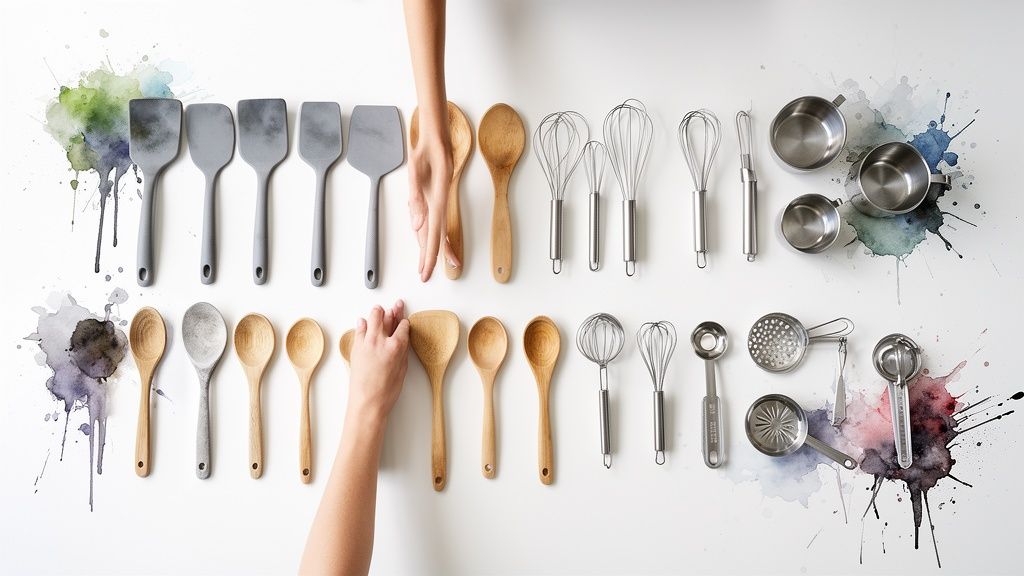
Let's be real: getting organized usually means making a bigger mess first. Before you rush out to buy drawer dividers or a fancy new crock, you need to face the reality of your utensil collection. You can't organize what you can't see.
So, take a deep breath and pull every last spoon, spatula, whisk, and odd-looking gadget out of every drawer and hiding spot. Lay it all out on your counter or dining table. This visual audit is almost always an eye-opener. You’ll probably find three can openers, a melon baller you forgot you owned, and at least one melted spatula.
Create Functional Categories
With everything in plain sight, it's time to sort. But don't just group all the spatulas together. A much smarter approach is to categorize by how you use them. This is what makes a kitchen truly functional.
Your piles might look something like this:
- Everyday Cooking Tools: The workhorses. Think whisks, tongs, turners, and the wooden spoons you grab without thinking.
- Baking Gear: All your measuring cups and spoons, silicone scrapers, offset spatulas, and pastry brushes.
- Serving Pieces: The tools you only pull out when you have company, like ladles, large spoons, and pie servers.
- Specialty Gadgets: This is the home for the garlic press, zester, apple corer, and other single-task tools.
Grouping your tools this way immediately tells you what needs to be within arm's reach. Your everyday stuff deserves prime real estate, while that turkey baster can live happily in a less accessible spot.
The goal is to declutter and condense your collection to make room for necessary items. Organizing in batches, based on these categories, makes a large task feel much more manageable.
The Honest Purge
Now for the hard part. Go through each pile and be brutally honest with yourself. Pick up every single item and ask some tough questions: Is it broken, melted, or warped? Do I have three of these? When did I last actually use this?
This is where you have to be ruthless. If you’ve got five wooden spoons, pick your two favorites and let the others go. That avocado slicer you thought was a brilliant idea but has never seen an avocado? It’s time for it to find a new home. This isn't about minimalism for its own sake; it's about curating a set of tools that you genuinely use and enjoy.
Once you’ve whittled things down, you can start thinking about new systems. Exploring quality function and organization products is a great next step to give your curated collection a proper home.
Finishing this process leaves you with a streamlined set of utensils you actually love. This foundational step—the big purge and sort—transforms a chaotic pile into a functional toolkit and sets you up for success in every drawer and on every counter.
Taming the Utensil Drawer with Smart Zones
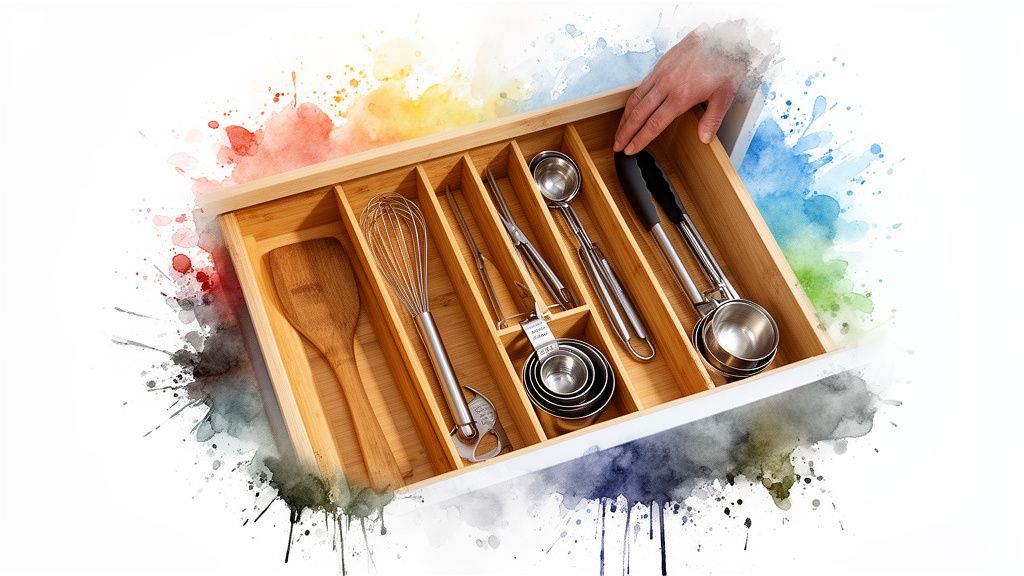
We’ve all been there: sauce simmering on the stove, and you’re frantically digging through a tangled mess of metal and plastic for a whisk. That jumbled utensil drawer is a universal kitchen headache. The real secret to fixing it isn't just buying another plastic tray; it's about thinking strategically and creating smart zones.
This is all about assigning a purpose to each drawer based on how you actually cook. Think of your drawers as valuable real estate. The one closest to your stove or main prep counter is your prime property, and it should be reserved for the tools you grab every single day.
Setting Up Your Prime Cooking Zone
Take a moment and walk through your cooking process. When you’re standing at the stove, what do you reach for without even thinking? That's what belongs in this prime drawer.
For most people, a well-stocked "Prime Zone" drawer looks something like this:
- Spatulas and Turners: For all your flipping, sautéing, and scraping needs.
- Whisks and Tongs: The workhorses for mixing, grabbing, and turning.
- Wooden Spoons: Can't live without them for stirring sauces and protecting your pans.
- Ladles: Essential for serving up soups, stews, and chili.
When you dedicate a drawer to just these high-use items, cooking becomes so much smoother. Everything else—your baking gadgets, specialty tools, or the fancy serving spoons—gets moved to a secondary drawer. This one simple move is the foundation for an organized kitchen.
A well-zoned kitchen doesn't just look better; it feels better. When tools are right where you need them, you cut down on wasted steps and mental friction, turning meal prep from a chore into a seamless creative process.
Finding the Right Drawer Dividers
Once you’ve decided on your zones, you need the right hardware to keep things in place. A good divider is what stops everything from sliding into a jumbled mess the second you shut the drawer. Luckily, you have some great options.
Adjustable Bamboo Dividers: These are a personal favorite because they’re so flexible. You can slide them to create perfectly sized compartments for anything from long-handled tongs to tiny measuring spoons. Plus, the natural wood just looks clean and warm.
Deep Bin Organizers: Got one of those extra-deep drawers that turns into a black hole? Vertical bin inserts are a game-changer. They let you store bulky tools like potato mashers and oversized whisks upright, so you can see and grab everything easily.
Custom-Fit Solutions: Some brands offer modular systems or interlocking trays that let you build a completely personalized layout. This is perfect if you want to use every square inch of your drawer and ensure no wasted space.
Here’s a little trick I always use: "nest" similar items within their compartments. Stack measuring cups from largest to smallest and keep measuring spoons together on a ring. It’s a small habit that makes a huge difference in keeping track of those little things that always seem to disappear. For a deeper look into drawer strategies, you can find more expert tips on how to organize kitchen drawers.
By creating thoughtful zones and using dividers to give every tool a home, you’ll finally win the war against drawer clutter. Not only will you find what you need in an instant, but you’ll be shocked at how much easier cleanup becomes.
Clever Countertop and Wall Storage Ideas
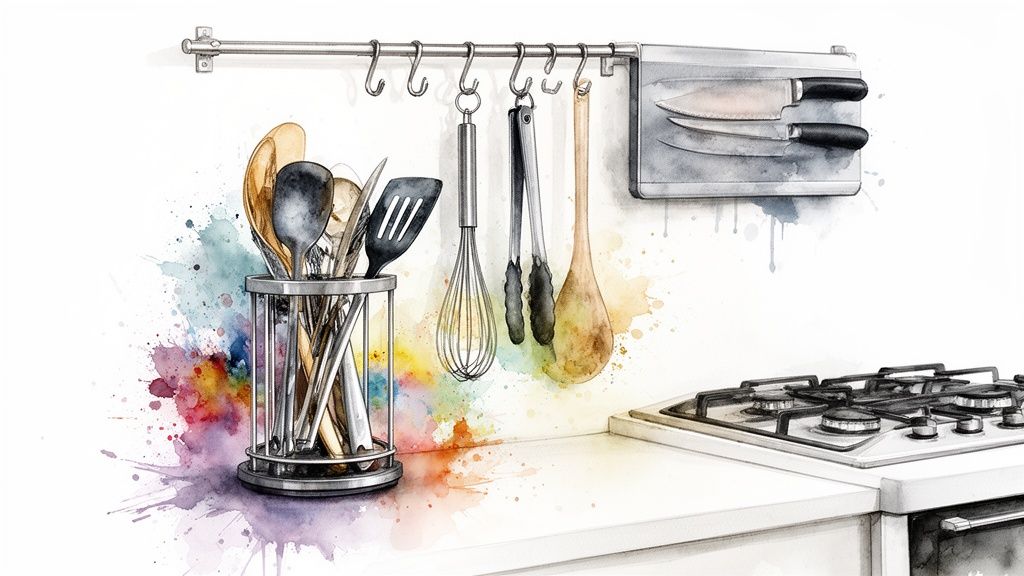
Why hide the tools you reach for every single day? While organized drawers are a must, some utensils just belong out in the open, ready for action. The right countertop and wall storage can keep your favorite tools at your fingertips without making your workspace feel chaotic.
Having a utensil holder right next to the stove is one of the simplest, most effective changes you can make. No more frantic drawer-digging for a spatula while your onions are about to burn. Everything you need is right there, making your whole cooking process feel more seamless and intuitive.
Embrace the Countertop Crock
The classic utensil crock is a kitchen staple for a reason—it just works. The trick is to pick one that's heavy enough so it won't topple over and has a wide opening so you aren't fighting to pull a ladle out. I like to keep my tallest, most-used tools here: wooden spoons, spatulas, and whisks.
A disorganized kitchen isn't just an eyesore; it's a genuine time-waster. Did you know a messy kitchen can cause you to spend 25% more time just looking for things during meal prep? That’s a frustration nobody needs.
This is where a rotating utensil holder becomes your best friend. Cooler Kitchen’s designs are sturdy and keep every tool visible with a quick spin, which immediately clears up countertop clutter and makes finding what you need that much faster.
Go Vertical to Maximize Space
If you're short on counter space—and let's be honest, who isn't?—the only way to go is up. Your walls are some of the most underused real estate in the kitchen, but they can become prime storage with a few smart additions. Vertical storage isn't just practical; it can look great, too.
Here are a few of my favorite ways to use wall space:
- Magnetic Knife Strips: These things are brilliant. They get that clunky knife block off your counter and free up an entire drawer. A simple magnetic strip keeps your knives safely organized and lets you see exactly which one you're grabbing.
- Wall-Mounted Rails: A metal rail with a few S-hooks is incredibly versatile. You can hang your measuring cups, whisks, and even small pots and pans. Everything stays off the counter but is still easy to reach.
- Stylish Pegboards: Pegboards aren't just for garages anymore. Modern versions look fantastic in a kitchen and give you a completely customizable way to hang tools, baskets, and even little shelves for your most-used spices.
For kitchens where every inch counts, going vertical is a non-negotiable. Explore smart wall storage solutions like wall shelves to really make the most of your space. Combining these ideas with other clever tools is always a winning strategy, and you can find more inspiration in our guide on space-saving kitchen gadgets.
By being thoughtful about your countertop and wall solutions, you can build a kitchen that’s not just organized, but also perfectly in tune with the way you cook.
Customizing Your System for Your Lifestyle
There’s simply no magic bullet for organizing kitchen utensils. A system that’s a dream in a huge suburban kitchen will be a complete nightmare in a tiny city apartment. The real secret to organization that actually sticks is to stop chasing some perfect, one-size-fits-all ideal and start building a system that fits the life you actually live.
A kitchen is a personal space. It's a reflection of how you cook, the size of your family, and even your personal values. When you tailor your approach to your own needs, you create a space that feels natural and helpful, not one you have to constantly battle.
Strategies for the Small-Space Kitchen
Living in a small space forces you to get creative. When drawer and counter space is at a premium, every single item has to earn its keep. The name of the game here is multi-functionality.
Start thinking about tools that can do more than one job. A good microplane, for instance, can take the place of a citrus zester, a cheese grater, and a garlic mincer. That’s three gadgets in one. This mindset should apply to your entire organization strategy.
A few space-saving hacks I've seen work wonders:
- Over-the-cabinet-door organizers are fantastic for stashing cutting boards or cookie sheets, freeing up that valuable cabinet real estate.
- Magnetic spice racks can stick right to the side of your fridge, getting all those little jars off your counter or out of a drawer.
- Nesting tools are a lifesaver. Look for sets of mixing bowls, measuring cups, and spoons designed to stack perfectly together.
In a small kitchen, every vertical surface is an opportunity. Wall-mounted magnetic strips for knives and utensil rails with S-hooks are non-negotiable for maximizing your area and keeping essentials within easy reach.
Organization for the Busy Family Hub
The family kitchen is a different beast entirely. It's less about a lack of space and more about managing the sheer volume of stuff and making the kitchen work for multiple people—including kids. The goal is to create clear, intuitive zones that everyone can understand and use.
Setting up a dedicated "kid zone" is a total game-changer. Stock a low, easy-to-reach drawer with their own durable plates, cups, and kid-safe utensils. This helps them feel independent, letting them set the table or grab a snack on their own. It teaches responsibility while keeping them safely away from sharp tools and breakable dishes.
Another great trick for families is to use color-coding. Products like Cooler Kitchen’s color-coded cutting boards do more than just look neat; they offer a simple, visual cue to teach the whole family about food safety and prevent cross-contamination between raw meats and veggies.
The Eco-Conscious and Sustainable Kitchen
If sustainability is a priority for you, organizing your kitchen can be a natural extension of that lifestyle. This approach is all about choosing durable, natural materials and setting up systems that help you minimize waste.
Bamboo is a superstar material for an eco-friendly kitchen. It's a rapidly renewable resource that also happens to be beautiful and incredibly tough. Swapping out flimsy plastic drawer dividers for adjustable bamboo ones is an easy and impactful upgrade.
Similarly, a well-chosen countertop caddy can make a big difference. The Cooler Kitchen Modern Slim Bamboo Utensil Holder is a perfect example—it keeps your go-to tools handy while being both a stylish and sustainable choice.
Integrating a countertop compost bin into your prep area is another key move. When it’s right there as you chop vegetables, collecting food scraps becomes second nature. You'll reduce landfill waste and create valuable compost, making sustainability a seamless part of your daily routine.
Utensil Organization Strategies by Kitchen Type
Every kitchen presents a unique organizational puzzle. The table below breaks down the common challenges for different kitchen types and suggests targeted strategies and products to solve them.
| Kitchen Type | Primary Challenge | Top Organization Strategy | Recommended Cooler Kitchen Product |
|---|---|---|---|
| Small Apartment | Limited drawer and counter space | Maximize vertical space; use multi-functional tools. | Magnetic Knife Bar |
| Busy Family | High volume of items; needs to be kid-friendly. | Create designated zones; use visual cues like color-coding. | Color-Coded Cutting Board Set |
| Eco-Conscious | Minimizing waste and plastic use. | Prioritize durable, renewable materials like bamboo. | Bamboo Utensil Holder |
| Gourmet Cook | Large collection of specialized tools. | Categorize by function; use deep drawer dividers. | EZ-Peel Garlic Peeler (to keep gadgets tidy) |
Ultimately, the best approach is one that feels intuitive to you. Use these ideas as a starting point to build a system that supports your unique cooking style and daily life.
Keeping Your Kitchen Organized for Good
So, you've conquered the clutter and your kitchen utensils are finally organized. That’s a huge win! But let's be honest, the real challenge is keeping it that way. The secret isn't scheduling another massive cleaning spree next month; it’s about weaving small, almost effortless habits into your daily life.
One of the simplest yet most effective rules I’ve ever come across is the "one-in, one-out" policy. It’s exactly what it sounds like: every time a new utensil comes into your home, an old one has to go. This single habit stops that slow, sneaky buildup of clutter and makes you think twice before making an impulse buy. Is that fancy new avocado slicer really worth giving up space for?
The Power of a Quick Reset
Life gets busy, and things will inevitably get a little out of place. That's why a quick seasonal reset can be a game-changer. I’m not talking about a deep clean. Just set a timer for 15 minutes once every few months and do a quick sweep of your utensil drawers and countertop holders.
This isn't about overhauling your system, it's about course-correcting.
- Find the spatula that somehow ended up with the forks and put it back home.
- Give the inside of your utensil crock a quick wipe-down.
- Be honest about that one gadget you haven't touched all season. Maybe it's time for it to go?
Think of it as preventative maintenance for your kitchen's sanity. It's a tiny investment of time that keeps your system working smoothly and stops small messes from turning into big projects.
Maintaining an organized kitchen isn’t a one-and-done project. It's about building small, repeatable habits that become second nature, preventing the chaos from ever creeping back in.
If you're not sure where to start with your kitchen's upkeep, this decision tree can point you in the right direction based on your lifestyle.
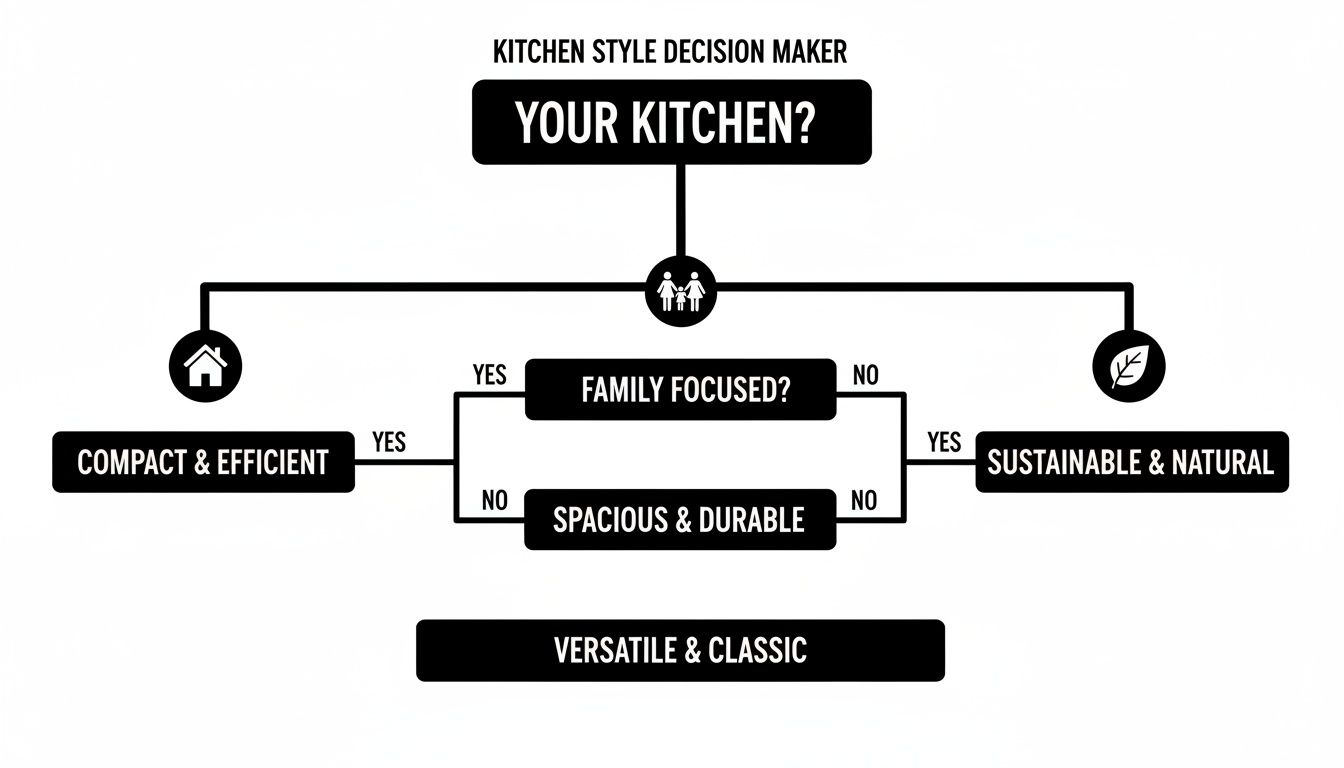
This handy visual helps you figure out if your priority should be saving space, creating a family-friendly system, or focusing on sustainable practices.
Caring for Your Tools
Staying organized is also about taking good care of the tools you decided to keep. When you properly maintain your utensils, they last longer, and you naturally feel more invested in keeping them tidy.
For example, taking a minute to rub a food-safe mineral oil on your wooden spoons keeps them from drying out and cracking. A quick buff of your stainless steel tools after washing prevents annoying water spots. It's these small acts of care that reinforce the value of your system, making you more likely to put things back where they belong and ensuring your kitchen stays a functional, enjoyable space.
Got Questions About Organizing Utensils? We’ve Got Answers.
Even after you've decluttered and sorted, a few tricky questions always seem to pop up. That’s totally normal. Fine-tuning your system is the last piece of the puzzle, so let's tackle some of the most common hurdles people face when trying to get their kitchen tools in order.
What Do I Do with Big, Awkward Utensils?
This is a big one. What are you supposed to do with those bulky tools that just don't play nice with standard drawer dividers? I'm talking about potato mashers, immersion blenders, and those extra-long serving ladles.
The trick is to stop forcing them into a drawer where they clearly don't belong. Think vertically instead. A sturdy, deep crock on your countertop can be the perfect home for that potato masher. Your immersion blender? It's probably better off in a cabinet with its other small appliance friends.
How Many Spatulas Do I Really Need?
Then there's the issue of duplicates. We've all been there—you open a drawer and find four nearly identical spatulas staring back at you. Do you need them all?
Honestly, probably not. Most of us can get by with just two or three top-notch spatulas: a flexible silicone one for scraping bowls, a sturdy fish spatula (great for more than just fish!), and maybe an offset one if you do a lot of baking.
Get real with yourself about which ones you reach for every week and let the rest go. This single act of reducing redundancy is one of the fastest ways to free up space and make your kitchen feel instantly less chaotic.
Where Do I Put All My Specialty Gadgets?
And what about those single-use tools? The apple corer, the cherry pitter, the spiralizer you swore you'd use every day. They're handy when you need them, but they’re also notorious clutter culprits.
The best strategy here is to round them all up and give them their own dedicated home, far away from your prime cooking real estate.
This could look like:
- A designated "gadget drawer" in a less-used part of the kitchen.
- A clear, labeled bin tucked away on a high cabinet shelf.
- A specific spot on a pantry shelf.
By corralling them together, you keep them from taking over the drawers you use daily. It also gives you a clear picture of what you own. When you see them all in one place, you’ll quickly realize which ones haven't seen the light of day in years, making your next decluttering session a whole lot easier.
Ready to create a kitchen that's as beautiful as it is functional? Cooler Kitchen offers thoughtfully designed organization solutions, from sturdy utensil holders to space-saving cutting board sets, that bring calm and efficiency to your daily routine. Explore the full collection and start building a kitchen you love.