

How to Season Bamboo Cutting Board: how to season bamboo cutting board quickly
If you want your bamboo cutting board to last, seasoning it is the single most important thing you can do. It's a simple process of applying a food-safe oil that soaks into the bamboo fibers. This creates a protective barrier that prevents cracks, repels moisture, and keeps the surface more hygienic.
Honestly, this one step is the difference between a board that splits in a year and one that becomes a trusted kitchen workhorse for a decade or more.
Why Seasoning Your Bamboo Cutting Board Is a Must
When you get a brand-new bamboo cutting board, it's tempting to just rinse it off and start chopping. But hold on. While bamboo is incredibly tough, it's still a natural, porous material. Just like wood, it's thirsty and can dry out over time, especially with all the washing. That's where seasoning comes in.
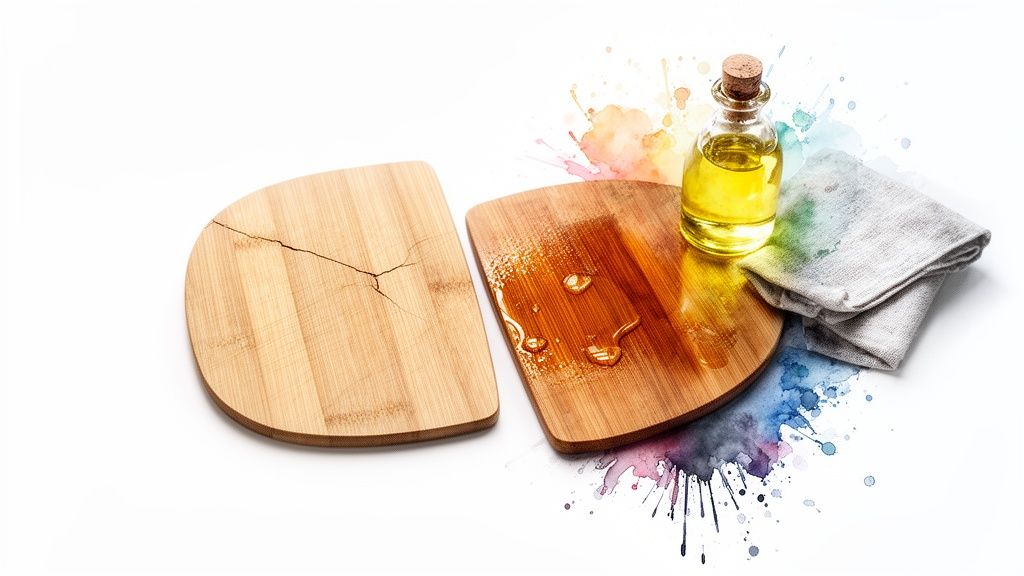
Learning how to season a bamboo cutting board is basically like creating an invisible shield for it. This quick oiling routine does a few critical things to protect your investment and make your food prep better and safer.
The Real-World Benefits of Seasoning
Getting into the habit of seasoning your board gives you immediate and long-term perks that are about much more than just good looks. It’s the cornerstone of taking care of your kitchen gear.
-
It Stops Drying and Cracking: The number one killer of a bamboo board? Dryness. Regular oiling deeply hydrates the bamboo, keeping the fibers flexible so they don't get brittle and split.
-
It Creates a Water-Resistant Barrier: A well-seasoned board makes water bead up and roll off instead of soaking in. This is huge because it prevents the board from swelling and shrinking after every wash—the main reason boards warp.
-
It Boosts Hygiene and Safety: The oil fills in the bamboo's tiny pores, making it way harder for meat juices, bacteria, and funky smells to sink in. You’re left with a much safer, less porous surface to work on.
-
It Improves the Look and Lifespan: Oiling really brings out the rich, natural grain of the bamboo, giving it a beautiful, healthy sheen. This small ritual is truly the key to getting years of reliable use out of your board.
Taking just five minutes to oil your board once a month is one of the easiest ways to protect your kitchen tools. It ensures a quality product, like a Cooler Kitchen bamboo board with color-coded mats, performs beautifully for years to come. That small effort pays off big time in durability and food safety.
Choosing the Right Oil for a Food-Safe Finish
When it comes to seasoning your bamboo cutting board, not all oils are created equal. You might be tempted to just grab whatever cooking oil you have in the pantry, but that’s one of the most common mistakes people make. Using the wrong oil can leave you with a sticky, smelly board that's a magnet for bacteria.
The goal is simple: you need an oil that will sink in, protect the bamboo, and never, ever go bad.
Your Best Bet: Mineral Oil and Waxes
By far, the best choice for seasoning is food-grade mineral oil. It's completely inert, non-toxic, and will never spoil or go rancid. It soaks deep into the dense bamboo fibers, hydrating them from the inside out and creating a fantastic barrier against moisture and food juices.
While pure mineral oil works great on its own, you can get even better protection with a board conditioner. These products typically blend mineral oil with natural waxes, giving you the best of both worlds.
-
Beeswax Blends: The wax in these conditioners creates a more robust, water-repellent surface. Think of the mineral oil as the deep conditioner and the beeswax as the protective topcoat.
-
Fractionated Coconut Oil: If you're looking for a good plant-based option, this is it. It’s been processed so it won't go rancid like regular coconut oil and stays liquid at room temperature, making it easy to apply.
This isn't just a suggestion—it’s crucial for the life of your board. Did you know that proper seasoning can extend a bamboo cutting board's lifespan by up to 50%? A large survey actually found that 68% of home cooks who regularly oiled their boards saw them last over five years without cracking. That's a huge jump from the typical two-to-three-year lifespan of a board that’s been neglected.
Oils to Strictly Avoid
Now for the most important rule: avoid all standard cooking oils. I’m talking about olive oil, vegetable oil, canola oil, sunflower oil, and even regular coconut oil. These are all organic, non-drying oils, which means they will eventually oxidize and spoil.
When cooking oils go bad, it's a process called rancidification. It doesn't just create a sour, unpleasant smell—it leaves a sticky, gummy residue on your board that traps bacteria and can make your food taste off.
To help you remember, I've put together a quick cheat sheet.
A Quick Guide to Cutting Board Oils
Use this quick reference to see which oils will protect your bamboo board and which will cause damage over time.
| Oil Type | Recommendation | The Reason Why |
|---|---|---|
| Food-Grade Mineral Oil | Highly Recommended | Inert and non-toxic; it never goes rancid and penetrates deeply. |
| Beeswax/Wax Blends | Highly Recommended | Adds a protective, water-repellent top layer over the mineral oil. |
| Fractionated Coconut Oil | Recommended | A good plant-based alternative that has been processed to prevent rancidity. |
| Olive, Vegetable, Canola Oil | Avoid at All Costs | These are cooking oils that will go rancid, creating a sticky, smelly surface. |
| Regular Coconut Oil | Avoid | Unlike its fractionated cousin, it will eventually go rancid and spoil. |
Ultimately, choosing the right oil is the key to a hygienic and long-lasting board. You can learn more about why olive oil is not recommended for wood board seasoning and why sticking to a stable, non-rancidifying oil is the only way to go.
The Complete Bamboo Board Seasoning Process
Alright, you've got your oil picked out, and now it's time for the fun part. Think of seasoning your bamboo cutting board less like a chore and more like a simple kitchen ritual. It’s all about patience and a little bit of technique to make sure that oil gets deep into the wood for the best possible protection.
First thing's first: your board needs to be perfectly clean and, even more importantly, completely dry. If you just washed it, give it at least 24 hours to air dry. A great trick is to stand it up on its edge so air can circulate all around it. Never apply oil to a damp board—it traps moisture inside, which is a surefire recipe for warping or even mold. That's a mistake you don't want to make.
Applying the Oil
When your board is bone dry, grab a clean, soft cloth (lint-free is best) and your food-grade mineral oil. Pour a good amount of oil right onto the surface of the board. Don't be stingy here; that thirsty bamboo is going to drink it right up.
With your cloth, start working the oil into the bamboo using gentle, circular motions. Go over the entire top surface, making sure you get even coverage. Don't forget to hit every single part of the board—the sides, the bottom, and any little juice grooves or handles. These often-missed spots are just as prone to drying out and cracking.
This flowchart really breaks down the most important decision you'll make: which oil to use.
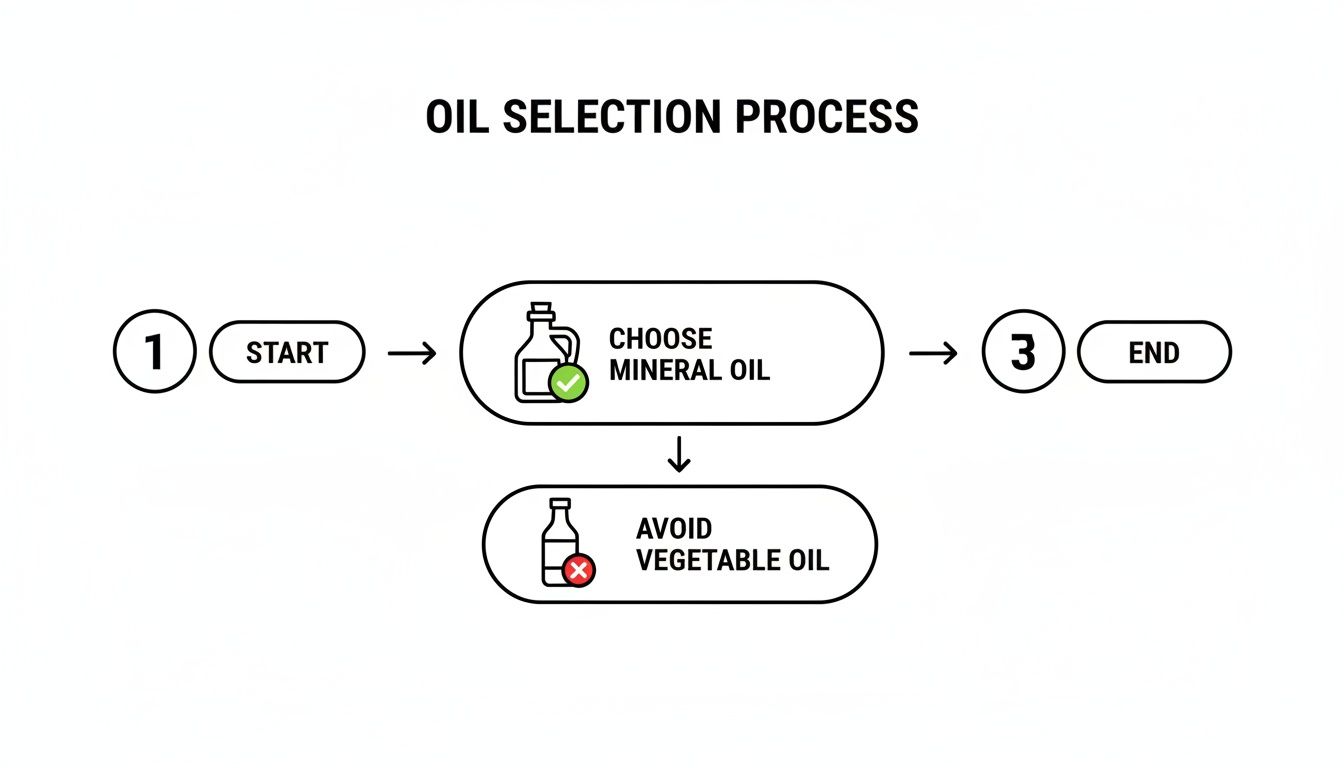
As you can see, sticking with food-grade mineral oil is the way to go for protecting your board, whereas everyday cooking oils will just lead to headaches down the road.
Patience is a Virtue (Especially Here)
Now for the most critical step of all: waiting. Once you've coated the entire board, prop it up against your backsplash or set it on a wire rack and just let it be. You'll want it to sit for at least 6-8 hours, but leaving it overnight is even better. This long wait gives the oil time to really soak deep into the dense bamboo fibers, hydrating them from the inside out. If you rush this part, you'll only get a shallow treatment that won’t last.
The idea of conditioning a surface to make it last is a common theme in the kitchen. For example, the techniques for seasoning cast iron cookware are built on the same core principle as prepping your bamboo board—it’s all about creating a protective, non-stick layer with the right oil and a bit of patience.
After the long wait, grab a fresh, dry cloth and wipe away any excess oil that hasn't been absorbed. Buff the surface until it feels smooth and dry to the touch, not greasy or tacky. And that’s it! Your board is now beautifully seasoned, protected, and ready for whatever you throw at it. To keep your Cooler Kitchen bamboo cutting board looking its best, just repeat this process whenever it starts to look a little dry or thirsty.
How Often Should You Season Your Board?
Seasoning your bamboo cutting board isn't a one-and-done deal. Think of it more like a simple monthly habit that keeps one of your most-used kitchen tools in prime shape. A little bit of consistent care goes a long way, preventing problems like cracking and warping before they can even start.The real trick is learning to see when your board is getting thirsty. Every time you wash it, you're slowly removing some of that protective oil you worked so hard to apply. Luckily, the board gives you some pretty clear signals when it's ready for another drink.
How to Tell When It's Time to Re-Oil
There are two dead giveaways that your board needs a fresh coat of oil.
-
The Look Test: A well-seasoned board has a nice, healthy luster. If you notice your bamboo starting to look dull, dry, or even a little chalky, that's its way of telling you the protective finish is wearing thin.
-
The Water Drop Test: This is my go-to method because it’s foolproof. Just sprinkle a few drops of water on the surface. If the water beads up into tight little domes, you're golden. But if it spreads out or, worse, soaks right in and leaves a dark spot, the bamboo is unprotected and begging for oil.
As a rule of thumb, plan on re-oiling your bamboo cutting board about once a month. For most home cooks, this quick routine is all it takes to keep the bamboo hydrated and resilient against daily use.
Now, that's not a hard and fast rule. If you're using and washing your board every single day, you might find it needs a refresh every two to three weeks. On the other hand, if it only comes out for special occasions, it might stay looking great for a couple of months.
Just pay attention to what the board is telling you. Those visual and water-based cues are your best guide. Taking this proactive approach is the secret to longevity, especially if you've invested in a great set like the Cooler Kitchen board with flexible mats, as proper care keeps it hygienic and beautiful.
Troubleshooting Common Cutting Board Problems
Even a perfectly seasoned and well-maintained bamboo cutting board is going to run into some issues. Life in the kitchen gets messy, but don't worry—most of the common problems are surprisingly easy to fix. With a little know-how, you can get your board looking and feeling brand new again.
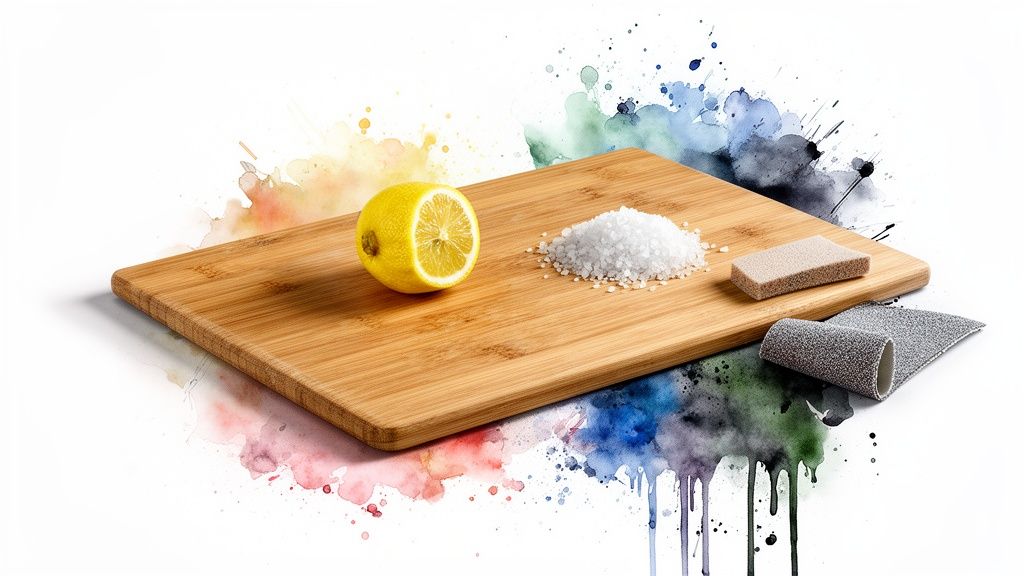
So, don't panic if you notice a new stain or feel a weird sticky spot. Those are just signs of a well-loved kitchen tool. A few simple tricks will get it back in action in no time.
Fixing a Sticky or Tacky Finish
If your board feels sticky, it's almost always a sign of one of two things: you've used a bit too much oil, or you used the wrong kind of oil and it's gone rancid. The fix is to strip that old layer off and start fresh.
Start by giving the board a really good scrub with hot water and a strong, grease-cutting dish soap. If that doesn't do the trick, make a paste from baking soda and water. Work that paste into the board, let it sit for a few minutes, and then rinse it clean.
The most important part? Let the board dry completely for 24-48 hours. Once it's bone-dry, you can re-season it with a fresh coat of mineral oil.
Dealing with Stubborn Odors and Stains
Strong foods like garlic, onions, or even fish can leave their scents behind. Likewise, colorful foods like beets or berries can leave stubborn stains. The classic, all-natural solution here is a simple lemon and salt scrub.
Pour a generous layer of coarse salt all over the board. Cut a lemon in half and use it like a scrubber, working the salt into the bamboo and squeezing the juice as you go. Let that sit for about 10-15 minutes, then scrape the mixture off and give the board a good rinse.
It's a fantastic trick. The salt acts as a gentle abrasive to lift out stains, while the acid in the lemon juice works wonders to neutralize those pesky odors.
This kind of care also reinforces your board’s natural defenses. A well-seasoned bamboo board has incredible antibacterial properties, which can reduce surface bacteria by 99.9% after just a simple vinegar wipe and re-oiling. By sealing the pores, the oil creates a barrier against germs like E. coli, making it a much safer surface than untreated wood. You can learn more by checking out the MasterChef.com guide on bamboo's benefits.
Got Questions? Let's Talk Board Care
Even with the best instructions, a few questions always seem to come up. Getting these sorted will help you master your board care routine and keep your bamboo cutting board looking and performing its best for years.
How Do I Know When It’s Time to Re-Season My Board?
This is the most common question I get, and luckily, there's a simple trick.
Just use the water test. Splash a few drops of water on the surface. If it beads up like rain on a freshly waxed car, you're golden—the oil barrier is holding strong. But if the water starts to spread out, or worse, soaks in and leaves a dark patch, your board is telling you it's thirsty.
You can also just go by looks. A board that's starting to look a bit pale, chalky, or dry is crying out for another coat of oil.
Can I Just Toss My Bamboo Board in the Dishwasher?
Please don't. I can't stress this enough: putting a bamboo cutting board in the dishwasher is the fastest way to ruin it. The intense heat, harsh detergents, and long water exposure will strip away its protective oils, causing the bamboo to warp, crack, and split before you know it.
A dishwasher is basically a torture chamber for bamboo. The only way to clean it is by hand with a little mild soap and warm water, then letting it air dry standing on its edge.
Is Seasoning Bamboo Any Different From Seasoning Wood?
Not really. The steps, the oils, the whole process—it's all the same. The main difference is in the material itself. Bamboo is technically a grass, and its fibers are packed more densely than most hardwoods. This just means it might not soak up quite as much oil as, say, a maple board would.
But at the end of the day, it's still a porous material. It needs that protective seal just like any wood board to keep moisture out and prevent it from drying out. The fundamental goal is identical: seal the fibers.
Help! I Used Vegetable Oil and Now My Board Is Sticky.
Ah, a classic mistake. Don't panic, it's usually fixable. First, you'll need to strip off that sticky, rancid oil. Give the board a really good scrub with hot water and a strong dish soap designed to cut through grease. If it's being stubborn, a paste made from baking soda and water can work wonders for lifting that tacky residue.
Rinse it off completely, then stand it up to air dry. And I mean completely dry—this could take a day or two. Once it's bone-dry to the touch, you can start fresh with the proper seasoning process using a good food-grade mineral oil.
Keep your kitchen tools in prime condition with Cooler Kitchen. Our thoughtfully designed essentials, like our easy-to-clean bamboo cutting boards, are made for the modern home cook. Explore our full collection today.