

How to Store Cut Ginger Root to Keep It Perfectly Fresh
Ever used a small piece of ginger only to watch the rest turn into a shriveled, sad knob in your fridge? The simplest way to keep cut ginger fresh is to wrap it loosely in a paper towel, pop it in a zip-top bag, and stash it in your crisper drawer. This basic trick keeps it firm and flavorful for weeks.
The Secret to Keeping Cut Ginger Fresh for Weeks
We've all been there. You buy a beautiful, plump hand of ginger for one recipe, use a tiny piece, and then the rest gets lost in the back of the refrigerator. When you finally find it, it’s either dry and woody or soft and moldy. It’s a frustrating cycle of waste that makes using fresh ginger feel like a hassle.
But knowing how to store cut ginger root properly is a total game-changer. It’s not just about extending its life; it’s about preserving that potent, spicy flavor and the aromatic oils that make ginger so special. The goal is to create a stable environment that balances humidity—just enough to prevent it from drying out, but not so much that it encourages mold.
Choosing Your Storage Timeline
The right storage method really comes down to when you plan on using your ginger next. Are you making another stir-fry this week, or do you want it on hand for the next few months? This simple chart can help you decide.
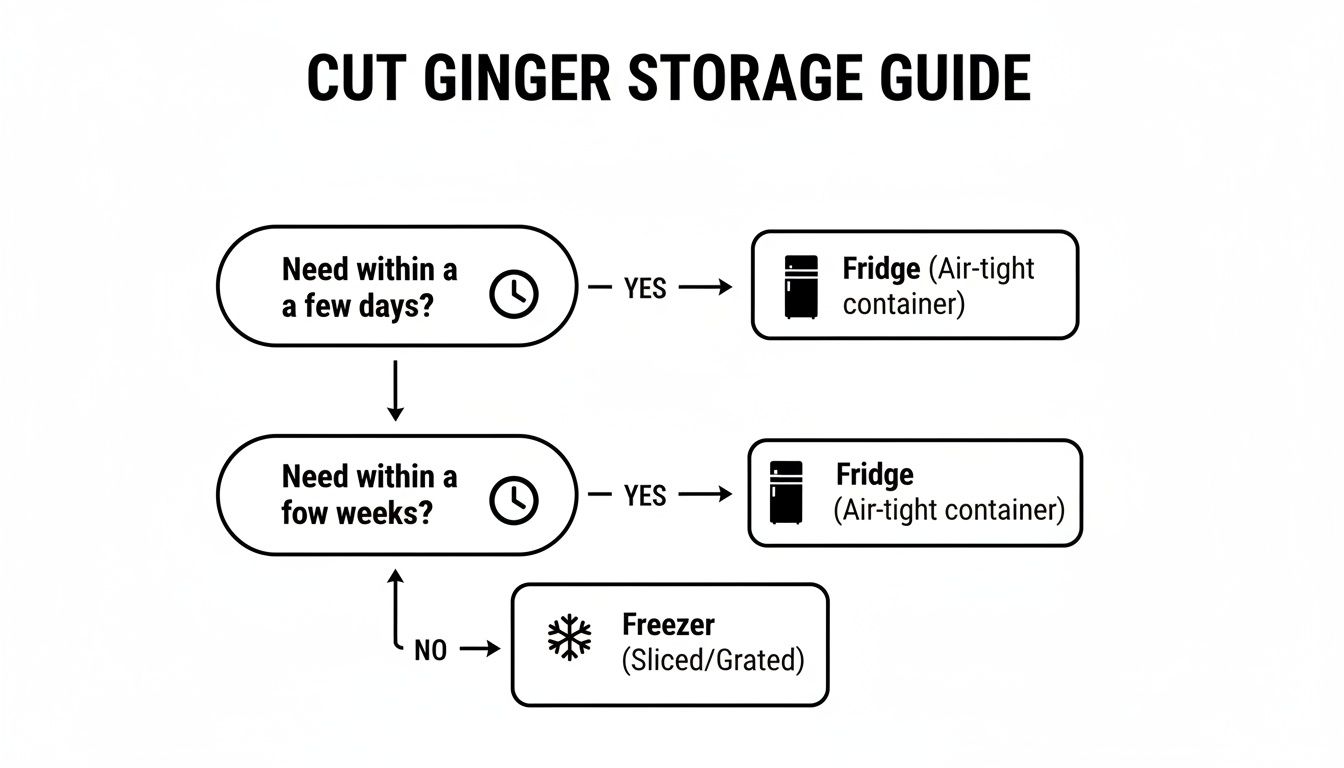
As you can see, the choice is pretty straightforward. The refrigerator is your go-to for short-term needs, while the freezer is your best friend for anything longer. Storing cut ginger root correctly in the fridge keeps key compounds like gingerol stable for weeks. The ideal conditions are 13-15°C with high humidity, which you can mimic at home with that damp paper towel and a sealed bag trick.
This simple step can easily extend its usability by two to three times compared to just leaving it out on the counter. Proper storage is crucial, as post-harvest ginger losses can reach as high as 25% due to spoilage—a figure we can easily reduce in our own kitchens. If you're interested in the science behind it, the National Center for Biotechnology Information has some great research on ginger preservation.
Key Takeaway: Don't let your ginger go to waste. With minimal effort, you can have fresh, zesty ginger ready for teas, soups, and stir-fries whenever you need it.
To make it even easier to choose, here's a quick breakdown of the most common storage methods.
Comparing Ginger Storage Methods
| Storage Method | Best For | Lasts For | Effort Level |
|---|---|---|---|
| Refrigeration (Bag) | Daily or weekly use | 2-3 weeks | Low |
| Freezing (Whole/Pieces) | Long-term, easy grating | 4-6 months | Low |
| Freezing (Minced/Pureed) | Quick-use in soups/sauces | 3-4 months | Medium |
| Preserving in Alcohol | Cocktails, infusions, baking | Up to 1 year | Medium |
Each method has its place, and choosing the right one ensures you always get the most flavor and a good shelf life from your ginger.
Mastering Refrigerator Storage for Daily Use
If you’re like me and reach for ginger almost daily, the refrigerator is your best friend. For ginger you plan on using within a few weeks, proper fridge storage keeps it firm, spicy, and ready to go.
The whole game here is managing humidity. If you just toss a cut piece of ginger in the crisper drawer, it will shrivel up surprisingly fast. But if it’s too wet, it gets slimy and can even start to mold. The goal is to find that perfect balance.
Understanding how to keep produce fresh is all about temperature control. If you're curious about the science behind it, learning the principles of cold chain management is fascinating—it's the same concept that keeps food fresh from the farm all the way to your kitchen.
Simple Fridge Storage Techniques
Over the years, I've found a couple of foolproof methods for keeping cut ginger in top shape right in my fridge.
- The Paper Towel Trick: This is my go-to. Just wrap the cut ginger in a paper towel, then pop it into a zip-top bag. Squeeze out most of the air before you seal it. The towel wicks away any extra moisture that could cause sliminess, while the bag keeps it from drying out.
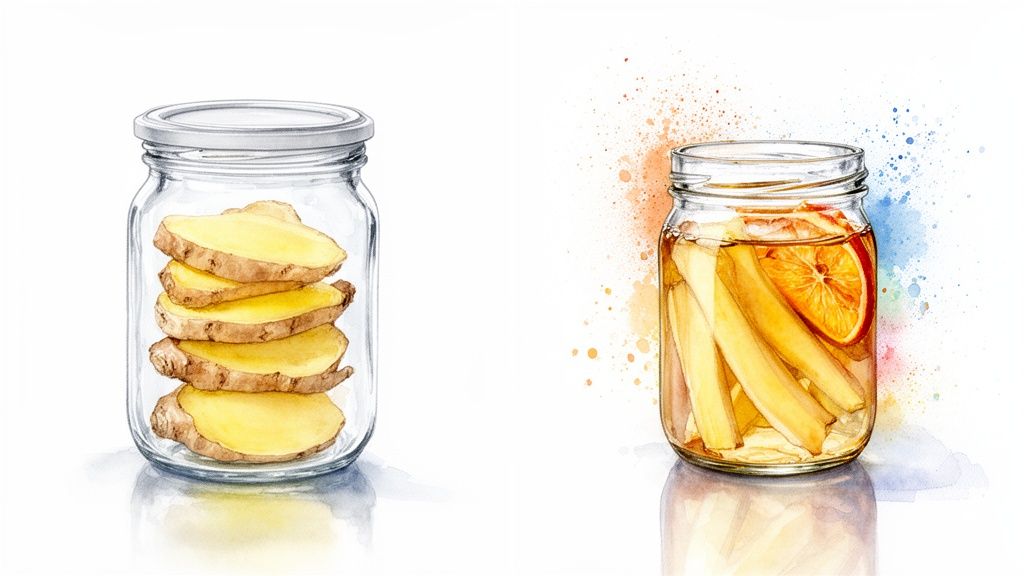
- The Airtight Container Method: If you like to prep ahead, this one’s for you. Place your sliced, minced, or grated ginger directly into a small airtight container. It’s perfect for keeping your ginger ready for quick additions to stir-fries or tea throughout the week.
Think about your Sunday meal prep. You’ve just sliced up a bunch of ginger on your favorite flexible cutting board mats and you stash it in a small glass container. Come Friday, that ginger will be just as potent and aromatic for your curry as it was the day you cut it. Both of these techniques essentially create a tiny, humid micro-environment that stops the ginger from drying out.
The difference is actually pretty dramatic. Research shows that cut ginger can lose 10-15% of its weight in just 10 days if left at room temperature. But simply storing it in an airtight jar to maintain humidity can more than double its shelf life compared to leaving it on the counter.
A Lesser-Known Preservation Trick
Want to try something a little different? You can preserve peeled ginger by submerging it in an acidic liquid or alcohol. It sounds odd, but it works wonders.
Put your peeled ginger pieces—either in coins or sticks—into a clean jar. Then, cover them completely with sherry, rice vinegar, or even vodka. This not only keeps the ginger fresh for months but also leaves you with an incredibly flavorful infused liquid. I love using the ginger-infused vinegar in salad dressings and the vodka in a Moscow Mule
Your Guide to Freezing Ginger for Long-Term Flavor
If you want to keep ginger fresh for the long haul, your freezer is your best friend. Freezing is the absolute best way to lock in that spicy, pungent flavor for months, meaning you'll always have some on hand without it shriveling up in the back of your fridge. It’s a classic "prep once, use often" strategy that saves money and cuts down on food waste.
The great thing about freezing ginger is that you have options. You don't have to commit to just one method; you can pick whatever works best for how you cook. Each approach keeps your ginger potent and ready to go whenever you need it.
Practical Ways to Freeze Ginger
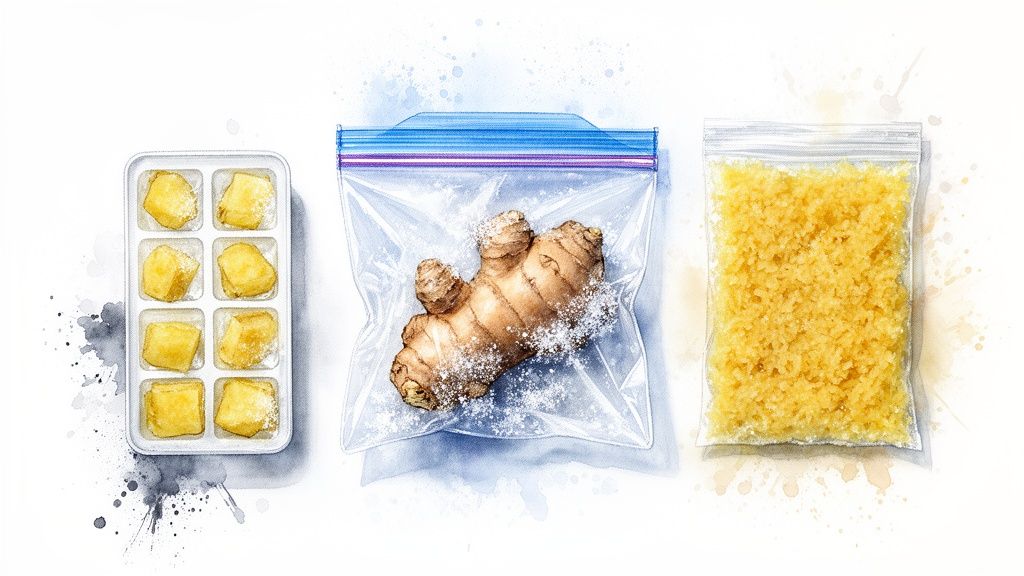
Here are a few of the most popular and effective ways I've found to freeze ginger, ranging from whole pieces to perfectly portioned bits.
- Whole Unpeeled Knobs: This is as easy as it gets. Just toss the entire unpeeled piece of ginger into a freezer-safe bag, squeeze out as much air as you can, and you're done. The peel does a fantastic job of protecting the flesh from freezer burn.
- Minced Ginger Cubes: For pure convenience, this is the way to go. Peel and mince or grate your ginger, then pack it tightly into an ice cube tray. You can add a splash of water to help it bind, but it’s often not necessary. Once the cubes are solid, pop them out and store them in a labeled freezer bag.
- Grated Ginger "Bark": My go-to method for bulk prep. I peel and grate a big batch of ginger, spread it in a thin, even layer inside a freezer bag, and seal it flat. This creates a "bark" that lets you easily snap off whatever amount you need, no knife required.
Here's my favorite pro-tip: I often grate the frozen, unpeeled knob directly into whatever I'm cooking. You don't need to thaw it, and the frozen root is surprisingly easy to grate, creating a fine, almost fluffy texture that disappears beautifully into sauces and stir-fries. It's a huge time-saver.
Thawing and Using Frozen Ginger
Honestly, for most hot dishes, you can skip the thawing step entirely. Just toss a pre-portioned cube into a hot pan with some oil or drop it straight into a simmering soup. The heat from the dish does all the work for you.
If you need a smooth paste for something like a salad dressing or a marinade, a frozen portion works great. A good mortar and pestle can turn a frozen cube into a perfect paste in just a few seconds.
When stored properly in the freezer, your ginger will keep its zesty kick for up to six months.
Creative Ways to Preserve Ginger Beyond the Cold
While the fridge and freezer are your go-to for daily use, sometimes you want to do more than just store your ginger—you want to transform it. Moving beyond simple cold storage opens up a whole world of flavor, turning that humble root into a gourmet ingredient you can grab from the pantry.
Think of these methods less as storage and more as fun kitchen projects. They're a fantastic way to preserve a big haul of ginger and create something new and exciting in the process.
Make Your Pantry a Flavor Powerhouse
Infusing liquids with ginger is probably one of the easiest and most rewarding ways to keep it around. Not only does this save the ginger from going bad, but you also end up with a brand-new, flavor-packed ingredient for your cooking adventures.
-
Pickled Ginger: If you love sushi, this is a must-try. Slice peeled ginger super thin (a mandoline is great for this), pack the slices into a jar, and pour over a hot mixture of rice vinegar, a little sugar, and a pinch of salt. It’s ready to enjoy in about a day and will keep for months in the fridge, ready to add a tangy kick to salads and rice bowls.
-
Ginger-Infused Vinegar: This is an even simpler take on pickling. Just drop a few slices of peeled ginger into a bottle of apple cider or white wine vinegar. Let it sit for about a week, and you’ve got a zesty base for incredible homemade salad dressings.
-
Ginger Syrup: This stuff is liquid gold for cocktails, homemade sodas, or drizzling over a bowl of ice cream. Gently simmer equal parts sugar and water with several big slices of ginger. Once the sugar has completely dissolved and the liquid has thickened just a bit, strain out the ginger. This syrup will last for up to a month in the fridge.
I always have a jar of ginger syrup on hand. A splash in some sparkling water makes an instant, incredible ginger ale that blows the store-bought stuff away. It's a simple little trick that always wows people.
These aren't just practical ways to store cut ginger root; they're creative ones. You're actively reducing food waste by giving leftover ginger a delicious new life. Instead of watching that knob of ginger slowly shrivel up, you can turn it into something special that adds your own personal touch to meals and drinks.
Common Ginger Storage Mistakes You Might Be Making
We’ve all been there. You buy a beautiful piece of ginger, use a small knob, and then find it shriveled or slimy in the fridge a week later. Even with the best intentions, a few common slip-ups can seriously cut down your ginger's lifespan.
One of the biggest mistakes I see is tossing a cut piece of ginger directly into a plastic bag and sealing it shut. This seems like a good idea, but it actually traps moisture right against the cut surface. You're essentially creating a mini-greenhouse perfect for mold and that dreaded slimy texture to grow.
On the flip side, leaving cut ginger out on the counter or loose in the crisper drawer is just as bad. The constant air exposure will suck the moisture right out of it, leaving you with a dry, fibrous, and flavorless stump.
Key Takeaway: The enemy of fresh ginger is either too much direct moisture or too much air. Finding the right balance with a paper towel and a sealed container is crucial for long-term freshness.
How to Tell When Ginger Is Past Its Prime
Knowing when your ginger has gone bad can save you from ruining a perfectly good dish. Fresh ginger should feel heavy for its size and be very firm. If you notice any of these signs, it's time to toss it:
- Soft or Mushy Spots: If you can press into the ginger and it feels soft or spongy, it's starting to break down.
- Slimy Texture: Any slick or slimy feeling on the skin or cut flesh is a clear sign of spoilage.
- Dark Discoloration: While the cut end will naturally darken a bit, any widespread dark or grey spots on the flesh mean it's no good.
These same principles of checking for freshness apply to other kitchen staples, too. For example, similar signs of spoilage can be found in our guide on how to properly store garlic.
Common Questions About Storing Ginger
Even when you think you've got it down, a few questions always pop up about keeping ginger fresh. Let's tackle some of the most common ones so you can store your ginger with confidence.
Should I Peel Ginger Before I Store It?
This really comes down to how and when you plan to use it. If you're just popping a chunk in the fridge for a few days or freezing a larger piece, definitely leave the skin on. It’s nature’s own protective wrapper, helping to keep the flesh inside from drying out and locking in all that amazing flavor.
On the other hand, if you're all about convenience and want to grate or mince it ahead of time, peeling it first is the way to go. That way, it’s completely ready to be tossed into a stir-fry or steeped for tea the moment you need it.
Is It Okay to Use Ginger That Has Sprouted?
Absolutely. Seeing a little green sprout just means the ginger is still alive and kicking! It's not a sign of spoilage at all, though it is a little hint that the root is getting older.
Simply snap off the sprout and use the rest of the ginger root just as you normally would. Think of it as a friendly reminder to use it up soon before it starts to lose its firm, crisp texture.
A common misconception is that sprouted ginger is bad, but it's perfectly safe. Think of it like a potato sprout—just remove it and carry on with your recipe.
While this guide focuses on common ginger, you might also be interested in learning about other varieties and their care, such as this helpful guide on Myoga Ginger: A New Zealand Gardener's Guide.
How Can I Tell if My Stored Ginger Has Gone Bad?
Trust your senses—they're your best tool here. Fresh ginger should always feel firm to the touch with smooth, tight skin. If you grab your ginger and it feels soft, mushy, or has a slimy coating, it's time to toss it.
Other dead giveaways are any signs of mold (even a small spot), dark or discolored flesh under the skin, or a sour, unpleasant smell. When in doubt, throw it out.
At Cooler Kitchen, we believe in making every part of cooking easier, from prep to storage. Our thoughtfully designed kitchenware, like our airtight containers and flexible cutting board sets, helps you keep ingredients fresh and your kitchen organized. Explore our collections today and find the perfect tools to minimize waste and maximize flavor. Find your next kitchen favorite at https://www.coolerkitchen.com.