

Substitute dried herbs for fresh: Easy Ratios and Tips
It happens to every home cook: you're halfway through a recipe and realize you don't have the fresh basil it calls for. Don't panic. Your spice rack is your best friend here, and knowing how to swap in dried herbs is a game-changer.
The rule of thumb is simple and surprisingly reliable: use one-third the amount of dried herbs for the fresh amount listed. So, if your recipe needs 1 tablespoon of fresh oregano, you'll want to use just 1 teaspoon of dried oregano.
The Magic Behind the 3-to-1 Ratio
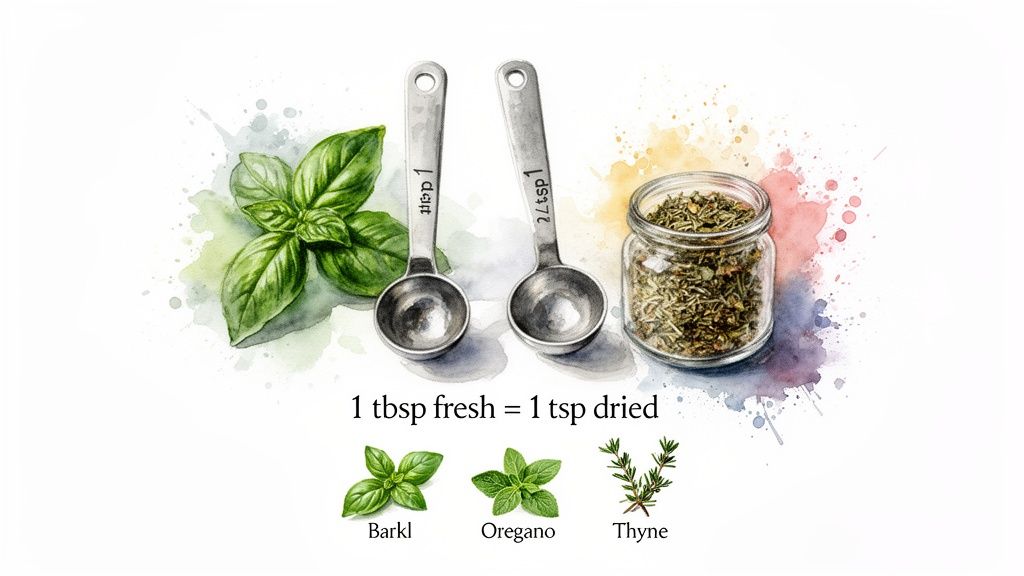
So why does this work? Fresh herbs are full of water. When they're dried, all that moisture evaporates, leaving behind highly concentrated essential oils where all the flavor lives. This makes dried herbs far more potent, so a little goes a very long way.
This isn't just a kitchen hack; it's a reflection of how modern cooking works. The global dried herbs market is currently valued at an impressive USD 3.1 billion and is expected to grow significantly. This trend, detailed by industry analysts, shows just how many kitchens rely on these pantry powerhouses.
My Two Cents: Think of dried herbs as a flavor concentrate. Using too much can quickly overpower a dish and sometimes even add a bitter taste. The 3-to-1 ratio is your best starting point to avoid that.
This trusty conversion works beautifully for most leafy herbs you'll encounter, including:
- Oregano
- Basil
- Thyme
- Rosemary
- Sage
While the ratio is a solid guideline, always remember to trust your taste buds. Some herbs, like rosemary, can be particularly punchy when dried. I always recommend starting with slightly less than the ratio suggests, giving it a taste, and then adding more if needed. It's the easiest way to save a trip to the store without sacrificing flavor.
Quick Herb Conversion Chart Dried vs Fresh
For a quick reference you can screenshot or jot down, this chart covers the basics for the most common herb forms you'll find.
| Fresh Herb Amount | Dried Herb Equivalent (Leaf) | Dried Herb Equivalent (Ground) |
|---|---|---|
| 1 tablespoon | 1 teaspoon | ½ teaspoon |
| 1 teaspoon | ⅓ teaspoon | ⅙ teaspoon |
| ½ cup | 2 ½ tablespoons | 4 teaspoons |
Remember, ground herbs are even more concentrated than dried leafy ones, so you need even less. Keep this chart handy, and you'll never be stuck mid-recipe again.
When Dried Herbs Actually Outperform Fresh
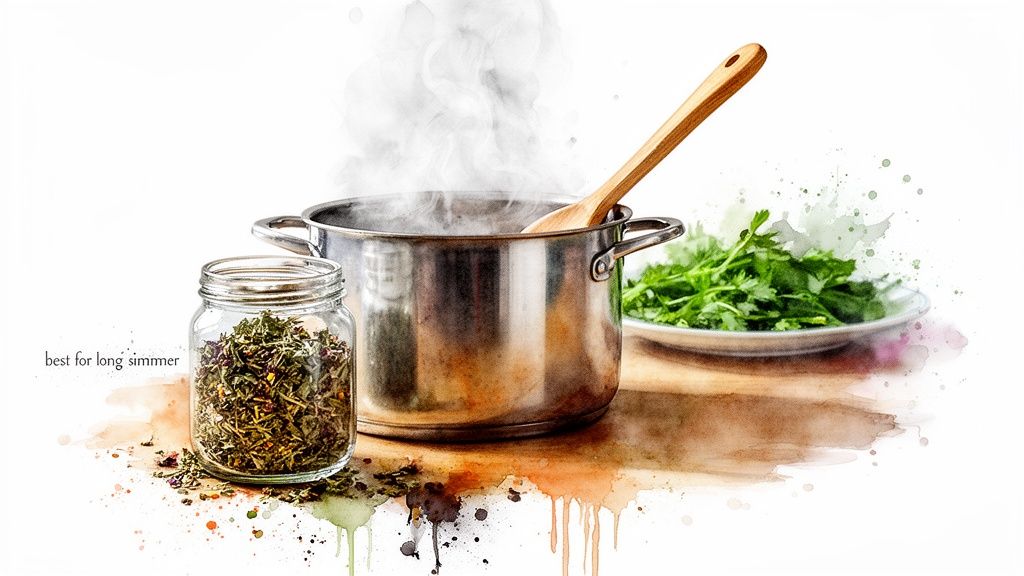
While fresh herbs get a lot of glory for their bright, vibrant flavors, don't count out their dried counterparts. There are specific times when reaching for that jar in your spice rack is actually the smarter move. It's not just a backup plan; it's a strategic choice that can build a much deeper flavor foundation in certain recipes.
Long, slow-cooked dishes are the perfect stage for dried herbs to shine. I'm talking about those hearty stews, rich bolognese sauces, and warming soups that bubble away on the stove for an hour or more. This extended simmering time is exactly what dried herbs need to rehydrate and slowly release their concentrated, earthy flavors, infusing the entire dish with a complexity that fresh herbs, added too early, just can't match.
The Power of Low Moisture
Dried herbs also have a distinct advantage in any recipe where you want to keep moisture to a minimum. Think about creating a dry rub for a steak or a rack of ribs—you want pure, intense flavor without adding any water, which could steam the meat instead of creating that perfect, crispy sear.
Here are a few prime examples where dried is the way to go:
- Dry Rubs: For building that incredible, flavorful crust on meats before you grill, roast, or smoke them.
- Marinades: Especially in oil-based marinades, where you want to avoid watering down the flavor profile.
- Infused Oils and Vinegars: Dried herbs provide a stable, potent flavor for infusions without the risk of spoilage that fresh herbs introduce.
This reliability and concentrated flavor are big reasons why the dried herbs market is booming. The global market, which hit USD 3.9 billion, is expected to climb to USD 6.5 billion by 2034. Home cooks are using them more than ever in custom seasonings, soups, and even vegan spice blends, saving money and cutting down on food waste in the process. You can dig deeper into the growing preference for dried herbs in home cooking.
The takeaway is simple: if your dish involves a long cooking time or needs a big flavor punch without any extra liquid, dried herbs are your best friend. They lay down a foundational flavor that holds up beautifully to heat.
If you're curious about how drying transforms herbs and concentrates their flavor, check out these easy food dehydrator recipes. Knowing when to use dried herbs isn't just about convenience; it means less food waste from wilted fresh bunches and a pantry that's always ready for whatever you're inspired to cook.
Mastering the Art of the Herb Swap
Swapping fresh herbs for dried ones goes way beyond just changing the amount you use. You have to understand a little bit about how different herbs work. I find it easiest to think of them in two main groups: the tough guys (robust herbs) and the sensitive types (delicate herbs). Each needs to be handled differently to get the flavor you're after.
Robust herbs are the ones with woody stems and hardy leaves, like rosemary, thyme, oregano, and sage. These are the superstars of the dried herb world. Their tough nature means they hold onto a ton of their essential oils, giving them a deep, earthy flavor that can handle some serious cooking time.
Then you've got your delicate herbs. Think soft stems and tender leaves—basil, parsley, cilantro, and mint. While you can certainly find them in dried form, they lose a lot of that bright, fresh punch in the process. When you use a dried version of these, just know you're going to get a more subtle, and sometimes completely different, flavor.
The Critical Role of Timing
When you add your herbs is just as important as how much you use. Dried herbs are sleepy; they need time, heat, and a little moisture to wake up and release their flavor. That's why you should always add them early on. I like to toss them in with the onions and garlic right at the start of a sauce, soup, or stew. This gives them plenty of time to rehydrate and really bloom.
Pro Tip: Fresh herbs are the complete opposite. Their vibrant oils are fragile and disappear with too much heat. Always toss in fresh herbs like basil or cilantro in the last few minutes of cooking, or even just sprinkle them over the finished dish. This keeps their amazing aroma and taste front and center.
A Simple Trick to Boost Flavor
Here’s a little secret I swear by for getting the most out of my dried herbs: always crush them before you use them. Seriously, just rubbing some dried oregano or thyme between your palms for a few seconds makes a world of difference. This simple friction breaks down the cell walls and releases all those trapped aromatic oils. It’s like you’re waking the herb up before it goes into the pot.
If you want to take it a step further, a dedicated tool can really amplify the effect. An EZ-Grip Mortar and Pestle is fantastic for unlocking the absolute maximum potential from your dried spices. This one extra step guarantees you're squeezing every last drop of flavor from your pantry staples.
Your Herb-by-Herb Substitution Playbook
Knowing the general 3-to-1 rule for swapping dried herbs for fresh is a great start, but let's be honest, real-world cooking is a bit more nuanced. Every herb has its own personality, and they don't all behave the same way when dried. Understanding these differences is what separates a good cook from a great one.
Let’s break down the common herbs you'll find in your spice rack so your dishes always taste intentional and delicious, never like an afterthought.
This infographic is a fantastic visual guide, clearly separating the tough, woody herbs from the more delicate ones. It’s all about timing.
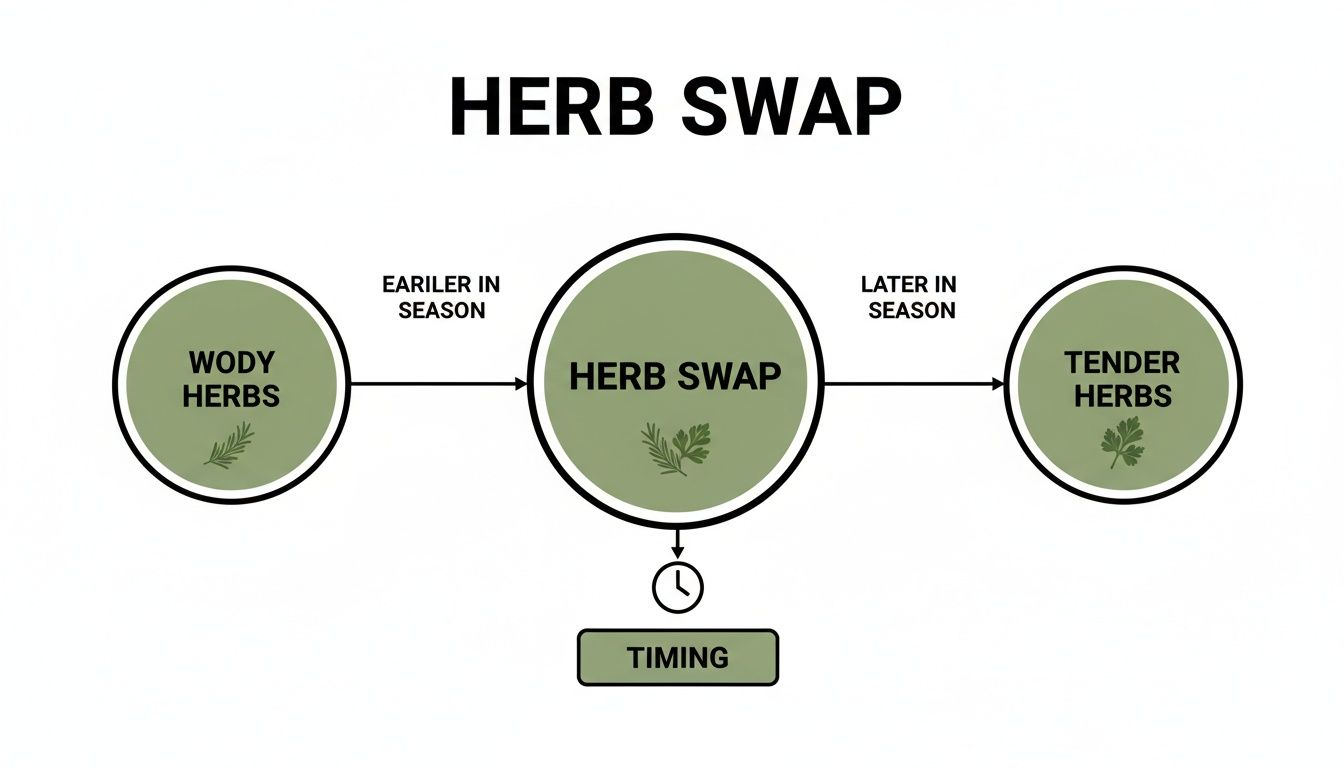
As you can see, woody herbs can take the heat and should go in early to let their flavors bloom. Tender herbs? They're best saved for the very end.
Herb Substitution Profile: Woody vs. Tender
Not all herbs are created equal in the drying process. Here’s a quick look at how woody and tender herbs compare and where they shine (or don't) as substitutes.
| Herb Type | Common Examples | Dried Flavor Profile | Best For Substitution In... |
|---|---|---|---|
| Woody | Rosemary, Thyme, Oregano, Sage | Concentrated, earthy, deep. Flavors hold up well. | Slow-cooked dishes: stews, roasts, braises, and hearty sauces. |
| Tender | Parsley, Cilantro, Dill, Chives | Faint, grassy, often bland. Loses its bright notes. | Not recommended. Better to omit or use a different fresh herb. |
Woody herbs are your best friends for substitutions because their structure is built to last. Tender herbs, on the other hand, are best enjoyed fresh.
The Hardy Herbs That Dry Beautifully
These are the workhorses of the dried herb world. Their robust structure and potent oils stand up incredibly well to dehydration, resulting in a deep, earthy version of their fresh selves.
- Oregano and Marjoram: Dried oregano is a pantry powerhouse. I'd argue it's even better than fresh in long-simmered tomato sauces, where it develops a warm, peppery depth. Stick to the standard 1 tsp dried for every 1 tbsp fresh.
- Thyme: Those subtle, lemony-mint notes get much more concentrated when dried. It’s a must-have for roasts, soups, and stuffings. The classic 3-to-1 ratio works perfectly here.
- Rosemary and Sage: Be careful with these two! They are intensely aromatic and can easily overpower a dish. I always start with a little less than the standard, maybe ¾ tsp dried for every 1 tbsp fresh, especially for ground sage. You can always add more.
It's crucial to remember that drying fundamentally changes an herb's flavor. Dried basil, for instance, often picks up a minty, almost licorice-like quality that's very different from its sweet, fresh counterpart. This is why it works beautifully in a rich marinara but would feel completely out of place in a delicate pesto, a dish that absolutely relies on the vibrancy of fresh herbs. To see what I mean, check out this recipe for fresh zucchini pasta with frozen pesto—it’s a true celebration of fresh flavor.
The Delicate Herbs That Just Don’t Work
Now, for the tricky ones. Some herbs lose all their magic when they're dried, leaving you with something that tastes more like hay than a flavorful ingredient. Their volatile oils are just too fragile to survive the process.
If a recipe calls for any of these fresh, using a dried version is almost always a mistake:
- Cilantro: Dried cilantro is a completely different beast—it has none of the bright, citrusy punch of the fresh stuff. Don't do it.
- Parsley: Those little green flakes in a jar offer a bit of color, but that's it. They bring virtually zero flavor to the party and can't replicate the clean, green taste of fresh parsley.
- Chives: That mild, oniony bite you love from fresh chives? It completely vanishes when dried.
- Dill: The unique, tangy flavor of fresh dill gets lost in translation, leaving only a faint echo that isn’t worth adding.
For these herbs, your best bet is to either grab a fresh bunch at the store or find a different path. If you need a fresh garnish, don’t even think about reaching for dried parsley; it’s honestly better to just leave it out.
Common Herb Mistakes and How to Fix Them
Even those of us who have been cooking for years can make a few common slip-ups when swapping dried herbs for fresh. The good news is that avoiding these little traps is easy, and it’s the secret to making sure your dish tastes just as amazing as the recipe promised.
One of the most frequent mistakes is simply using a one-to-one ratio. This almost always leads to an overpowering, sometimes even bitter, flavor profile. Another classic blunder is tossing dried herbs into the pot at the very end of cooking, which gives them no time to wake up and release all their wonderful flavor.
Are Your Dried Herbs Still Good?
Maybe the single biggest mistake is grabbing that dusty jar of herbs from the back of the pantry without a second thought. Dried herbs don't keep their magic forever; their potency takes a nosedive after about a year. If your dried basil looks more brown than green and smells like, well, dust, it’s not going to do your food any favors.
Pro Tip: The Sniff Test: Before you measure anything out, crush a little bit of the dried herb between your fingers. If you get a strong, fragrant aroma, you're in business. If the scent is faint or completely absent, it's time for a new jar.
Your best defense against flavor loss is smart storage. Always keep your herbs in airtight containers, stashed away from heat, light, and moisture. That little spice rack right above your stove? Probably the worst spot in the kitchen for them. To get the most out of all your seasonings, check out our guide on the best way to store fresh herbs.
-
Mistake: Adding dried herbs at the end of cooking.
- The Fix: Give them a head start! Add them early on with other aromatics like onions and garlic. This allows them to "bloom" in the heat and oil, unlocking their full potential.
-
Mistake: Forgetting that dried herbs are concentrated.
- The Fix: Stick to the 3-to-1 fresh-to-dried ratio. You can always add more later, but you can't take it out once it's in there.
Your Top Herb Substitution Questions, Answered
Even with a handy conversion chart, you're bound to run into a few specific questions when you're in the middle of a recipe. Let's tackle some of the most common ones I hear.
Can I Go the Other Way and Use Fresh Herbs Instead of Dried?
You absolutely can! You just flip the conversion ratio on its head. If your recipe calls for 1 teaspoon of a dried herb, you'll want to use 3 teaspoons (which is 1 tablespoon) of the fresh, chopped version.
The key thing to remember is when you add them. Those bright, delicate fresh herbs like parsley, basil, and cilantro lose their punch with too much heat. Always stir them in at the very end of cooking to keep their flavors vibrant.
What's the Deal with Dried Leaf vs. Ground Herbs?
Think of it in terms of concentration. Dried leaf herbs, like the oregano or basil flakes you shake into your pasta sauce, are just dehydrated leaves. Ground herbs, like garlic powder or ground ginger, have been milled down, which seriously packs in the flavor. They're much more potent.
If a recipe calls for fresh and all you have is a ground powder, you need to be really careful. I stick to a 4-to-1 ratio as a starting point: use just ¼ teaspoon of the ground herb for every 1 teaspoon of dried leaf herb specified. That means you'd use 1 teaspoon of ground for every 4 teaspoons of fresh.
My best advice? Always, always start with less than you think you need. You can add more, but you can't take it back out, and the potent flavor of ground herbs can easily hijack your dish.
If you're interested in learning more about the principles of working with botanicals, getting a foundational understanding of herbalism is a great place to start.
How Can I Tell If My Dried Herbs Have Gone Bad?
Dried herbs don't spoil in the traditional sense, but they definitely lose their oomph over time. Most have a good one-to-two-year shelf life. The best way to check if they're still kicking is to trust your senses.
- Take a look: Is the color still vibrant? A jar of dried basil should be green, not a sad, faded brown. That's your first clue.
- Give it a sniff: Rub a little bit of the herb between your palms to warm it up. If you get a strong, fragrant aroma, you're in business. If it smells dusty, faint, or like nothing at all, it's time to restock.
At Cooler Kitchen, we believe that a well-stocked pantry with high-quality tools is the key to confident cooking. Explore our collection of kitchenware designed to make every meal easier and more enjoyable. https://www.coolerkitchen.com