

Your Guide to Eco Friendly Kitchen Products for a Greener Home
Eco-friendly kitchen products are simply items made with the planet in mind. They cover the whole journey, from where the materials come from, to how long the product lasts, and finally, what happens to it when you're done. Swapping in things made from materials like bamboo or stainless steel is a great way to cut down on waste, save resources, and make your home a little healthier.
What Makes Kitchen Products Genuinely Eco-Friendly?
It’s easy to get lost in all the "green" buzzwords out there. But what really makes a kitchen tool sustainable? It’s not about one single feature; it's the product's entire life story.
This story starts with smart material choices. Instead of single-use or resource-heavy plastics, you'll find options made from fast-growing bamboo, tough-as-nails stainless steel, or durable food-grade silicone. These materials are chosen for a reason: they put renewal and longevity first.
The Lifecycle of a Sustainable Product
Every single item in your kitchen has a lifecycle. Thinking about these stages is the key to spotting a truly eco-friendly product.
- Sourcing: It all begins with where the materials come from. Are they harvested responsibly? Bamboo, for instance, grows incredibly fast without needing a lot of pesticides.
- Manufacturing: The next chapter is how it’s made. Sustainable production focuses on using less energy, conserving water, and avoiding harmful chemicals.
- Durability: A product built to last is inherently eco-friendly. It keeps you from having to buy replacements over and over, which means less waste. Think of a solid stainless steel pot that could be passed down through generations.
- End-of-Life: What happens when its time is up? Ideally, it can be easily recycled, composted, or disposed of without leaving a lasting mess.
A countertop compost bin is the perfect example. It's usually made from durable, recyclable steel and has one job: to keep your food scraps out of the landfill. It literally turns waste into a valuable resource for your garden.
Beyond Materials: Performance and Design
Here's the good news: going green doesn't mean you have to compromise on performance or style. Today’s eco-friendly kitchenware is designed for real-world cooking. You'll find sleek compost bins with charcoal filters to keep odors at bay and bamboo cutting boards with smart, built-in organizers.
This focus on practical design proves that a sustainable kitchen can also be a more functional and beautiful one.
Ultimately, choosing these products is about more than just buying new stuff. It’s about being part of a more responsible way of living. A huge piece of that puzzle is simply sending less to the landfill. If you're ready to dive deeper, you can learn all about how to reduce food waste at home in our guide.
Exploring the Best Sustainable Kitchen Materials
When you're trying to choose eco-friendly kitchen gear, it really all boils down to the materials. Think of it like cooking: the quality of your ingredients makes or breaks the dish. In the world of kitchen tools, materials like bamboo, stainless steel, and food-grade silicone are your star ingredients for creating a sustainable, high-performance space.
Each one brings something special to the table, from being incredibly fast-growing to practically indestructible. Getting to know what makes them tick helps you see past the marketing fluff and find products that are genuinely better for your home and for the planet.
Let's dig into the "why" behind these powerhouse materials.
Bamboo: The Fast-Growing Grass
When you hear "wood," you probably picture a massive oak or maple tree that took decades to grow. But bamboo is a different beast altogether—it's technically a grass, and it grows like one. It can shoot up to full maturity in just three to five years, which is lightning-fast compared to traditional hardwoods.
This rapid growth is a total game-changer for sustainability. It means bamboo can be harvested without causing deforestation because the root system stays put, ready to sprout new shoots almost immediately. That makes it an amazing renewable resource for the things you reach for every single day.
Beyond its green credentials, bamboo also has natural antibacterial properties, making it a fantastic, hygienic choice for cutting surfaces. As you pull together your eco-conscious kitchen, thinking about how materials work together is key—you might even consider options like the best tile for kitchen backsplash to complement the warm, natural vibe of bamboo.
Stainless Steel: The Indestructible Choice
For any cookware or utensil that has to face serious heat and constant use, stainless steel is the undisputed champion. It’s the very definition of durability. Plus, it’s a non-toxic, non-reactive material, so you never have to worry about weird chemicals leaching into your food, no matter how hot the pan gets.
What truly seals the deal for its sustainability is its incredible lifespan and recyclability. A well-made stainless steel pot or set of measuring spoons can literally last a lifetime, which cuts down massively on waste and the need to buy replacements. This "buy it once, buy it right" mindset is at the heart of any low-waste kitchen.
At the end of its incredibly long life, stainless steel is 100% recyclable. It can be melted down and reformed into new products again and again without losing any quality, creating a closed-loop system that saves energy and raw materials.
This circular life makes stainless steel a cornerstone of any eco-friendly kitchen built for people who are serious about both cooking and the planet.
Silicone: The Flexible Alternative to Plastic
Food-grade silicone is the perfect answer to all the flimsy, single-use plastics that clutter our kitchens. It’s a tough, flexible material derived from silica—a natural element you find in sand—and it’s way more resilient than any plastic alternative.
Silicone’s resume is pretty impressive for a modern, sustainable kitchen:
- Heat Resistance: It can take the heat without melting or warping, which is why it’s perfect for spatulas, oven mitts, and baking mats.
- Non-Stick and Easy to Clean: Things don’t stick to its smooth surface, and most silicone gear is dishwasher-safe. Cleanup is a breeze.
- Inert and Safe: It’s completely BPA-free and won’t release harmful chemicals, keeping your food pure and your family safe.
By switching to high-quality silicone tools, you stop the endless cycle of buying and tossing out cheap plastic spatulas or single-use storage bags.
Of course, wooden and bamboo essentials are also a huge part of this shift. In the global kitchenware market—set to hit USD 137.64 billion by 2034—wood already makes up about 12% of products like spatulas and cutting boards. These materials are kind to your cookware and come from quickly renewing resources. Our own extra-large bamboo cutting board is a perfect example of this philosophy in action.
Kitchens are Going Green, and It’s a Big Deal
Something significant is happening in kitchens all over the world. It's a quiet but powerful shift away from the disposable and toward the durable, the sustainable, and the thoughtfully made. This isn't just a fleeting trend; it's a fundamental change in how we think about the heart of our homes.
This movement is completely remodeling the kitchenware industry. People are looking past slick marketing and asking tough questions about the products they buy. Where did this come from? What is it made of? Is it safe for my family? The answer to these questions is fueling a massive demand for eco friendly kitchen products that genuinely align with our values.
You're in the Driver's Seat
The real engine behind this change? It’s you. The conscious consumer. We’ve all seen the documentaries showing oceans choked with plastic and read the startling reports about microplastics. Those abstract environmental problems have suddenly become very personal.
The kitchen is often the first place we look to make a tangible difference. It’s where our daily habits have a direct impact. This consumer-led charge is driven by a few core beliefs:
- Health Comes First: We’re more aware than ever of chemicals like BPA that can leach from plastics. This knowledge is pushing us toward safer, non-toxic materials like bamboo and stainless steel for everything that touches our food.
- Buying for the Long Haul: People are tired of "throwaway culture." There's a real pushback against flimsy gadgets designed to break. Instead, we're investing in well-crafted, durable tools that stand the test of time, which saves money and keeps unnecessary junk out of landfills.
- Making a Real Impact: Every time you reach for a reusable coffee filter or a glass storage container, you’re making a conscious choice. It’s a small win, but those small wins add up and feel incredibly empowering.
This blend of concern for our families' health and a deep-seated desire to protect our planet is creating a new standard for kitchenware.
The modern consumer sees their purchasing power as a vote for the world they want to live in. By choosing sustainable options, they are investing in companies that prioritize ethical sourcing, durability, and a smaller environmental footprint.
The Numbers Don't Lie
This isn't just a feeling—the data paints a very clear picture. The global market for sustainable kitchen products was already valued at an impressive USD 12.5 billion in 2023.
Analysts project that figure will skyrocket to USD 22.7 billion by 2033, growing at a steady clip of 6.3% each year. This boom is a direct result of everyday people choosing products that reduce waste and save energy. If you're curious, you can explore additional details about these market trends to get the full story.
What This Means for Your Kitchen
This shift is great news for all of us. As more people demand sustainable options, companies are rising to the challenge. They’re innovating like never before, creating products that are not only eco-friendly but also smarter, more efficient, and beautifully designed.
You now have more choices than ever. Gone are the days when you had to sacrifice performance for sustainability. Today’s best eco-friendly kitchenware offers the best of both worlds, giving you high-quality tools you can feel good about using. And as this movement grows, making those conscious choices will only get easier.
Key Features to Look for in Eco Friendly Products
Knowing your sustainable materials is step one. Step two is learning how to spot the features that make a product genuinely eco-friendly and worth your money. When you're browsing for eco friendly kitchen products, certain attributes are dead giveaways of quality, separating the truly great items from the pretenders.
Think of it as looking under the hood. You want to move past the shiny "green" promises on the packaging and focus on the built-in qualities that deliver real, lasting value. From rock-solid construction to clever design details, these are the features that truly count.
Built for Longevity and Durability
The most sustainable product you can own is the one you don't have to replace. Durability is the quiet champion of the eco-friendly world because it’s a direct challenge to our throwaway culture. An item built to last is one less thing in a landfill, and it saves you from buying the same thing over and over again.
So, how do you spot it? Use your senses. A set of stainless steel utensils should have a satisfying weight to them, not feel flimsy or cheap. A good bamboo cutting board will be thick and solid, ready to resist warping and cracking after countless washes. Adopting a "buy it once, buy it right" mindset is a cornerstone of any sustainable kitchen.
Prioritizing Non-Toxic and Safe Materials
A healthy home and a healthy planet go hand in hand. One of the biggest reasons people switch to eco-friendly products is the growing concern over the chemicals hiding in everyday items. That’s why a non-toxic composition isn't just a bonus—it's a must-have feature.
Keep an eye out for products that are clearly labeled with these assurances:
- BPA-Free: Bisphenol A, or BPA, is a chemical found in many plastics that has been linked to health issues. Choosing BPA-free items for food storage and prep is a simple move to protect your family.
- Phthalate-Free: Like BPA, phthalates are used to make plastics more flexible and are best avoided in anything that touches your food.
- Food-Grade Materials: This label on materials like silicone or stainless steel is your guarantee that they are pure and won't leach unwanted substances into your meals.
These aren't just buzzwords. They're your peace of mind in a label.
Smart Design for Real-World Convenience
Going green shouldn't feel like a chore. The best sustainable products are actually designed to make life easier, with clever features that streamline your kitchen routine. When a product is convenient, you'll reach for it again and again, making it a beloved part of your kitchen for years.
A countertop compost bin is a perfect example of this. It's not just a bucket—it's an elegant solution. Thoughtful features like tight-sealing lids and replaceable charcoal filters are designed specifically to trap odors, making composting a clean and easy habit, even if your kitchen is tiny.
Other smart touches to look for include things like color-coded cutting mats that prevent cross-contamination or pasta pots with lock-on strainers. Even simple things like being dishwasher-safe can make a world of difference, proving you don't have to sacrifice modern convenience to be more sustainable.
The best eco-friendly products don't just replace their conventional counterparts—they outperform them. This table highlights how their thoughtful features provide a clear advantage over disposable alternatives.
Sustainable Kitchen Swaps vs Conventional Products
| Kitchen Task | Eco-Friendly Product Feature | Conventional Product Drawback |
|---|---|---|
| Food Prep | A durable bamboo cutting board with color-coded, flexible mats for organization. | A thin, flimsy plastic board that warps, stains easily, and needs frequent replacement. |
| Cooking | A heavy-duty stainless steel pot that provides even heating and will last for decades. | A non-stick pan with a chemical coating that can scratch, flake, and degrade over time. |
| Food Storage | Reusable food-grade silicone bags that are freezer, microwave, and dishwasher safe. | Single-use plastic baggies that create constant waste and can leach chemicals. |
| Waste Management | An odor-absorbing countertop compost bin that turns food scraps into a resource. | Throwing food waste in the trash, where it creates methane gas in landfills. |
When it comes down to it, choosing eco-friendly kitchen gear is about investing in items that are thoughtfully designed from the inside out. By focusing on durability, safety, and smart, user-friendly features, you’re not just buying a product; you’re building a kitchen that’s more efficient, healthier, and truly sustainable.
How to Build Your Own Eco-Friendly Kitchen
Turning your kitchen into a more sustainable space can feel like a massive undertaking, but it really doesn't have to be. The best way to start isn't by throwing everything out and buying all new gear. It's more of a journey, made up of small, thoughtful changes that add up over time.
The process kicks off with an honest look at what you already own. From there, you can begin making intentional swaps that cut down on waste and create a kitchen that's better for your family and the planet.
Start With a Simple Kitchen Audit
Before you even think about buying a single new thing, put on your detective hat for a few minutes. A quick "audit" of your kitchen will help you pinpoint your biggest sources of waste, so you can focus your energy where it will have the most impact. This isn't about judging your habits—it's just about gathering clues.
Ask yourself a few simple questions:
- What am I throwing away most often? Keep an eye on your trash can for a few days. Is it overflowing with plastic wrap, used paper towels, or single-use coffee pods?
- What’s almost empty? When that bottle of dish soap or roll of plastic bags is about to run out, that’s the perfect moment to look for a sustainable replacement.
- What do I own that I never use? That avocado slicer collecting dust in the back of a drawer is also a form of waste. Realizing this helps you appreciate multi-functional tools more.
This little exercise gives you a practical roadmap. Instead of guessing, you'll know exactly which swaps will make a real difference in your home.
Make Smart Swaps for Lasting Impact
Once your audit is done, you can start making strategic upgrades. The goal here is to phase out disposable or flimsy items and bring in durable, reusable eco-friendly kitchen products as the old ones wear out. Think of it as a gradual, budget-friendly evolution, not a one-day makeover.
Some of the most effective swaps include:
- Disposable Sponges to Reusable Cloths: Those typical kitchen sponges shed microplastics and end up in the trash every few weeks. A good set of washable Swedish dishcloths or organic cotton towels can last for ages.
- Plastic Wrap to Beeswax Wraps: Ditch the single-use plastic for reusable beeswax wraps or silicone food covers. They form an airtight seal and can be washed and reused for a year or more.
- Flimsy Plastic to Solid Bamboo: A cheap plastic cutting board can warp, stain, and hold onto bacteria. Swapping it for a solid bamboo cutting board gives you a naturally antibacterial, long-lasting surface that’s much kinder to your knives.
When thinking about how to create a greener cooking space, it can be helpful to adopt the mindset of an eco-friendly architect. This perspective encourages you to consider the longevity and environmental impact of every material you bring into your home.
Embrace Composting to Transform Waste
One of the single most powerful changes you can make is to start composting. It’s a staggering fact, but nearly 40% of all food in the United States goes uneaten. When that food ends up in a landfill, it releases methane, a potent greenhouse gas. Composting, however, turns that "waste" into a valuable resource for your garden.
Getting a system set up is surprisingly easy. A sleek countertop compost bin with a charcoal filter will keep your kitchen completely odor-free while you collect scraps like coffee grounds, eggshells, and vegetable peels. Our guide walks you through every step of how to compost at home.
This isn't just some niche hobby anymore—it’s a movement with real economic force. The market for sustainable kitchen products is growing at a 7.34% compound annual rate, which is 2.7 times faster than conventional products. With 70% of consumers willing to pay more for ethically made goods, it's clear that choices like composting are shaping a greener future. By building your own eco-friendly kitchen, you're joining a powerful and growing community.
Caring for Your Sustainable Kitchenware to Make It Last
You’ve made the leap and invested in high-quality, eco-friendly kitchen products. That’s a huge first step! But the real impact of sustainability isn't just in the buying—it's in the keeping. After all, the most eco-friendly item is the one you already own and don't have to replace.
This is where a little bit of care goes a very long way. Think of it like a chef keeping their knives sharp. A few simple routines can extend the life of your kitchenware for years, preserving its function and beauty while truly living out the “reduce and reuse” philosophy.
The process for setting up a truly sustainable kitchen can be broken down into three simple stages, as shown below.
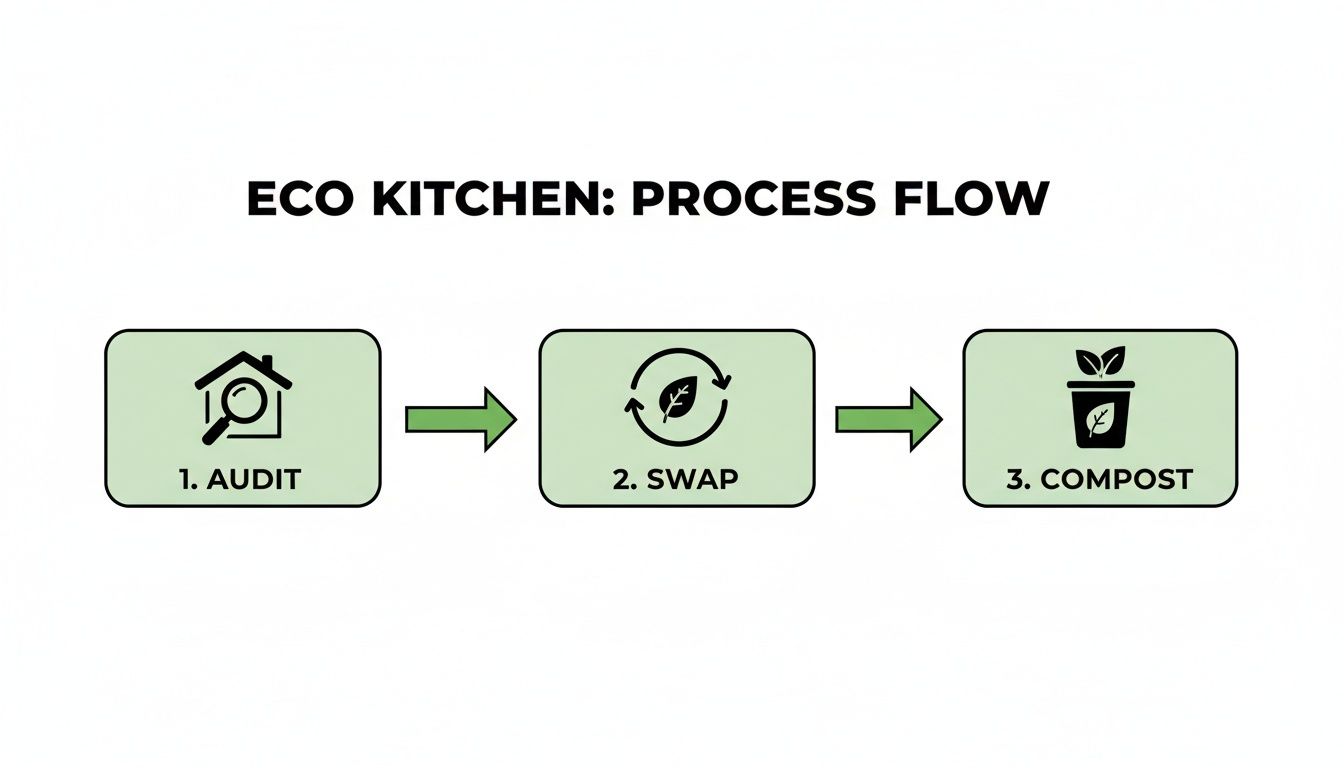
This journey starts with a kitchen audit, moves into making smart product swaps, and finishes with composting. It’s a straightforward path to making a real difference.
Care Tips for Bamboo Products
Bamboo is a wonderfully durable material, but just like any natural wood product, it needs a little TLC to keep it from drying out and cracking. It's all about preserving its natural state.
- Hand-Wash Only: This is the golden rule. Dishwashers are a no-go for bamboo. The intense heat and harsh detergents will cause the wood to swell, warp, and eventually split.
- Dry Thoroughly: Once you've washed it with a bit of mild soap and warm water, towel it dry right away. I like to lean my cutting boards on their side to let air circulate all around, ensuring no moisture gets trapped in the grain.
- Oil Regularly: Give your bamboo a spa day about once a month. A quick rubdown with a food-grade mineral oil will nourish the wood, keeping it hydrated and looking great.
Keeping Stainless Steel Pristine
Stainless steel is a workhorse, but it's not immune to water spots or the occasional discoloration from high heat. The good news? Keeping it gleaming is easy. For most messes, simple soap and water is perfect. For tougher spots or to restore that brilliant shine, a little bit of vinegar or a paste of baking soda works like a charm.
Longevity is the ultimate goal. By taking care of your eco friendly kitchen products, you're not just maintaining items; you're actively reducing consumption and waste.
Best Practices for Silicone Items
Food-grade silicone is one of the easiest materials to care for. It’s naturally non-stick, flexible, and handles heat like a champ.
Most high-quality silicone products are completely dishwasher-safe, which makes cleanup a breeze. If you ever notice a stubborn oily residue or lingering food odors, here’s a pro tip: pop your silicone items on a baking sheet and bake them at a low temperature (around 250°F / 120°C) for about an hour. This helps release any trapped oils and gets them feeling brand new.
Your Eco-Friendly Kitchen Questions, Answered
Deciding to make your kitchen a little greener is a fantastic first step, but it's totally normal for questions to pop up. Is this going to break the bank? Will I have to spend all my time scrubbing special equipment? We hear these questions a lot, so we've put together some straight-to-the-point answers.
Remember, this isn't about a massive, instant renovation. It’s about making smart, simple swaps that work for you and your home.
Are Eco-Friendly Kitchen Products More Expensive?
That’s probably the biggest myth out there—that "green" automatically means "expensive." While you might notice some sustainable products have a higher price tag upfront, the real story is in how long they last. Think of it as a one-time investment that pays you back over the years.
A solid bamboo cutting board or a good set of stainless steel utensils can outlive their plastic counterparts by a decade or more. You stop the cycle of constantly buying cheap, disposable things that break or wear out. In the long run, you actually end up saving money.
Is It Hard to Maintain Bamboo Kitchenware?
Not in the slightest. In fact, one of the best parts about high-quality, natural materials is how easy they are to care for. There are no fancy cleaners or complicated routines needed.
Taking care of something like a bamboo cutting board is simple:
- Just hand-wash it with a little soap and warm water.
- Let it air-dry completely (pro-tip: stand it on its side so air can get to both faces).
- Every once in a while, rub a bit of food-grade mineral oil into it to keep the wood from drying out.
That’s it! And for most quality stainless steel or silicone tools, they’re usually dishwasher-safe, so cleanup is just as easy as anything else in your kitchen.
How Can I Compost in a Small Apartment?
You absolutely can! Composting isn't just for people with big backyards anymore. Living in a small space is no longer a roadblock, thanks to some really clever countertop compost bins designed specifically for apartments. They make the whole process tidy, simple, and surprisingly odor-free.
These little bins are designed to look good on your counter and often come with charcoal filters that trap any odors. You can toss in coffee grounds, veggie peels, and eggshells right as you cook.
Once your bin is full, what's next? Many cities and towns now have compost drop-off spots at farmer's markets, community gardens, or even municipal centers. It’s an incredibly simple way to give your food scraps a second life as a valuable resource instead of sending them to a landfill. You get all the eco-friendly benefits, no backyard required.
Ready to get started with durable, thoughtfully designed tools? Check out the full range of sustainable kitchen solutions at Cooler Kitchen and see just how easy it is to create a greener, more beautiful cooking space. Find your next favorite kitchen essential at https://www.coolerkitchen.com.