

How to Reduce Food Waste at Home: Quick Tips (how to reduce food waste at home)
Cutting down on food waste at home really boils down to three simple things: shopping smarter, storing your food properly, and getting a little creative with your leftovers. It's not about a total kitchen overhaul overnight. Instead, it’s about picking up a few new habits, like peeking in your pantry before you head to the store or learning the best way to keep your produce fresh, that can make a huge difference in what ends up in the trash.
Your Practical Plan to Reduce Food Waste Starts Now
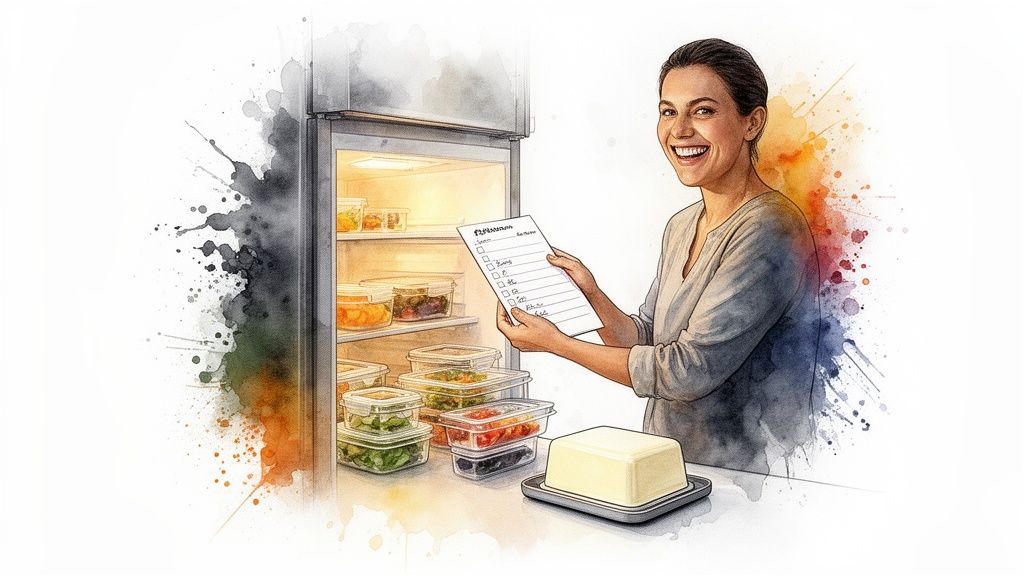
We've all been there. That weekly fridge clean-out where you discover wilted greens, mystery leftovers, and fruit that’s gone a bit too soft. It's a frustrating moment, both for your wallet and your good intentions.
But this guide is here to flip the script. We're going to look at food waste not as a failure, but as a series of small, fixable habits. These simple shifts add up to a massive impact, and we’ll walk you through a complete kitchen strategy to make it happen.
The True Cost of Wasted Food
The sheer scale of this problem is hard to wrap your head around. In 2022 alone, households around the world threw away a staggering 631 million tonnes of food. That’s enough to fill over 1,000 football stadiums. This accounts for 60% of all food waste, with the average person tossing out 79 kg from their kitchen every single year.
This isn't just about wasted food; it's a major environmental issue, contributing to 8-10% of global greenhouse gas emissions. But on the flip side, simple changes at home can save a family up to $1,500 annually. This journey is about more than saving money—it's about respecting the resources it took to get that food to your plate.
Building Better Habits From the Start
We're going to kick things off with mindful shopping and smart storage before diving into creative cooking and, finally, what to do with the scraps you can't use. An organized space is truly the foundation of a low-waste kitchen, so if you're feeling cramped, check out our guide on how to organize a small kitchen for some game-changing tips.
The most impactful changes often begin before you even step into a grocery store. A well-thought-out meal plan based on what you already have is your single greatest tool against impulse buys and future waste.
This guide will show you how the right kitchen tools can make these new habits feel completely natural. You’ll learn how to:
- Audit Your Pantry: Build your shopping list around what you already own to stop buying duplicates.
- Master Storage: Discover simple tricks to make fresh produce last days, or even weeks, longer.
- Reimagine Leftovers: Turn last night’s dinner into the base for an exciting new meal.
- Close the Loop: Responsibly handle scraps you can’t use through easy composting methods.
By the time we're done, you'll feel empowered, not overwhelmed. Let's get started.
Win the Battle Before You Shop with Smart Meal Planning
The most effective way to slash your food waste doesn't happen when you're scraping plates into the compost bin. It happens before you even grab a shopping cart.
It all starts with a smart, proactive plan that shifts your kitchen from a place of potential waste to one of intentional use. Honestly, this is the single most powerful habit you can build—it saves money, cuts down on stress, and puts you firmly in control.
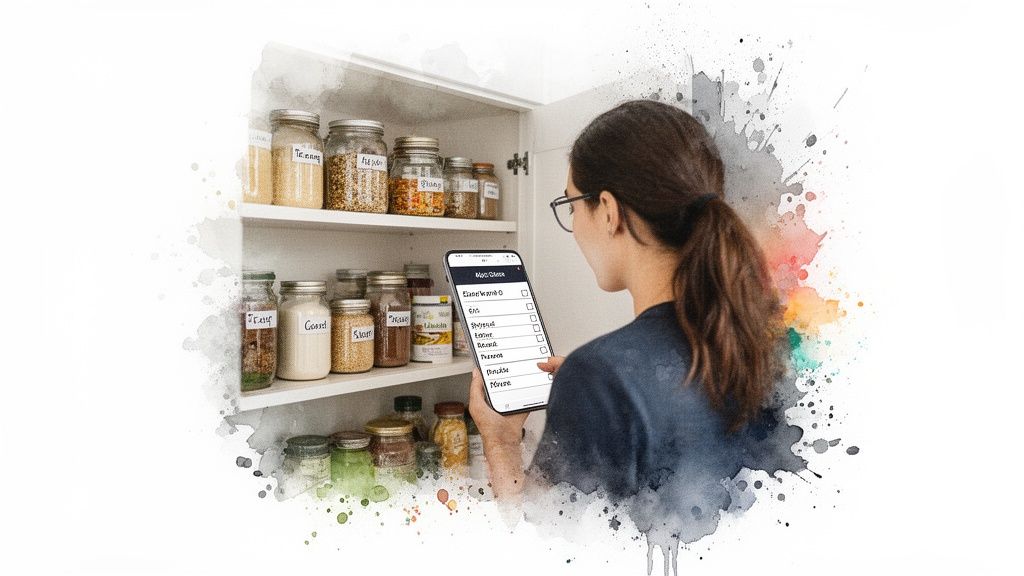
Forget the generic advice to just "make a list." A good list is the result of a much more important process, one that starts with a look at what you already own. This is where a quick "pantry audit" becomes your secret weapon.
Start with a Pantry and Fridge Audit
Before you even dream of new recipes, take a quick inventory. Pop open the fridge, freezer, and pantry to see what needs to be used up soon.
Is there a half-bag of quinoa hiding behind the pasta? A can of black beans nearing its date? A slightly soft bell pepper in the crisper? Your mission is to build your upcoming meals around these ingredients first. This simple shift in mindset—from "What do I want to eat?" to "What do I need to use?"—is a total game-changer for cutting waste.
Having an organized kitchen makes this whole process a breeze. When your go-to spatulas, whisks, and measuring spoons are all in a rotating utensil holder, you can see what you have instantly, which makes prepping for your audit-inspired meals so much easier.
If you want to take your planning to the next level, a comprehensive meal prep guide can help you create a system that works for your household.
The Power of the "Flex Meal"
Meal planning doesn't have to be rigid. In fact, a little flexibility is your best friend. I always plan for one "flex meal" each week. Think of it as a designated dinner designed specifically to use up any random leftovers or produce that's on its last legs.
A few of my favorite flex meal ideas:
- Stir-fries: You can throw almost any combination of veggies and protein into a wok.
- Soups or Stews: The perfect way to blend slightly wilted vegetables into a delicious, hearty meal.
- Frittatas or Omelets: Eggs are a fantastic vehicle for leftover cheese, cooked meats, and sad-looking herbs.
- "Kitchen Sink" Salads: Combine leftover grains, proteins, and roasted vegetables for a nutrient-packed lunch that feels brand new.
This strategy gives you a built-in buffer to prevent small amounts of food from being forgotten and eventually tossed out.
Understanding food labels is a huge part of your pre-shop audit. A "Use By" date is about safety and should be taken seriously. A "Best By" date, however, refers to peak quality. So many foods are perfectly safe and delicious to eat well past their "best by" date.
Navigating the Grocery Store Wisely
Alright, you've done your audit and built a meal plan around your existing ingredients. Now you can finally make that targeted shopping list. The real challenge? Sticking to it.
Grocery stores are designed to tempt you with impulse buys, which are a major source of food waste at home.
Resist the siren song of bulk shopping unless you are 100% certain you will use everything before it spoils. That giant bag of avocados might seem like a bargain, but not if you end up throwing half of them out. The same goes for "buy one, get one free" deals on perishable items—if you don't have a solid plan for both, just walk away.
When you shop with purpose, you've already won the fight against food waste before the groceries even make it through your front door. This mindful prep work is the foundation for everything else.
Get Smart About Kitchen Storage and Keep Your Food Fresh Longer
So, you’ve brought your carefully selected groceries home. What happens next is just as important as what you bought. Your refrigerator and pantry can be your best allies in the fight against food waste, or they can become graveyards for forgotten produce. Let's make sure they're the former.
It doesn’t take complicated rules, just a few smart habits. Understanding what your food needs to stay fresh can dramatically extend its life, saving you money and frustration.
Simple Storage Hacks for Common Problem Foods
We've all been there—limp celery, wilted herbs, soggy lettuce. Let's put a stop to that with some simple tricks that really work. These small adjustments keep your food vibrant, crisp, and delicious for so much longer.
Here are a few of my favorite game-changers:
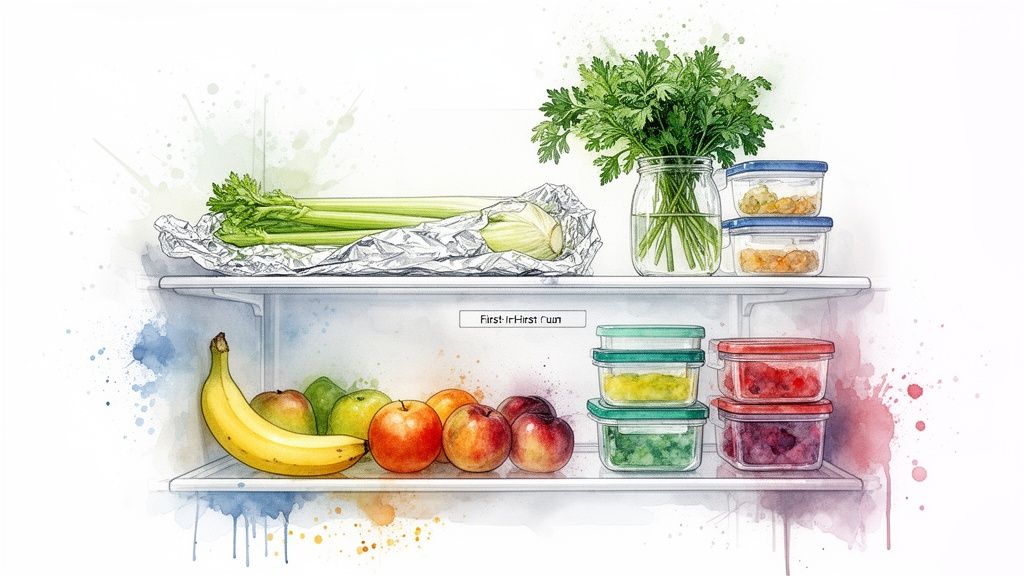
- Crisp Celery for Weeks: Ditch the plastic bag it came in. Wrap your celery tightly in aluminum foil before putting it in the crisper. The foil lets the ethylene gas (the stuff that causes ripening) escape while holding in just enough moisture to keep the stalks snappy.
- A Bouquet of Fresh Herbs: Treat delicate herbs like parsley, cilantro, and basil like fresh-cut flowers. Snip the ends, stand them up in a jar with an inch of water, and loosely cover them with a plastic bag in the fridge.
- Lively Lettuce: As soon as you get home, wash and thoroughly dry your greens. A mini salad spinner is a fantastic tool for this. Once they're dry, store them in a container lined with a paper towel to wick away any extra moisture.
Another key strategy is knowing which fruits and veggies to keep apart. Some produce emits a natural gas that makes its neighbors ripen and spoil faster. If you want to get into the nitty-gritty of this, learning how to store fruits properly is a great place to start.
The Ethylene Effect: Why You Need to Separate Your Produce
Think of ethylene gas as a ripening bully. Certain fruits and veggies produce a lot of it, and when they're stored next to sensitive items, they cause them to go bad in a flash.
It’s a simple concept: just keep the big producers away from the sensitive ones.
| High Ethylene Producers | Ethylene-Sensitive Produce |
|---|---|
| Apples & Bananas | Leafy Greens & Broccoli |
| Avocados & Tomatoes | Carrots & Asparagus |
| Peaches & Pears | Cucumbers & Eggplant |
Just by giving your bananas their own spot on the counter instead of in the fruit bowl with everything else, you can prevent a whole lot of premature spoilage. This one change is incredibly effective.
Put the "First-In, First-Out" Rule into Practice
Professional kitchens live by this simple but powerful system: First-In, First-Out (FIFO). The idea is to make sure the oldest food always gets used before the newest.
It's easy to do at home. When you unpack your groceries, just slide the older items to the front of the shelf and tuck the new stuff in behind them. This simple visual cue reminds you to grab what needs to be eaten first, so nothing gets lost in the back of the fridge until it's too late.
Adopting the FIFO method is more than just organization—it's a mindset. It trains you to constantly rotate your stock, ensuring nothing gets lost and everything gets used at its peak.
This is a lifesaver for prepped ingredients, too. After you’ve chopped up veggies on your color-coded cutting mats, pop them into clear, airtight containers. Slap a label with the date on them and place them right at the front of the fridge. It makes weeknight cooking so much faster and guarantees you’re using things up in the right order.
Even things on your counter benefit from a little strategy. A modern butter dish, for example, keeps your butter fresh and perfectly spreadable without hogging fridge space, ensuring it’s always ready to go. It's these small, intentional habits that really add up to a more efficient kitchen and a lot less waste.
Transform Scraps and Leftovers into Your Next Great Meal
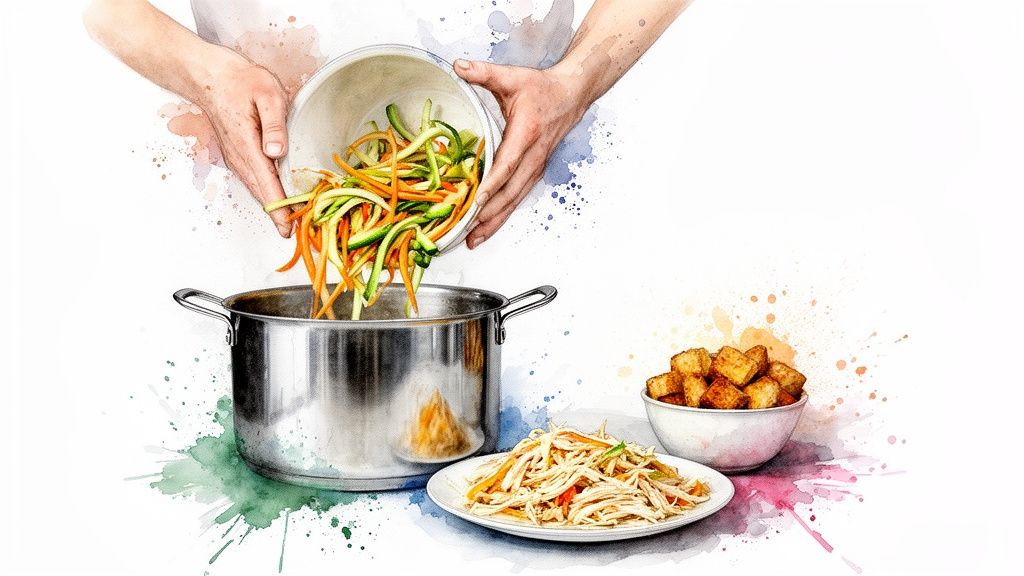
This is where the real kitchen magic happens. It’s all about shifting your mindset from seeing "leftovers" as a chore to seeing them as a head start. That container of last night's dinner isn't an obligation; it's a collection of pre-prepped ingredients for a brand-new meal.
With a little creativity, you can stop food waste in its tracks and turn forgotten items into something you’re genuinely excited to eat. This approach doesn't just save you money—it sparks your inner kitchen innovator.
Remake and Remix Your Meals
Instead of just reheating the same plate for the second time, think about how you can deconstruct and rebuild it. This "remixing" strategy is the secret to making leftovers feel fresh and appealing, which is key to preventing food boredom and waste.
Take last night’s roasted chicken. It’s incredibly versatile. Shred the meat for tacos, chop it into a creamy pasta sauce, or use it as a protein-packed topping for a quick homemade pizza. Those slightly sad-looking vegetables in the crisper? They are perfect for a vibrant, blended soup or a hearty frittata.
The goal is to see the potential in what you already have. By treating cooked food as a base ingredient, you open up a world of quick, easy, and waste-free meal possibilities that your family will actually enjoy.
Use Every Part of Your Ingredients
A huge part of reducing food waste is learning to look beyond the main parts of your ingredients. So many of the bits we instinctively toss are packed with flavor and nutrients. This "root-to-stem" cooking philosophy is a cornerstone of a truly sustainable kitchen.
Making homemade stock is the perfect example. Don't throw away onion peels, carrot ends, celery tops, or chicken bones. Just toss them into a large pot, cover them with water, and let them simmer. In a couple of hours, you'll have a rich, flavorful broth that's worlds better than anything from a carton—and it cost you virtually nothing.
Get Creative with Seemingly Unusable Scraps
Once you start looking, you’ll find opportunities everywhere to give scraps a second life. This is where you can get really inventive and keep food out of the compost bin entirely.
Here are a few of my favorite tricks:
- Stale Bread: Never toss it. Cube it, toss with olive oil and herbs, and bake into crispy croutons. You can also blitz it in a food processor to make breadcrumbs for future recipes.
- Overripe Bananas: Peel, slice, and freeze them. They're the perfect base for creamy smoothies or can be turned into a delicious one-ingredient "nice cream."
- Citrus Peels: Instead of discarding orange or lemon peels, infuse them in a jar of white vinegar for a couple of weeks. You'll end up with a powerful, fresh-smelling, all-purpose cleaner.
- Wilted Greens: Revive slightly limp spinach or kale by shocking it in a bowl of ice water for a few minutes. It'll crisp right back up, ready for a salad.
And if you have a backyard flock, turning kitchen scraps into treats is a fantastic way to close the loop. Just make sure you know which are safe human foods chickens can eat.
By adopting this resourceful approach, you'll make a significant dent in your household food waste and discover new recipes and techniques that make cooking more rewarding. It’s a win for your wallet, the planet, and your taste buds.
Close the Loop with Easy Composting and Family Teamwork
Even with the best meal planning and leftover game, some food scraps are just unavoidable. That’s where composting comes in. Think of it as the final, crucial step to truly close the loop on your kitchen waste. It's an incredibly powerful tool in your food-waste-fighting arsenal, and it’s way easier to get started than most people think.
Composting isn't just for people with sprawling backyards. It's a clean, simple, and surprisingly effective process you can manage right on your countertop, even in a small apartment. By turning your scraps into rich, healthy soil, you’re not just keeping your trash can from overflowing—you're actively participating in nature's cycle of renewal.
Demystifying Countertop Composting
The idea of keeping a bin of food scraps in the kitchen might sound… well, smelly. But modern kitchen tools have completely solved that problem. A good countertop compost bin is designed specifically to keep things clean and fresh.
For instance, the Cooler Kitchen compost bin uses activated charcoal filters to trap and neutralize any odors before they can escape. This makes collecting daily scraps like coffee grounds, eggshells, and vegetable peels completely effortless. You just toss them in as you go. It’s a tiny change to your daily routine that adds up to a massive environmental win.
Did you know that in 2022, households worldwide threw out the equivalent of 1 billion meals every single day? In the US, food scraps make up 22% of the waste in our landfills, where they release potent methane gas. By composting, you can divert a huge chunk of that waste and help cut down the 8-10% of global greenhouse gas emissions that come directly from food loss. You can explore more facts from the global impact of food waste on Earth.org.
What Can You Actually Compost at Home?
Getting started is easy once you know what to toss in the bin. Just think of it as collecting food for your future garden.
Green Materials (The Nitrogen-Rich Stuff):
- Fruit and veggie scraps (peels, cores, stems)
- Coffee grounds and their paper filters
- Tea bags (just pull the staple out first)
- Crushed eggshells
- Houseplant trimmings and grass clippings
Brown Materials (The Carbon-Rich Stuff):
- Shredded newspaper or plain cardboard
- Dry leaves from the yard
- Wood chips or sawdust
- Paper towels and napkins (as long as they aren't soaked in cleaning chemicals)
As a general rule for simple home systems, you’ll want to avoid meat, dairy, and oily foods, as they can attract pests and create bad odors. For a more detailed look, you can check out our guide on how to compost at home.
Composting is more than just a disposal method; it’s a tangible way to transform waste into a valuable resource. Every banana peel and coffee ground you divert from the landfill is a small victory for the planet.
Making It a Family Mission
Let’s be honest: the changes that stick are the ones that become shared habits. When you turn food waste reduction into a family project, it not only makes it easier to follow through but also teaches incredibly valuable lessons about sustainability.
It suddenly feels less like a chore and more like you're all on the same team.
Getting Kids Excited About Less Waste
Involving your kids in the kitchen is one of the best ways to build a healthy relationship with food. You can give them fun, age-appropriate jobs that connect them directly to the process.
- The "Eat Me First" Basket: Have your kids help you create a special spot in the fridge for produce that needs to be used up soon. They can be in charge of picking an ingredient from the basket for the next meal.
- The Revival Station: Let them take charge of a mini salad spinner. It feels like a magic trick to them when they help revive wilted greens with a quick ice water bath.
- Scrap Inspectors: Make them the official compost managers. Their job is to collect scraps after you prep dinner and make sure only the right stuff goes into the countertop bin.
- Creative Cooks: Challenge them to brainstorm uses for fruit that’s getting a little too ripe. Overripe bananas and berries are perfect for whipping up homemade sorbet or "nice" cream.
When you give kids a sense of ownership, you empower them. These positive, hands-on experiences build a foundation of conscious consumption that will stick with them for life, turning your kitchen into a fun little classroom for sustainability.
Got Questions? We’ve Got Answers.
As you start to put these ideas into action, some real-world questions are bound to come up. That’s perfectly normal. Fighting food waste is a marathon, not a sprint. We’ve rounded up some of the most common hurdles people face to give you clear, straightforward advice to keep you going.
"I Live in a Small Apartment. Can I Really Compost?"
Yes, you absolutely can! It’s a common myth that you need a big backyard to compost. Modern solutions have made it incredibly simple to manage, even in a tiny space.
A sleek countertop compost bin is the perfect place to start. The best ones come with charcoal filters that completely trap odors, so you can toss in daily scraps like coffee grounds, vegetable peels, and eggshells without any worry.
Once it's full, you have a few options. Check if your city offers a curbside compost program. If not, many local farmers' markets or community gardens have drop-off points. For those who want to create their own nutrient-rich soil for houseplants, an indoor worm bin (vermicomposting) is another compact and totally odor-free choice. You definitely don't need a yard to keep food out of the landfill.
"My Family Hates Leftovers. How Do I Get Them on Board?"
The trick here is all about rebranding. Ditch the word "leftovers" and start thinking of them as "ingredients" for a brand new meal. It’s a small mental shift that can change everything.
Last night's roasted chicken isn't just old news; it’s the star of tonight's quesadillas, a savory topping for a pizza, or the protein boost in a quick pasta dish. Those extra roasted veggies? Blend them into a creamy soup or chop them up for a fantastic frittata.
A great way to get everyone excited is to introduce a weekly "Remix Night." Pull out all the pre-cooked ingredients and let the family vote on how to transform them. When you make it a creative, collaborative process, the whole dynamic changes.
This approach not only prevents food boredom but ensures that perfectly good food gets eaten enthusiastically.
"I’m Way Too Busy for Complicated Meal Prep. How Can I Still Cut Down on Waste?"
This is a big one. The good news is that reducing waste is less about marathon cooking sessions and more about building simple, smart habits. Efficiency is your best friend here.
Focus on small actions that deliver a big impact without eating up your time:
- Embrace Smart Shortcuts: If buying pre-chopped butternut squash means you’ll actually cook it instead of letting the whole squash go soft in your fridge, that’s a win.
- Batch-Cook the Basics: You don't have to prep five different meals. Just cook one or two versatile things on the weekend. A big pot of quinoa or a few grilled chicken breasts can be used in salads, wraps, and grain bowls all week long.
- Make Your Freezer an Ally: Think of your freezer as a pause button for food. As soon as you get home, freeze half of that loaf of bread. Toss those browning bananas in for future smoothies. Freeze single servings of soup for a quick meal later.
A little organization goes a long way, too. When you use clear containers and can see what you have at a glance, you're so much more likely to use it up.
"How Do I Know If I'm Actually Making a Difference?"
Seeing your progress is a huge motivator, and there are a few simple ways to track it without getting complicated.
First, try a quick "before and after" audit. For one week before you start, jot down every bit of food you throw away. After a month of using these new habits, do it again. You’ll be genuinely surprised by how much shorter the second list is.
The most concrete proof, though, will be on your grocery receipts. The average US household wastes nearly 32% of the food it buys, so when you start shopping your pantry first and wasting less, the savings really add up.
Finally, just trust your trash can. A lighter bag that you're taking out less often is one of the most satisfying signs that you're succeeding.
Ready to equip your kitchen with tools that make reducing food waste feel effortless? At Cooler Kitchen, we design thoughtful, practical kitchenware—from odor-free countertop compost bins to smart storage solutions—that helps you build sustainable habits. Explore our collection and start your journey today at https://www.coolerkitchen.com.