

How to organize a small kitchen: Expert tips for max space
The only way to truly organize a small kitchen is to first get ruthless about what you own. Before you even think about buying a single new container, you have to pull everything out, make some tough decisions, and group what’s left by how you use it. This isn't the fun part, but it's the most important—it guarantees you’re only making space for things you actually need.
The First, Most Critical Step: A Full-Scale Kitchen Purge
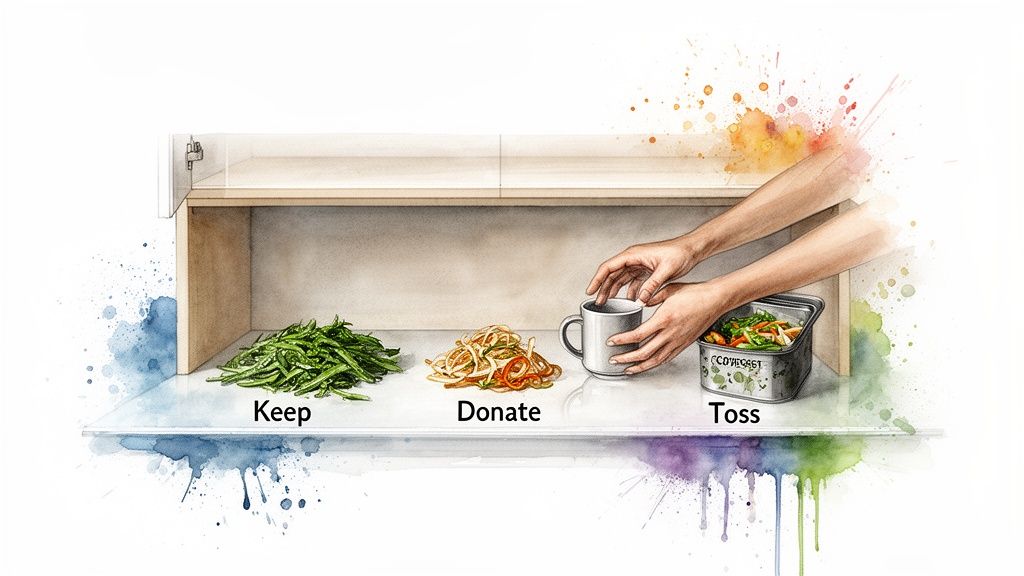
Before you can get to the clever storage hacks and satisfying drawer organizers, you have to create a blank canvas. This isn't just a quick tidy-up; it's a complete audit of every single item in your kitchen. The mission? To take back precious counter and cabinet space from anything that's broken, expired, or just plain forgotten.
Pick one spot to start—a single drawer or one cabinet is perfect. Empty it completely. Dump everything onto your counter or dining table so you can see it all at once. This moment of truth is often shocking; you’ll finally see the three nearly identical spatulas or that collection of mismatched Tupperware lids you've been searching for.
The Three-Pile Sorting System
As you pick up each item, sort it into one of three piles. This simple method keeps you from getting overwhelmed and helps you make decisions quickly and decisively.
- Keep: These are the things you use regularly and genuinely love. If it's been part of your cooking routine in the last six months, it probably belongs here.
- Donate/Sell: For all the gadgets and dishes that are in good shape but just don't fit your life anymore. That bread maker you used twice? The set of holiday-themed plates gathering dust? Let them go.
- Toss/Recycle: Be honest and unforgiving here. This is for anything expired, broken, or stained beyond recognition. That means ancient spices, chipped mugs, and worn-out dish towels have to go.
This sorting phase is the absolute core of learning how to organize a small kitchen. It forces you to face the clutter that's been secretly stealing your space.
Taking stock of what you own and purging the excess isn't just about making room. It's about simplifying your life. A clear, organized kitchen means less stress and more joy in your daily cooking routine.
Group and Conquer
Once you've whittled it down to just the "keep" pile, the next move is to categorize. Grouping similar items together shows you exactly what you're working with and what kind of storage it will need. Don't just make a giant pile of "utensils"—get specific.
Create smaller, more logical groupings like:
- Baking Gear: Measuring cups and spoons, mixing bowls, rolling pin.
- Coffee & Tea Station: Mugs, filters, beans, tea bags, sugar.
- Everyday Cooking Tools: Spatulas, whisks, tongs, ladles.
- Food Storage: Containers with their matching lids.
Thinking about how to organize your items is a foundational skill, much like learning how to organize kitchen cabinets for maximum space and flow. To make this process a bit more sustainable, try keeping a small compost bin on the counter for any expired food you find. This initial clean-out is the real secret to creating a kitchen that feels bigger and works better.
Creating Smart Zones for an Effortless Workflow
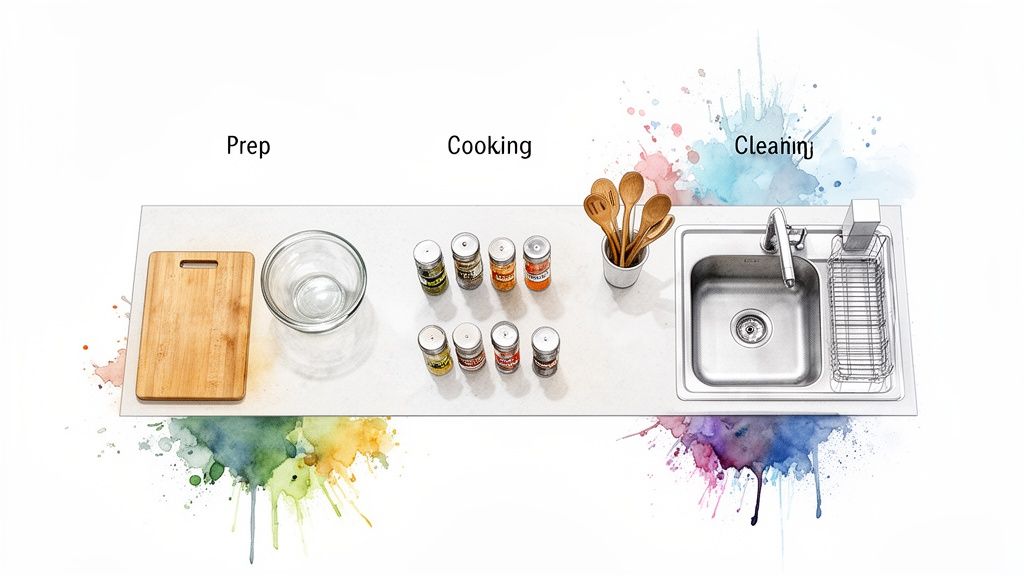
Now that you've cleared out the clutter, it’s time to rethink the layout of your kitchen. The real secret to a functional small kitchen isn't about having more space—it's about making every inch work smarter. Stop seeing your kitchen as one big room and start thinking of it as a series of connected workstations.
This is a concept called kitchen zoning. You group everything you own based on the activity it's used for. The whole point is to keep everything you need for a specific task—like chopping veggies or brewing coffee—right there within arm's reach. It's about creating a natural, intuitive flow that cuts down on wasted steps.
Think about the last meal you cooked. You probably moved from the counter to the stove, then to the cupboard for a plate, and finally to the sink. By setting up your kitchen to support that natural sequence, cooking becomes less of a chaotic scramble and more of a smooth, enjoyable process.
Mapping Your Primary Kitchen Zones
Even the tiniest kitchens can usually be broken down into a few core zones. Defining these areas is the first step toward creating a layout that just makes sense, where everything has a logical home.
- Prep Zone: This is where the magic begins, usually your largest open counter space. Keep your cutting boards, knives, mixing bowls, and measuring tools right here. Everything you need to get ingredients ready should live in this zone.
- Cooking Zone: Naturally, this area is centered around your stove and oven. Store your pots, pans, and baking sheets in the cabinet below or beside it. Cooking oils, spices, and utensils like spatulas and spoons should be immediately accessible—think a utensil crock right on the counter or in the nearest drawer.
- Cleaning Zone: This one’s easy—it’s everything around your sink and dishwasher. This is the spot for dish soap, sponges, cleaning sprays, and your trash and recycling bins. Keeping these items contained prevents cleaning supplies from migrating all over the kitchen.
- Storage Zone: This zone serves two purposes: food and dishes. Your pantry area holds all your dry goods. For dishware, the best spot is a cabinet right next to or above the dishwasher. It makes unloading dishes a breeze.
A well-zoned kitchen turns cooking from a frantic search into a calm, methodical process. By storing items where you use them, you build muscle memory and make your kitchen work for you.
The table below breaks down these core areas to help you visualize the most efficient layout.
Essential Kitchen Zone Layouts
| Zone | Essential Items | Ideal Location |
|---|---|---|
| Prep Zone | Cutting boards, knives, mixing bowls, measuring cups, spices. | Largest clear countertop space, often between the sink and stove. |
| Cooking Zone | Pots, pans, baking sheets, cooking utensils, oils, potholders. | Cabinets and drawers immediately surrounding the stove and oven. |
| Cleaning Zone | Soap, sponges, dish towels, trash/recycling bins, cleaning supplies. | Under and around the sink area. |
| Storage Zone | Everyday plates, bowls, glasses, cutlery, pantry staples. | Cabinets near the dishwasher for dishes; pantry or designated food cabinets. |
Getting these main zones right will fundamentally change how you feel about cooking in your kitchen.
Creating Efficient Mini-Zones
Once you have the big zones sorted, you can get even more efficient by creating small, dedicated "mini-zones." These are brilliant for reducing countertop clutter and keeping household traffic out of your main work triangle.
A coffee station is a classic example. Group your coffee maker, mugs, beans, and sugar together on a small tray or in a specific corner. Everything you need for your morning ritual is in one self-contained spot.
Another great idea, especially if you have kids, is a snack station. Designate a low drawer or an easy-to-reach cabinet for kid-friendly snacks and drinks. This empowers them to grab their own stuff without getting underfoot while you're trying to cook.
Even something as simple as consolidating all your cooking tools is a form of micro-zoning. For more great ideas on this, check out our guide on how to organize kitchen utensils. These small, thoughtful tweaks are what make a kitchen not just organized, but truly a joy to use.
Maximizing Every Inch of Cabinet and Drawer Space
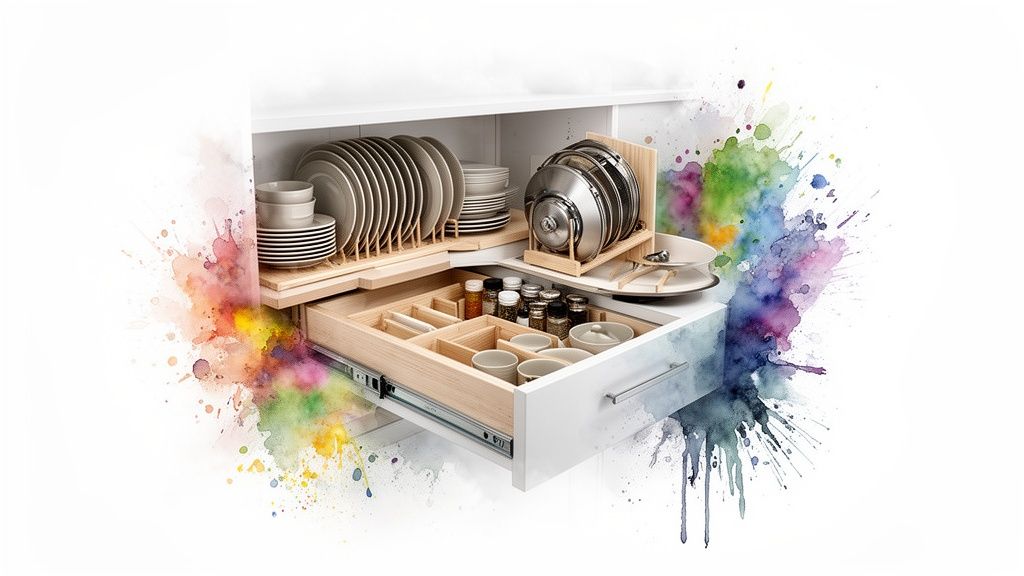
Let's be honest, your cabinets and drawers are the true heroes of a tidy kitchen. But too often, they become black holes where things get shoved to the back, never to be seen again. Learning how to organize a small kitchen really boils down to treating this space like prime real estate—every single square inch is precious.
We need to move past simply stacking things and hoping for the best. A few smart, strategic additions can completely transform how you use your storage. Instead of one flat shelf, you can suddenly have multiple levels, effectively doubling or even tripling your space.
Smart Cabinet Solutions
Take a look inside your cabinets. See all that empty air between the shelves? That’s wasted potential. Your mission is to reclaim it, and you can do it without creating wobbly, towering piles of dishes.
- Add Shelf Risers: These little wire or acrylic shelves are lifesavers. They instantly create a second tier for plates, bowls, or mugs. No more unstacking a huge pile just to grab the plate at the bottom.
- Use Turntables (Lazy Susans): For those deep, awkward corner cabinets, a turntable is a complete game-changer. A quick spin brings everything from the back right to the front. They're perfect for oils, spices, and jars of condiments.
- Hang Items Under Shelves: Think vertically! Add simple hooks under your cabinet shelves to hang mugs, or install a specialized rack for wine glasses. This frees up the entire shelf surface for bigger items like mixing bowls.
Here’s another clever trick I love: pop a tension rod inside the cabinet under your sink. You can hang all your spray bottles from it by their triggers, clearing the whole floor for sponges and other supplies. For more great ideas on making small spaces work harder, check out these interior design tips for small rooms.
The goal isn't just to cram more stuff in. It's to make everything easy to see and even easier to grab. If you can't reach it, you won't use it.
Smart storage is big business for a reason. The kitchen cabinet and storage industry is on track to become a USD 124.42 billion market by 2031. Much of this is driven by innovative, ready-to-assemble products that give homeowners affordable and flexible ways to organize.
Taming Chaotic Drawers
Drawers are notorious for turning into a jumbled mess of utensils, gadgets, and who-knows-what-else. A few simple organizers can restore order in minutes.
- Vertical Pot Lid Organizers: Stop that clattering avalanche of pot lids every time you open a drawer. A simple rack that stores them vertically—like files in a filing cabinet—is the perfect fix. This trick also works beautifully for baking sheets and cutting boards.
- Tiered Spice Organizers: Get an angled or tiered spice rack insert for your drawer. You'll be able to see every single label at a glance, finally ending that frustrating hunt for the cumin that’s always hiding.
- Expandable Drawer Dividers: Use adjustable dividers, often made of bamboo or plastic, to create custom-sized compartments for everything. Your cutlery, spatulas, and whisks will finally have a dedicated home where they stay put.
By putting these strategies into action, you force your existing storage to work smarter, not just harder. You can find more inspiration in our guide to essential space-saving kitchen gadgets.
Thinking Vertically: Unlocking Hidden Storage
When you’ve maximized every last inch of countertop and cabinet space, there’s only one direction left to go: up. So many small kitchens have a massive, untapped resource just waiting to be used—their vertical space. A big part of organizing a small kitchen is training your eyes to see the storage potential on your walls, on the sides of your cabinets, and even in the empty air above them.
This strategy isn't about calling a contractor for a costly renovation. It’s about being clever with simple, high-impact additions that reclaim areas you might have written off as useless. That bare stretch of wall? It's prime real estate for floating shelves. The empty side of your fridge cabinet? The perfect spot for a magnetic spice rack. Thinking vertically is the key to turning dead space into functional, easy-to-reach storage.
Putting Your Walls to Work
Your walls probably offer the single biggest opportunity to get stuff off your crowded countertops. Wall-mounted storage is incredibly practical, but it can also add a touch of personality to your kitchen, turning everyday tools into part of the decor.
- Magnetic Knife Strips: It’s time to ditch that clunky countertop knife block. A sleek, wall-mounted magnetic strip frees up a surprising amount of workspace and keeps your most-used knives safely within arm's reach.
- Hanging Pot Racks: If you’re blessed with a bit of ceiling or wall height, a hanging pot rack is a classic for a reason. It can single-handedly clear out an entire lower cabinet, making room for small appliances or pantry items.
- Pegboards: A kitchen pegboard is the ultimate in customizable storage. You can outfit it with a mix of hooks, baskets, and small shelves to hang everything from spatulas and mugs to small pots and measuring cups.
The key takeaway is to see your walls as an extension of your cabinets. Every item you can hang on a wall is one less item cluttering a drawer or countertop.
Leveraging Overlooked Spaces
Beyond the main walls, you’ll find dozens of smaller, often-ignored spots that are perfect for vertical storage solutions. Once you start looking for them, you'll see these hidden opportunities everywhere.
Take the space above your upper cabinets, for instance. For most people, it's just a dusty dead zone. Instead of letting it collect grime, place a few stylish baskets up there. It’s the perfect out-of-the-way spot for stashing things you only use a few times a year, like holiday cookie cutters, a turkey roasting pan, or that extra-large serving platter.
Another goldmine is the underside of your cabinets. Simple, screw-in under-cabinet hooks are brilliant for hanging coffee mugs, which can free up an entire shelf. You can also install a slim paper towel holder or a stemware rack here to keep everyday items handy but completely off the counter. Don't forget the inside of a cabinet door—it's the ideal place to hang a rack for pot lids or a small caddy for your dish soap and sponges.
Reclaiming Your Countertops for Good
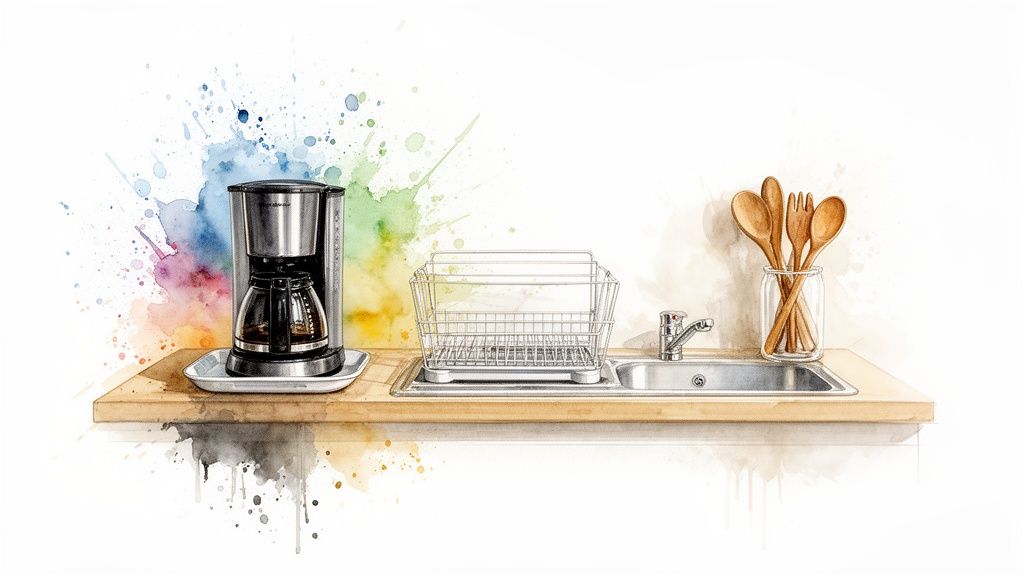
In a small kitchen, your countertop is prime real estate. It’s your workspace for chopping vegetables, rolling out dough, and plating your masterpiece—not a permanent parking lot for appliances, mail, and that random collection of things that don't have a home. Honestly, the single most impactful thing you can do when learning how to organize a small kitchen is to reclaim this surface. You want to transform it from a chaotic drop zone into a clean, functional prep area.
This isn’t about creating some sterile, minimalist void. It’s about being ruthlessly intentional with what earns a spot on the counter. Every item left out should have a daily purpose and truly justify the space it takes up. It seems a lot of people are catching on to this idea; the global kitchen organization market is projected to hit a staggering USD 213.89 billion by 2031. It’s a clear sign that homeowners everywhere are choosing function over clutter. You can dive deeper into this trend in a detailed market research report.
The Countertop Real Estate Rule
I like to think of counter space like a VIP section at a club—only the absolute essentials get to stay. Everything else has to find a home inside a cabinet, pantry, or drawer. It’s time to be brutally honest with yourself about what you actually use every single day.
- Daily Drivers: That coffee maker you can't live without? Your trusty toaster? An electric kettle for your afternoon tea? If it's part of a daily ritual, keeping it out makes perfect sense.
- Essential Tools: A knife block or a magnetic wall strip keeps your most important tools safe and handy. The same goes for a utensil crock holding the spatulas and spoons you're constantly reaching for while cooking.
- Everything Else: That beautiful stand mixer you use once a month for baking? The blender for occasional smoothies? These need to be stored away. Find an accessible spot for them, but don't let them take up precious prep space 24/7.
The goal is to curate your countertops, not just clear them. A few well-chosen items look intentional and organized. A dozen random gadgets just look like clutter.
Smart Tools to Minimize Counter Clutter
Once you've decided on your countertop VIPs, a few clever tools can help you keep things looking tidy without giving up on function. The name of the game is consolidation and using smart, space-saving designs.
One of my favorite tricks is so simple: use a small decorative tray. Grouping smaller items like your salt and pepper shakers, a bottle of olive oil, and a spoon rest onto a single tray instantly makes the collection look contained and deliberate, not scattered and messy.
Another game-changer is an over-the-sink drying rack. These are brilliant. They’re often roll-up or collapsible racks that let you air-dry dishes directly over the sink, completely freeing up the counter space that a bulky, traditional dish rack would devour.
Keeping Your Newly Organized Kitchen That Way
Getting your small kitchen organized is a huge win, but the real challenge? Keeping it that way. The secret isn't a massive, time-sucking overhaul every few months. It's all about building small, consistent habits that stop clutter before it even starts. Think of it as a practice, not a one-and-done project.
One of the best habits you can adopt is the "one in, one out" rule. It’s incredibly simple. When a new coffee mug or gadget comes into the house, an old one has to go. This single policy is your best defense against accumulating duplicates and keeps your inventory under control—absolutely essential when every inch counts.
Create a Simple Maintenance Rhythm
To protect all your hard work, you'll want to weave a few quick "resets" into your regular schedule. These don't need to feel like a chore. Remember, consistency beats intensity every time.
- The 10-Minute Weekly Tidy-Up: Pick a day and set a timer for just 10 minutes. Use that time for a quick sweep: put spices back in their drawer, clear the mail off the counter, and get utensils back into their holder. It’s amazing what you can accomplish in 10 minutes, and it stops tiny messes from turning into a weekend project.
- The Quarterly Check-In: Every three months or so, go a little deeper. Do a quick scan of your pantry for expired items, see if your zones are still working for you, and give your shelves a good wipe-down. This is also the perfect time to deep clean appliances. For some great tips, check out our guide on the best way to clean a microwave interior.
Getting the whole family on board is a game-changer. A low, accessible drawer with kids' snacks helps them be more independent without upending your entire system. When everyone knows where things live, cleanup naturally becomes a shared, and much easier, task.
Think of it like building muscle memory for your kitchen. A quick daily wipe-down and a weekly reset eventually become second nature, keeping your space functional and calm without you even having to think about it.
The desire for lasting order is a big reason the kitchenware industry is booming, projected to hit USD 123.33 billion by 2033. A huge part of that growth is driven by smart storage containers and organization sets designed to make maintenance easier. When you have the right tools, sticking to the system feels effortless. If you're curious about this trend, you can discover more insights about the kitchenware market.
Common Small Kitchen Organization Questions
Even with a solid plan, you're bound to hit a few snags when organizing a tiny kitchen. Let's tackle some of the most common frustrations with practical solutions to help you fine-tune your space.
What if I Have Almost No Counter Space?
When you’re working with postage-stamp-sized counters, you have to get creative. The trick is to create temporary workspaces right where you need them. An over-the-sink cutting board or even a simple roll-up drying rack can instantly turn your sink into a prep zone.
Another fantastic solution is a small kitchen cart or a rolling island. Think of it as a mobile prep station. It gives you that much-needed extra surface area for chopping or mixing, and you can just roll it out of the way when you're done.
How Can I Organize Pots and Pans?
The golden rule for pots and pans is to go vertical. A classic wall-mounted or ceiling-hung pot rack is a lifesaver, freeing up an entire cabinet by getting those bulky items up and out of the way.
If you'd rather keep them tucked away, use a simple rack inside a deep cabinet or drawer. It works like a file organizer, letting you store pans and baking sheets on their sides. No more clattering stacks! You can just slide out the one you need. Investing in a set of nesting cookware is another game-changer, as it's specifically designed to stack into a tiny footprint.
Pro Tip: The inside of your cabinet doors is prime real estate. A simple mounted lid rack is the perfect spot to keep all those stray pot lids organized and easy to find.
What Is the Best Way to Store Bulk Foods?
Get everything out of its original packaging. Decanting bulk goods like rice, flour, and pasta from those clumsy bags and boxes into uniform, stackable containers makes an enormous difference.
Always go for square or rectangular containers—they’re far more space-efficient than round ones, leaving no wasted gaps. Label every container with what's inside and the purchase date. This little habit not only saves a ton of pantry space but also keeps your food fresh and lets you see what you have at a glance.
At Cooler Kitchen, we design smart, space-saving tools to make your kitchen more functional and enjoyable. Discover our collection of utensil holders, cutting boards, and organizers that bring order to any space. https://www.coolerkitchen.com