

A Guide to Eco Friendly Kitchen Tools for a Greener Home
Take a look around your kitchen. What do you see? A jumble of single-use plastics and flimsy gadgets that seem designed to break? Now, imagine that same space filled with beautiful, durable tools that not only work better but also feel better to use—a kitchen that truly reflects a more mindful way of living. This guide is all about turning that vision into a reality, one simple step at a time.
The Big Shift to a Greener Kitchen
The move toward eco-friendly kitchen tools isn't just another passing trend. It’s a genuine shift in how we think about our homes, our health, and our impact on the world. People are more aware than ever of plastic pollution and are actively looking for non-toxic, long-lasting products to stock their kitchens. It's not about a complete overhaul overnight; it's about making small, smart changes that really add up.
The numbers back this up. The global market for eco-friendly kitchenware is expected to hit a staggering $126.47 billion by 2032. This isn't just a niche market anymore; it's a worldwide demand for things like sturdy bamboo cutting boards and stainless steel pots that won't end up in a landfill next year.
Why Does This Matter for Your Home?
Opting for sustainable tools is about so much more than just helping the environment. It's about creating a healthier, safer space for you and your family. When you choose products made without harmful chemicals and built to last, you're making a smart investment in your well-being and your budget. Brands like Cooler Kitchen get this, offering thoughtfully designed solutions—from countertop compost bins to bamboo cutting boards—that make a conscious lifestyle feel easy and natural.
The core idea is simple: A sustainable kitchen is built on progress, not perfection. Every mindful choice, no matter how small, contributes to a healthier home and a healthier planet.
This mindset also bleeds into how we handle our food. As you get deeper into a sustainable lifestyle, you'll see how everything is connected. For instance, understanding the value of eco friendly food packaging is a natural next step that complements your greener kitchen efforts. It all works together, from the tools you cook with to the containers you store your leftovers in. Let's walk through the practical steps to make those choices confidently.
What Makes a Kitchen Tool Truly Eco-Friendly?
The term "eco-friendly" gets thrown around a lot, but what does it actually mean when it comes to the tools you use in your kitchen every day? A genuinely sustainable product isn’t just about a single feature; it's about its entire story—from the moment it's created to the day you're done with it.
When you start thinking about a product's full lifecycle, you can cut through the marketing fluff. It’s not just about being "green." It's about understanding its impact from beginning to end, empowering you to make choices that are truly better for your home and the planet.
The Source: It All Starts with the Materials
The heart of any eco-friendly kitchen tool is what it’s made of. This first step is arguably the most critical because it sets the stage for the product's entire environmental footprint. The best materials are either renewable and grow back quickly, or they're so durable they practically last forever.
Take bamboo, for example. It’s not just wood; it's a type of grass that shoots up to full size in just 3-5 years. Compare that to the decades it takes for a hardwood tree to mature. This makes bamboo a fantastic renewable resource you can harvest without contributing to deforestation.
On the other end of the spectrum, you have materials like stainless steel. Sure, making it requires a lot of energy upfront, but its incredible durability is where it shines. A well-crafted stainless steel pot or utensil can easily last a lifetime, helping you break the cycle of buying and tossing cheaper, flimsy alternatives.
This diagram really brings the concept of a sustainable kitchen to life, highlighting how less waste, long-lasting items, and non-toxic materials all fit together.
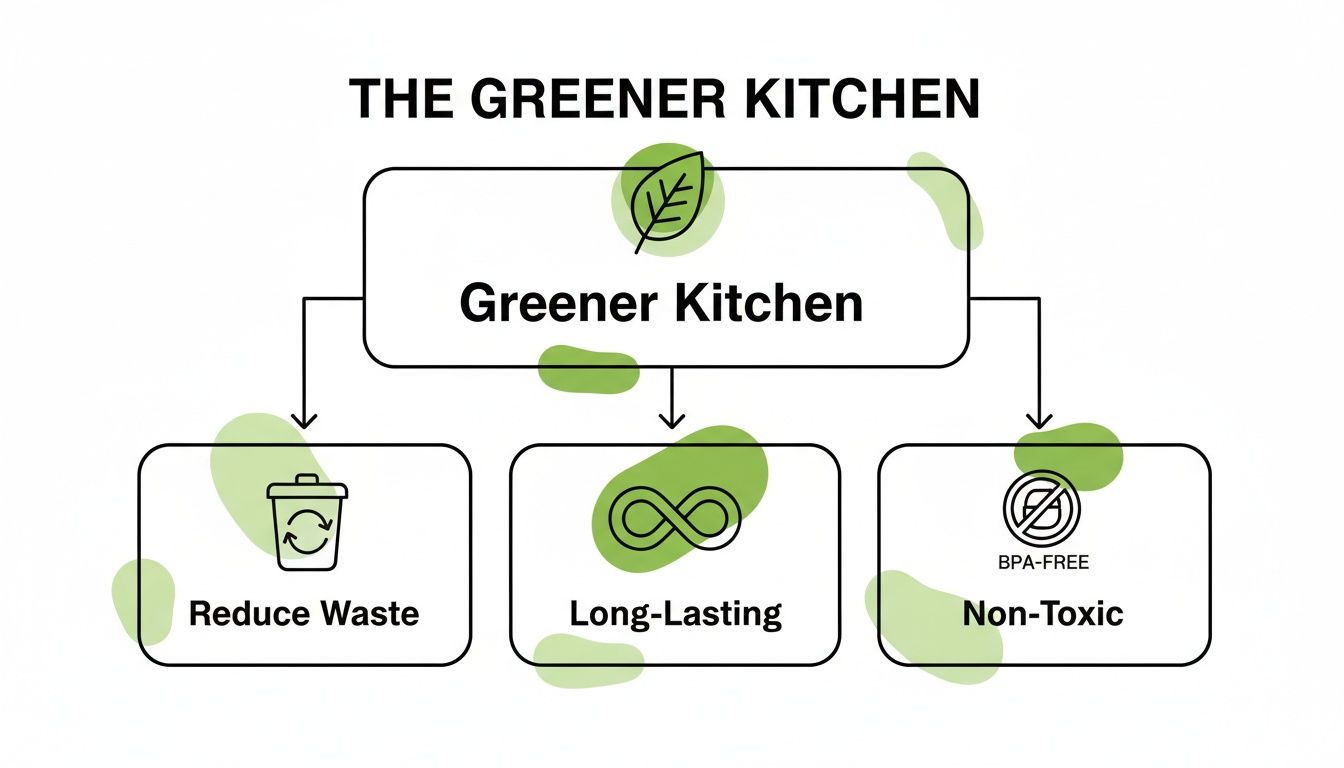
As you can see, these three pillars are the foundation of a greener kitchen. Each one plays a vital role in shrinking your environmental footprint one meal at a time.
The Middle: How It's Made and Used
The journey from raw material to a finished tool is the next crucial piece of the puzzle. A low-impact manufacturing process is one that minimizes energy, water, and waste while ensuring the final product is safe for you and your family.
This is where you'll see labels like BPA-free. Bisphenol A (BPA) is an industrial chemical that was commonly used in plastics, and it can leach into your food, which is a real health concern. Opting for BPA-free tools, especially those made from stable materials like food-grade silicone, is a simple way to keep unwanted chemicals off your plate.
The global appetite for safer, more sustainable kitchenware is growing fast. We're seeing a massive shift, with consumers buying over 410 million units of eco-friendly utensils worldwide in recent years. This isn't a fad; it's a market projected to jump from $15 billion in 2025 to $28 billion by 2033. People are actively swapping out old cookware for better options that can boost durability by 30-50% and cut down on chemical leaching.
If you're curious to dig deeper into the science and manufacturing behind these materials, it's often helpful to gain insights into sustainable kitchen materials directly from those who work with them.
Eco-Friendly Material Lifecycle Comparison
To make sense of it all, here’s a quick comparison of some popular eco-friendly materials and how they stack up across their lifecycle.
| Material | Source | Key Benefits | End-of-Life Options |
|---|---|---|---|
| Bamboo | Rapidly growing grass (renewable) | Lightweight, antibacterial, fast-growing resource | Compostable (if untreated) |
| Stainless Steel | Iron ore and other metals | Extremely durable, non-reactive, corrosion-resistant | Infinitely recyclable |
| Glass | Sand, soda ash, and limestone | Non-porous, doesn't stain or leach, safe for high heat | Infinitely recyclable |
| Food-Grade Silicone | Silicon (from sand) and oxygen | Flexible, non-stick, heat-resistant, BPA-free | Can be recycled at specialized facilities |
| Cast Iron | Iron ore | Incredible heat retention, naturally non-stick when seasoned, lasts for generations | Recyclable |
This table shows there’s no single "perfect" material—each has its own strengths. The best choice often depends on the tool's specific job in your kitchen.
The End: Where Does It Go From Here?
Finally, what happens when a tool has served its purpose? A truly eco-friendly product doesn't just disappear. It has a responsible end-of-life plan that keeps it out of a landfill.
Here's a quick guide to what those terms on the packaging really mean:
- Recyclable: This is a big win. Materials like stainless steel and glass can be melted down and reformed into brand new products, creating a closed-loop system.
- Compostable: Perfect for items made from 100% natural materials, like an unfinished bamboo spoon. It breaks down in a compost pile, turning back into soil.
- Biodegradable: This one can be tricky. While it means the item will break down eventually, that could mean hundreds of years. Worse, it might leave behind microplastics or other residues.
A product's true value is measured not just by its usefulness in your kitchen, but by its impact—or lack thereof—after it leaves your home.
By looking at these three stages—materials, manufacturing, and end-of-life—you can see the full picture and confidently choose kitchen tools that are better for you and the environment.
The Tangible Benefits of a Sustainable Kitchen
Choosing eco-friendly kitchen tools isn't just some abstract feel-good gesture for the planet. The benefits are real, tangible, and they show up right in your home every single day.
This simple shift can improve your family's health, dramatically reduce the amount of trash you haul to the curb, and even save you money in the long run. It’s one of those rare win-wins where what’s good for the environment is also genuinely better for you. Let's break down the three biggest advantages.
A Healthier Home Environment
Let's be honest: many conventional kitchen products, especially older plastics and certain non-stick coatings, are made with chemicals we'd rather not have anywhere near our food. Switching to eco-friendly kitchen tools made from stable, non-toxic materials is a straightforward way to limit your family's exposure.
Think about a cheap plastic spatula melting on the edge of a hot pan versus one made from food-grade silicone or sturdy bamboo. The plastic can potentially leach chemicals like BPA right into your dinner, while the silicone and bamboo options are inert and safe. Making simple swaps like this is a powerful step toward a cleaner, healthier kitchen. It ensures the only things in your food are the ingredients you put there.
The greatest benefit of a sustainable kitchen is peace of mind. Knowing your cooking tools are free from harmful chemicals makes every meal you serve your family feel safer and more nourishing.
It's really about building a space where you can cook with confidence, knowing every tool you reach for supports your family's well-being.
Drastically Reducing Household Waste
One of the most immediate and satisfying changes you'll notice is a much emptier trash can. The average kitchen is a major source of household waste, from food scraps and single-use packaging to broken, disposable tools.
Durable, reusable items are your first line of defense. A well-made stainless steel pot, for instance, can easily outlast a dozen cheap, coated pans that would otherwise end up in a landfill. The same goes for choosing a solid bamboo cutting board over a flimsy plastic one that gets scarred and tossed out after a year.
Beyond just being durable, some tools are designed specifically to fight waste. A countertop compost bin is the perfect example. Instead of scraping vegetable peels, coffee grounds, and eggshells into the trash, you can collect them to be turned into nutrient-rich compost. This one habit can divert up to 30% of your household waste from the landfill. If you're new to the idea, our guide on how to compost at home is a great place to start.
Smarter Spending Over Time
I get it—the sticker price on a high-quality, eco-friendly tool can sometimes seem higher than its disposable alternative. But that initial cost doesn't tell the whole story. A sustainable kitchen is a financially savvy one because it’s built on durability, not throwaway convenience. Think of it as an investment, not an expense.
Let’s look at the math with a common kitchen item:
- The Disposable Route: A cheap non-stick pan might only cost you $20, but you'll be lucky if it lasts two years before it's scratched and flaking. Over a decade, you could easily spend $100 or more just on replacements.
- The Sustainable Route: A quality stainless steel or cast-iron skillet might run you $60 upfront, but with a little care, it will last for decades—maybe even your entire life.
This "buy it once, buy it well" mindset applies to everything in your kitchen. Durable silicone spatulas won't melt or crack. Bamboo utensils won't splinter after a few washes. By choosing eco-friendly kitchen tools built to last, you escape the costly cycle of constantly buying replacements. You end up saving a surprising amount of money while shrinking your environmental footprint at the same time.
How to Choose and Care for Your Kitchen Tools
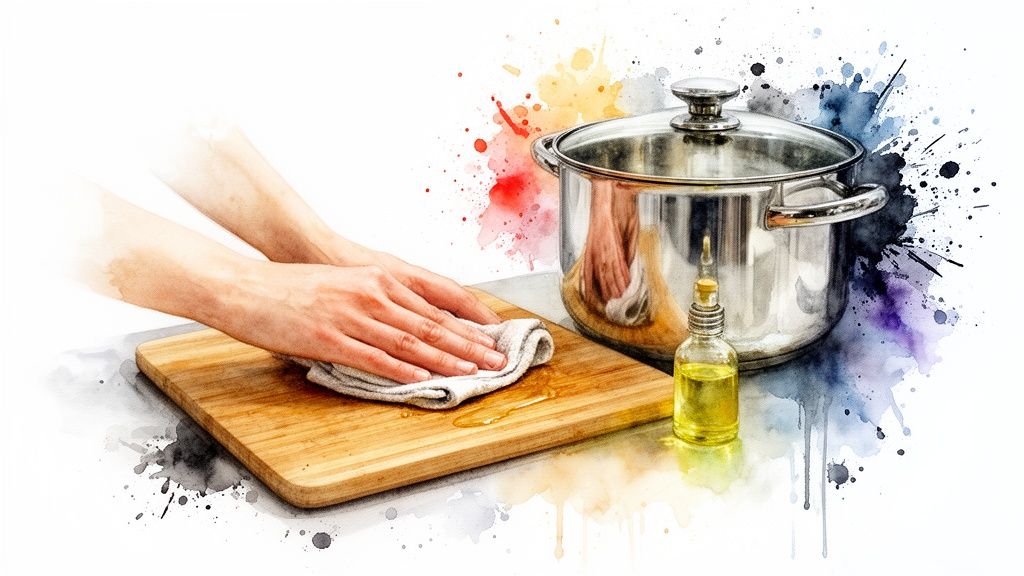
Choosing eco friendly kitchen tools is a great first step, but the real magic happens when you know how to make them last. Proper care isn't just about extending the life of your tools and keeping them out of the landfill; it's about making sure they work well and are safe to use for years to come.
The best part? Taking care of high-quality materials is usually far simpler than you might think. A few good habits are all it takes to keep your bamboo, stainless steel, and silicone gear in top-notch shape, making your initial investment pay off over and over again.
Decoding Labels and Certifications
Before we get into care routines, let's talk about making smart choices from the get-go. When you're shopping, you’ll see a bunch of different labels and certifications. Understanding what they actually mean is your key to cutting through the marketing noise and finding products that are genuinely well-made and sustainable.
Here are a few of the most important terms to look for:
- FSC-Certified: The Forest Stewardship Council (FSC) seal is your guarantee that any wood or bamboo comes from responsibly managed forests. It’s the gold standard, ensuring that the material was harvested in a way that's good for the environment, the workers, and the local economy.
- Food-Grade Silicone: This means the silicone is totally non-toxic and doesn't contain cheap chemical fillers like BPA. It's safe to use with any food or drink and won't release any weird fumes or flavors.
- BPA-Free: As we've touched on, this confirms the product is made without bisphenol A, an industrial chemical that has raised health concerns. For any plastic or silicone that touches your food, this is a non-negotiable.
Understanding these labels empowers you. You shift from just a consumer to an informed advocate for your family's health and the planet. You can confidently pick tools that are not only built to last but are also genuinely safe.
This kind of mindful shopping is becoming the new normal. The demand for eco friendly kitchen tools is exploding, with the market projected to jump from $73.26 billion in 2025 to a massive $123.33 billion by 2033. A big reason for this shift is durability—properly cared-for bamboo products, for example, can easily last two to three times longer than their flimsy plastic counterparts.
Material-Specific Care Instructions
Different materials need different kinds of TLC to live their longest, happiest lives. Think of it like gardening—you wouldn't care for a cactus the same way you'd care for a fern. Each tool in your kitchen has unique needs to help it thrive.
Caring for Bamboo
Bamboo is a beautiful, renewable workhorse, but it needs a little help to keep from drying out, cracking, or warping over time.
- Hand-Wash Only: Never, ever put your bamboo cutting boards or utensils in the dishwasher. The intense heat and long exposure to water will cause the wood to split and warp.
- Clean Promptly: Get in the habit of washing it with mild soap and warm water right after you're done using it. Don't let it soak in a sink full of water.
- Dry Thoroughly: After washing, pat it down with a towel and—this is key—let it air dry completely on a rack before putting it away.
- Oil Regularly: About once a month, give it a little spa treatment. Rub it down with a food-grade mineral oil or a special bamboo conditioning oil. This keeps the wood hydrated and looking its best. For a step-by-step guide, check out our post on how to season a bamboo cutting board.
Maintaining Stainless Steel
Stainless steel is incredibly tough and resists rust and corrosion like a champ, but a few simple tricks will keep it gleaming like new.
- Avoid Abrasives: To keep that smooth, shiny surface, stay away from steel wool or harsh scouring pads. A soft cloth or sponge is almost always enough.
- Tackle Discoloration: See those "rainbow" stains from heat? A little white vinegar is your secret weapon. Just wipe it on, rinse it off, and dry.
- Dry to Prevent Spots: Water spots are just harmless mineral deposits, but they can be annoying. The easiest fix is to simply towel-dry your stainless steel gear right after washing.
Keeping Silicone Like New
Durable silicone, like the kind used in Cooler Kitchen's spoon rests, is a dream to maintain and is completely dishwasher-safe.
For those stubborn, oily stains, especially from things like tomato sauce, try making a paste with baking soda and water. Rub it onto the stain, let it sit for a couple of hours, then just wash it as you normally would. It works like a charm.
Simple Swaps for Every Type of Home Cook
Making your kitchen a little greener doesn't require a dramatic, all-or-nothing overhaul. The best, most lasting changes come from small, deliberate upgrades that actually fit your life. After all, a bustling family has very different needs than someone living in a studio apartment. The best eco friendly kitchen tools are always the ones you'll genuinely use day in and day out.
The real secret is to focus on simple swaps that solve a problem you already have. When you match the right tool to your daily routine, you start making a real impact without feeling like you’re taking on a huge project. It makes sustainability feel less like a chore and more like a smart, easy upgrade for your home.
For the Busy Family
In a family kitchen, three things matter most: durability, safety, and efficiency. You need tools that can handle the daily chaos, are completely non-toxic for your kids, and help you get meals on the table (and cleaned up) faster.
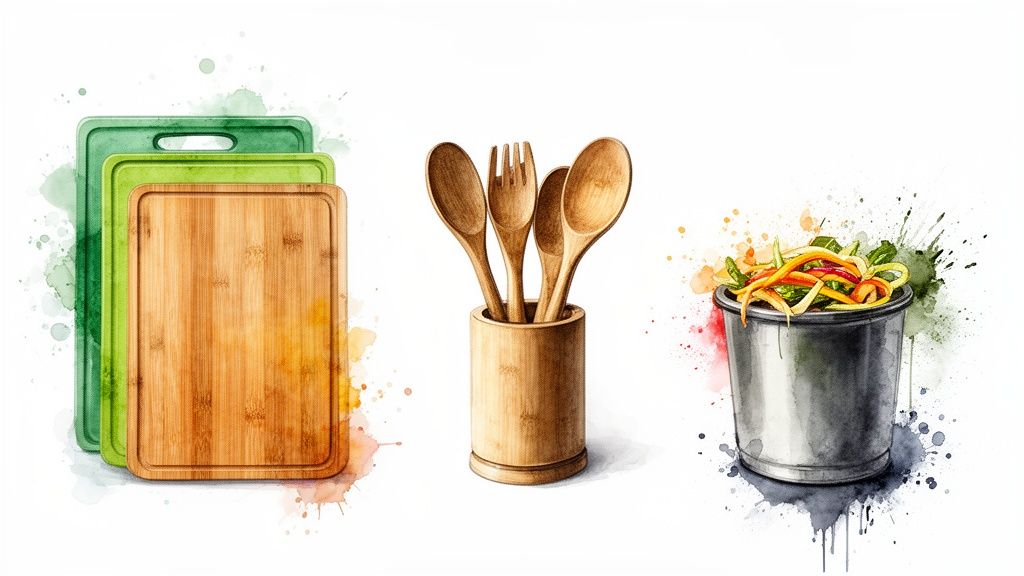
A brilliant first swap is a set of color-coded bamboo cutting boards. You can dedicate one color to raw meat, another to veggies, and so on, which is a foolproof way to prevent cross-contamination. It’s a simple system that brings peace of mind, especially when you’re rushing.
Another lifesaver is a stainless steel pasta pot with a strainer built right into the lid. This clever design means you don’t need a separate colander, which is one less bulky item to wash and store. It also saves water, since you aren't running the tap to rinse out another piece of equipment.
Making sustainable choices in a family kitchen is about finding tools that are tougher, safer, and smarter. They should simplify your life, not complicate it, all while reducing waste and chemical exposure for your loved ones.
These kinds of practical upgrades aren't just good for the planet; they're sanity-savers for any parent juggling it all.
For the Small-Space Dweller
When you live in a small apartment or condo, every inch of counter and cabinet space is prime real estate. The name of the game is finding multi-functional, compact eco friendly kitchen tools that pack a big punch in a tiny footprint.
A rotating utensil holder can be a game-changer. Instead of a clunky drawer organizer or a wide, static crock, a spinning holder keeps all your spatulas, whisks, and spoons right at your fingertips while barely taking up any counter space. It's a surprisingly elegant fix for a common problem.
Here are a few other smart swaps for a cozier kitchen:
- Collapsible Silicone Containers: These are perfect for leftovers and meal prep. When you're done, they flatten down to a fraction of their size, freeing up so much cabinet space.
- Nesting Bowls and Measuring Cups: Look for sets made from durable materials like stainless steel or bamboo that are specifically designed to stack into one neat unit.
- Over-the-Sink Cutting Boards: These clever boards are designed to fit right over your sink, magically creating extra prep space where there was none before.
Choosing tools that are both sustainable and space-efficient helps you keep an organized, uncluttered kitchen without giving up any functionality.
For the Zero-Waste Advocate
If you’re passionate about shrinking your environmental footprint, you’re looking for tools that do more than just last a long time—you want items that actively help you reduce or eliminate waste.
The quintessential tool here is a sleek countertop compost bin. This one simple addition lets you divert a massive amount of organic waste from the landfill, where it would generate harmful methane gas. All those fruit peels, veggie scraps, and coffee grounds can be turned into nutrient-rich compost instead of trash. If you're just starting, checking out a kitchen compost bin with a no-lock lid is a great way to see how easy it can be.
A few other high-impact swaps for the zero-waste enthusiast include:
- Reusable Coffee Filters: One cloth or stainless steel filter can take the place of hundreds of single-use paper ones every year.
- Silicone Baking Mats: Say goodbye to single-use parchment paper and aluminum foil. These non-stick mats can be washed and reused for years.
- Glass Jars for Bulk Shopping: Take them with you to the grocery store to fill up on grains, nuts, and spices, completely sidestepping all that plastic packaging.
These tools aren't just products; they're part of a whole system that helps you live more lightly on the planet. No matter how you cook or live, there’s a simple, sustainable swap ready to make your kitchen a little greener.
Ready to Start Your Sustainable Kitchen Journey?
Building an eco-friendly kitchen isn't about a massive, overnight overhaul. It's a journey, one that starts with small, deliberate choices that add up over time. As we've seen, it all comes down to understanding what goes into your tools, choosing things that are built to last, and making simple swaps that feel right for you. The real secret? Just start with one thing.
Maybe that first step is swapping your old plastic cutting board for a sturdy bamboo one. Or perhaps it's finally setting up that countertop compost bin you've been curious about. Each little change creates a ripple effect, making the next sustainable choice feel that much more natural. It was never about getting it perfect; it’s always been about making progress.
Remember, the kitchen is the heart of the home—it's a place where your everyday habits can create a powerful, positive impact for your family and the planet.
Think of this as the start of a really rewarding path. By choosing practical eco friendly kitchen tools that genuinely fit your life, you're not just making your kitchen greener—you're making the whole process enjoyable.
Start Small, But Think Big
Don't feel like you have to toss everything out and start from scratch. A much smarter—and more sustainable—approach is to wait until something is ready to be replaced. When your old spatula finally gives out, that's your cue to find a better, longer-lasting alternative. This gradual method is easier on your wallet and your peace of mind, ensuring your greener kitchen is built to last.
This guide has laid out the map, but you're the one steering the ship. The choices you make really do matter. Taking steps toward a more conscious and sustainable home is one of the most fulfilling things you can do. So, embrace the process, give yourself a pat on the back for the small wins, and enjoy the feeling that comes from building a kitchen that’s good for you and the world. Every meal you cook becomes a small vote for a healthier planet.
Got Questions? We’ve Got Answers.
Stepping into the world of sustainable living can feel like learning a new language, and it’s totally normal to have questions. As you start swapping out old kitchen gear for more earth-friendly options, you might wonder about the price, where to start, and what to do with your old stuff. Let's clear up some of the most common questions.
Are Eco-Friendly Kitchen Tools Actually More Expensive?
It's a common misconception that going green will drain your wallet. While some sustainable tools might have a higher price tag at the register, they almost always save you money in the long run. Think of it this way: materials like stainless steel, bamboo, and high-quality silicone are built for the long haul.
You're making an investment, not just a purchase. A single, solid stainless steel pan can easily outlive a parade of cheap, disposable non-stick pans you'd have to replace every couple of years. Over a decade, that's a huge saving and a lot less junk heading to the landfill. Plus, many everyday staples, like bamboo utensils, are surprisingly affordable right from the get-go.
What’s the Easiest First Swap I Can Make?
The best place to start is with something you use—and throw away—all the time. One of the simplest and most satisfying swaps is ditching your plastic cutting board for a sturdy bamboo one. Bamboo is an incredibly fast-growing, renewable resource, and a well-made board is not only better for the planet but also gentler on your knives.
Another fantastic "starter swap" is a reusable silicone spoon rest. Think about how many paper towels you toss just to have a place to set down a messy spoon. This one tiny tool eliminates that waste completely and keeps your counters clean for years. It's these small, daily wins that really build momentum.
How Do I Get Rid of My Old Kitchen Tools Responsibly?
Knowing what to do with your old gear is just as important as choosing new, sustainable items. The right way to dispose of something depends entirely on what it's made of. The ultimate goal is to keep as much as possible out of the landfill.
Here’s a quick guide for common materials:
- Natural Materials: If you have a utensil made from 100% bamboo without a synthetic coating, you can often break it into small pieces and add it to your compost pile.
- Metals: Stainless steel is a recycling superstar. It can be recycled over and over again without losing quality. Your old pots, pans, and utensils can be taken to a local scrap metal facility.
- Silicone: This one can be a bit tricky. Most city recycling programs won't take food-grade silicone in the curbside bin. However, there are specialized recycling services out there, so a quick online search for a drop-off location near you is definitely worth the effort.
Of course, the best strategy is to choose durable eco friendly kitchen tools from the start, so you don't have to worry about disposal for a very, very long time. And always, be sure to check the specific guidelines from your local waste management provider.
At Cooler Kitchen, we believe a sustainable kitchen should be simple, beautiful, and a joy to use. Our products are thoughtfully designed to last, helping you build a home that’s healthier for you and kinder to the planet. Ready to start your journey? Explore our collection and find your new favorite kitchen tool today.