

10 Fun Recipes to Make With Kids for Unforgettable Family Time in 2026
Welcome to the ultimate guide for turning your kitchen into a playground of creativity, learning, and delicious fun. Cooking with children is about more than just making a meal; it's about building confidence, teaching essential life skills, and creating joyful memories that last a lifetime. In a world of busy schedules, these hands-on activities offer a unique opportunity to connect, communicate, and collaborate away from screens.
We've gathered an exciting collection of fun recipes to make with kids, designed to be engaging, safe, and satisfying for little chefs of all ages. From no-bake energy bites and DIY personal pizzas to colorful cookie art, each recipe is broken down into simple steps. We've included safety tips, age recommendations, and clever ways to incorporate helpful kitchenware to make the process smoother and more enjoyable for everyone. For young children to participate safely at counter height, it's important to set them up for success. To truly empower your young culinary enthusiasts, discover how to raise little chefs with the perfect kitchen tower for safe and engaging participation. Get ready to embrace the mess, celebrate the creativity, and watch your little ones beam with pride as they serve up their very own culinary masterpieces. Let’s get cooking
1. Homemade Ice Cream & Frozen Treats
Making frozen desserts from scratch is one of the most exciting and rewarding fun recipes to make with kids. It transforms a simple kitchen activity into a cool science experiment, teaching children about freezing points, textures, and flavor creation. Using an electric ice cream maker, families can easily craft delicious, high-quality treats without the extra additives found in many store-bought options.
This hands-on process is perfect for hot summer days, birthday parties, or any time you want a memorable family project. Kids feel a huge sense of accomplishment watching a liquid base magically turn into a creamy, frozen dessert they helped create.
Get Started With These Ideas
- Classic Strawberry Ice Cream: Use fresh, seasonal berries for a vibrant and authentic fruit flavor.
- Dairy-Free Chocolate Sorbet: A rich and decadent option using cocoa powder and a sugar-water base.
- Frozen Banana 'Nice Cream': The simplest recipe of all. Just blend frozen bananas for a creamy, one-ingredient treat.
Tips for Success
Set your little chefs up for a fantastic experience by prepping the ice cream base at least a day in advance to ensure it's thoroughly chilled. Before you start churning, let kids choose their own toppings and mix-ins like chocolate chips, sprinkles, or crushed cookies. This gives them creative control over the final product.
Pro Tip: Create a "flavor journal" where your kids can write down or draw their favorite ingredient combinations. This encourages experimentation and helps them remember which creations they loved most.
For a comprehensive guide, check out these step-by-step instructions on how to make homemade ice cream.
2. DIY Personal Pizzas with Pre-Made Dough
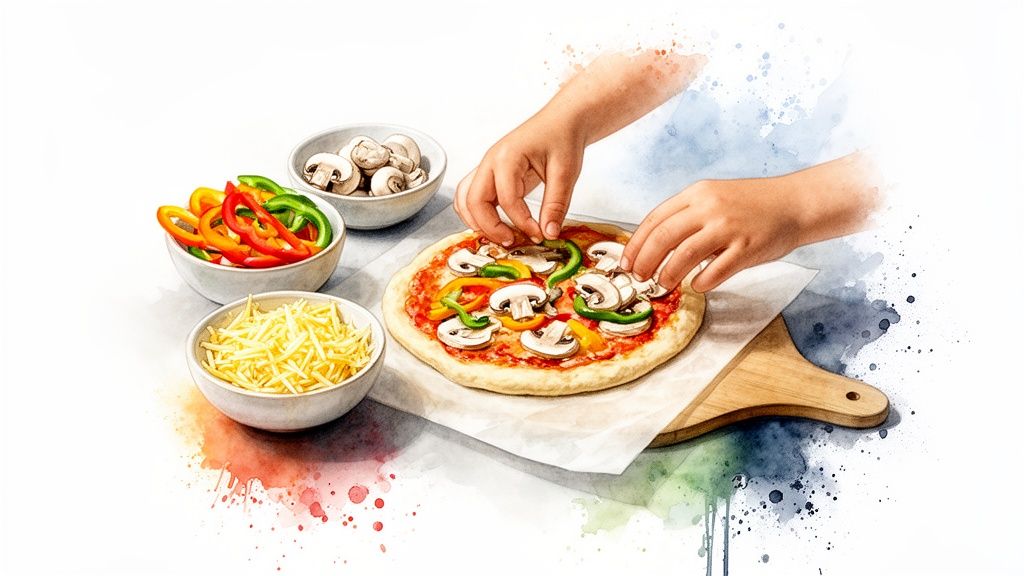
Creating personal pizzas is one of the most beloved fun recipes to make with kids. It empowers children by letting them become mini chefs, choosing their own toppings and designing their perfect meal from the ground up. Using pre-made dough removes the complexity of baking, allowing the focus to remain on creativity and hands-on assembly.
This activity is ideal for weeknight dinners, family game nights, or even a fun party theme. Kids develop confidence in the kitchen and learn about food groups as they arrange their ingredients, all while crafting a delicious meal they'll be excited to eat.
Get Started With These Ideas
- Classic Pepperoni & Cheese: The timeless favorite that never fails to please.
- Veggie-Loaded Pizza: Encourage healthy eating with colorful bell peppers, mushrooms, and zucchini.
- BBQ Chicken Pizza: Use pre-cooked chicken, BBQ sauce, red onion, and a sprinkle of cilantro.
- Mediterranean-Style: A sophisticated option with spinach, feta cheese, and black olives.
Tips for Success
Set up a "pizza station" by placing pre-cut toppings in small, separate bowls for easy access. This makes assembly smooth and minimizes mess. Using parchment paper on your baking sheets is a simple trick that guarantees an easy cleanup after the fun is over.
Pro Tip: Take photos of your kids' finished pizza creations before they go into the oven. Compile them into a "pizza portfolio" to celebrate their culinary artistry and remember their favorite unique combinations.
For a great guide on hosting a pizza night, explore this resource on how to throw a DIY pizza party.
3. No-Bake Energy Balls & Protein Bites
Creating no-bake energy balls is one of the easiest and most satisfying fun recipes to make with kids. This activity requires no heat, making it a safe and accessible option for even the youngest kitchen helpers. Children learn fundamental skills like measuring, mixing, and rolling while creating delicious, healthy snacks perfect for after school or a quick energy boost.
This hands-on process allows kids to get a little messy and feel a real sense of ownership over the final product. Watching a few simple ingredients like oats, nut butter, and dried fruit transform into tasty, portable bites is a magical experience that builds kitchen confidence.
Get Started With These Ideas
- Chocolate Peanut Butter Balls: A classic combination using oats, peanut butter, honey, and a coating of cocoa powder.
- Almond Butter & Date Bites: A naturally sweet treat made with Medjool dates, almond butter, and rolled in shredded coconut.
- Tahini & Honey Energizers: A unique, nutty flavor profile using tahini, honey, and a crunchy sesame seed coating.
Tips for Success
Set your little chefs up for a fantastic experience by chilling the mixture in the refrigerator for about 30 minutes before rolling. This makes the dough less sticky and much easier for small hands to manage. Use a small cookie scoop to create uniform-sized balls, which ensures they all firm up evenly.
Pro Tip: Set up a "rolling station" with shallow bowls of different coatings like shredded coconut, cocoa powder, or sprinkles. This turns the final step into an interactive and creative decoration activity for the kids.
For airtight and sustainable storage, consider using glass containers with bamboo lids to keep the energy bites fresh.
4. Colorful Fruit & Veggie Kabobs
Creating colorful fruit and veggie kabobs is one of the most engaging fun recipes to make with kids. This activity transforms healthy eating into a hands-on art project, empowering children to build their own nutritious snacks while practicing fine motor skills. Threading vibrant produce onto skewers makes fruits and vegetables visually appealing, which can often entice even the most selective eaters to try something new.
This simple, no-cook recipe is perfect for afternoon snacks, party platters, or a light and healthy dessert. Kids gain a sense of ownership and pride as they design their own edible creations, learning about colors, patterns, and the importance of eating a variety of foods.
Get Started With These Ideas
- Rainbow Fruit Skewers: Thread strawberries, orange segments, pineapple chunks, kiwi, blueberries, and purple grapes for a beautiful spectrum of color.
- Veggie Garden Kabobs: Combine cherry tomatoes, cucumber slices, bell pepper squares, and mozzarella balls for a savory treat.
- Sweet & Salty Watermelon Sticks: Alternate cubes of fresh watermelon and feta cheese for a refreshing flavor combination.
Tips for Success
Prepare for a smooth and fun experience by pre-chopping all fruits and vegetables into uniform, bite-sized pieces. Soaking wooden skewers in water for 30 minutes beforehand helps prevent splintering. Encourage kids to create their own patterns, turning snack time into a creative session. For an added flavor boost, pair the finished kabobs with a simple yogurt or honey-lime dipping sauce.
Pro Tip: Use color-coded cutting boards to keep fruits and vegetables separate during prep. This not only prevents flavor transfer but also serves as a great visual tool to teach kids about organizing their workspace.
To keep any leftover ingredients fresh, discover the best way to store fresh herbs and produce.
5. Decorated Sugar Cookies & Edible Art Projects
Transforming a simple dough into edible art is one of the most creatively fulfilling fun recipes to make with kids. Baking and decorating sugar cookies is a classic activity that teaches fundamental baking skills like measuring, mixing, and rolling, while also encouraging artistic expression. This multi-stage process keeps children engaged from start to finish.
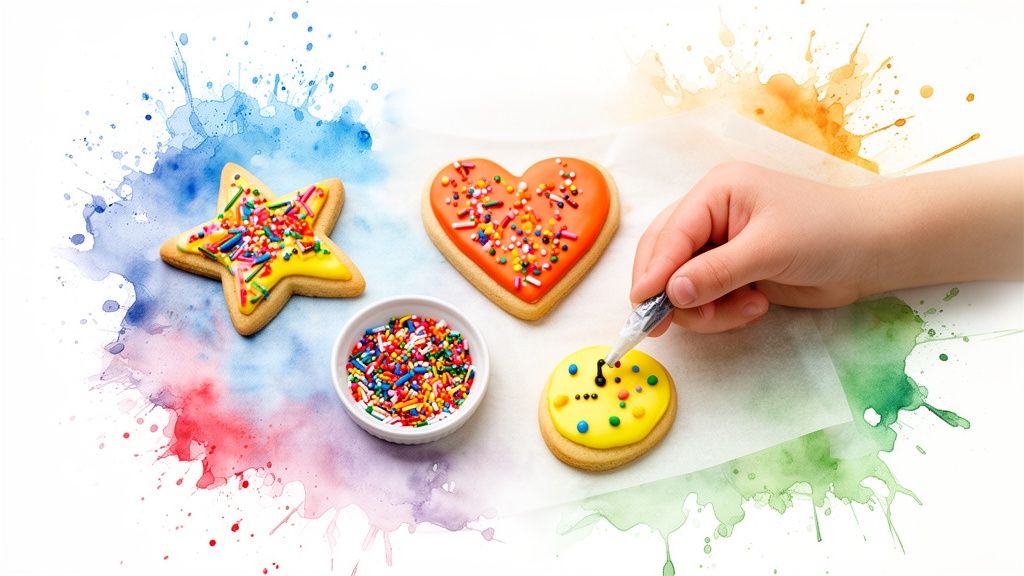
The real magic happens during the decoration phase, where each cookie becomes a unique masterpiece. It’s an ideal project for holidays, parties, or a quiet weekend afternoon, resulting in delicious treats that children can proudly share with family and friends. The sense of accomplishment they feel is as sweet as the cookies themselves.
Get Started With These Ideas
- Holiday-Themed Cookies: Create Christmas trees, pumpkins, or hearts to celebrate the seasons.
- Character Cookies: Decorate circles or squares to look like favorite book or movie characters.
- Personalized Cookies: Use letter-shaped cookie cutters for initials or names for a special touch.
- Abstract Art Cookies: Let kids create free-form geometric patterns and colorful designs.
Tips for Success
Prepare the cookie dough at least two hours in advance (overnight is best) and chill it thoroughly. This makes it much easier for little hands to roll and cut without it becoming too sticky. Set up a dedicated decoration station with bowls of frosting, various sprinkles, and small candies to keep things organized and accessible.
Pro Tip: Create a "cookie masterpiece gallery" by lining a baking sheet with parchment paper to display the finished creations. This gives the frosting time to set and lets kids admire their work before anyone takes a bite.
For visual instructions on making the perfect dough, this video guide is a great resource.
6. Smoothie & Milkshake Bar
Setting up a self-serve smoothie and milkshake bar is one of the most interactive and fun recipes to make with kids. This activity transforms snack time into a creative lab, empowering children to design their own drinks. It’s a brilliant way to encourage healthy eating, as kids are more likely to enjoy nutritious foods they've chosen and prepared themselves.
This hands-on station gives children a sense of independence and control over their nutritional choices. Watching fruits, yogurts, and milks blend into a delicious beverage teaches them about ingredient combinations and textures in a vibrant, engaging way.

Get Started With These Ideas
- Tropical Smoothie: Blend mango, pineapple, and banana with coconut milk for a taste of the islands.
- Berry Blast: Combine strawberries, blueberries, and raspberries with yogurt and a splash of milk.
- Hidden Veggie Green Smoothie: Sneak in some nutrition with spinach, pineapple, and banana; they'll never know!
- Classic Chocolate Milkshake: A simple treat made with banana, cocoa powder, milk, and a scoop of vanilla ice cream.
Tips for Success
Prepare all ingredients in advance by washing and chopping fruits, and arrange them in labeled bowls. For those looking to offer quick and easy, yet indulgent, options at your smoothie and milkshake bar, learn how to create delicious Shmoo milkshakes for a simple, pre-mixed solution. Always supervise children closely when they are operating the blender.
Pro Tip: Create a simple 'flavor combination chart' with pictures and words to suggest tasty blends. This helps younger kids make successful choices and encourages older kids to experiment with new pairings.
7. Pasta Shapes & Sauce Creation
Teaching kids to make pasta and sauce from scratch is one of the most essential fun recipes to make with kids. This activity introduces foundational kitchen skills like boiling water safely, understanding cooking times, and creating simple yet flavorful sauces. Using tools like a pasta pot with a locking strainer lid makes the process safer and more manageable for young helpers, turning a basic meal into an empowering culinary lesson.
This hands-on experience demystifies cooking and gives children a huge sense of accomplishment. They learn to manage a multi-step process, from cooking the noodles perfectly to simmering a delicious sauce, all while creating a meal the whole family can enjoy together.
Get Started With These Ideas
- Classic Marinara: A simple and timeless sauce made with canned tomatoes, fresh basil, and a sprinkle of parmesan.
- Butter & Parmesan: An incredibly easy sauce that lets kids master melting butter and mixing in cheese for a creamy finish.
- Garlic and Oil (Aglio e Olio): For slightly older kids, this teaches them how to gently toast garlic in olive oil for a fragrant, simple sauce.
Tips for Success
Set your junior chefs up for a safe and successful pasta night by teaching them proper water management. Let them feel the steam rising about 12 inches above the pot to understand heat without touching the stove. Use a timer to prevent overcooking and have them taste-test a noodle one minute before the package suggests. This introduces them to the concept of cooking to "al dente."
Pro Tip: Teach your kids the classic Italian trick of reserving a small cup of starchy pasta water before draining. Show them how adding a splash to the sauce helps it cling to the noodles, a practical problem-solving skill they’ll use for life.
For a safer draining experience, consider a dedicated tool like the Cooler Kitchen Stainless Steel Pasta Pot with Locking Strainer Lid.
8. Sandwich Art & Wrap Creations
Transforming lunch preparation into an art project is one of the most engaging fun recipes to make with kids. This activity empowers children by letting them design their own meals, which makes them more excited to eat what they've created. It’s a fantastic way to introduce concepts like balanced meals, food groups, and flavor combinations in a low-pressure, creative setting.
By setting up a "sandwich bar" with pre-prepared ingredients, you turn a routine task into a hands-on experience. Kids develop fine motor skills as they spread, layer, and wrap, and they gain a sense of ownership over their food choices, encouraging healthier eating habits.
Get Started With These Ideas
- Classic Turkey & Cheese: Layer turkey, cheese, lettuce, and tomato on whole wheat bread.
- Veggie-Packed Hummus Pita: Spread hummus in a pita pocket and fill with cucumber, bell peppers, and sprouts.
- Creamy Cucumber Dill Wrap: A simple and refreshing combination of cream cheese, sliced cucumber, and fresh dill on a whole grain wrap.
Tips for Success
Set up an assembly line with ingredients sorted in small bowls for easy access. Use color-coded cutting boards to teach food safety, like green for veggies and red for proteins. Guide them on technique: spread condiments first, then add flat layers, and finish with smaller ingredients.
Pro Tip: Create illustrated "sandwich recipe cards" with your kids, drawing their favorite combinations. This not only makes meal prep easier next time but also serves as a fun record of their culinary inventions.
For a great selection of food-safe tools, explore the kitchen essentials at Cooler Kitchen to get started.
9. Compost & Farm-to-Table Learning
Transforming kitchen scraps into nutrient-rich compost is one of the most impactful fun recipes to make with kids, turning cooking cleanup into a powerful lesson on sustainability. It connects children to the entire food cycle, from preparation to waste reduction and eventual regrowth. Using a simple countertop compost bin, families can integrate eco-friendly habits directly into their daily cooking routines.
This hands-on activity teaches kids about environmental responsibility and the importance of reducing food waste. They gain a deeper appreciation for where their food comes from and feel empowered knowing they are helping the planet, one apple core at a time. It’s a rewarding process that goes far beyond the meal itself.
Get Started With These Ideas
- Salad Scraps: Collect carrot tops, lettuce stems, and bell pepper seeds while making a fresh garden salad.
- Smoothie Leftovers: Save banana peels, strawberry tops, and mango skins after blending a fruity smoothie.
- Baking Remnants: Gather excess pizza dough trimmings or eggshells when baking treats.
Tips for Success
Set up your composting station for an engaging experience by creating a simple visual guide of "what goes in the bin" and placing it nearby. Let kids be in charge of rinsing and sorting the scraps, which gives them more ownership over the process. Make sure the countertop bin is in an accessible spot so they can easily deposit scraps during meal prep.
Pro Tip: Start a "compost journal" to track how much food waste you've diverted from the landfill each week. Celebrate your waste reduction milestones as a family to reinforce the positive impact of your new habit.
Learn more about getting started with this eco-friendly practice by exploring Cooler Kitchen's guide on how to use a countertop compost bin.
10. Cooking Challenge Games & Recipe Competitions
Transforming your kitchen into a game show arena is one of the most dynamic fun recipes to make with kids. This gamified approach turns cooking into a friendly competition, boosting engagement, creativity, and problem-solving skills under a little bit of fun pressure. Kids learn to think on their feet, manage time, and make decisions about flavors and ingredients.
Inspired by popular TV shows, these challenges encourage children to see cooking not just as a task but as an exciting, creative outlet. Whether it's a timed race or a mystery box challenge, the competitive element keeps kids fully invested from start to finish, making memories that last long after the dishes are clean.
Get Started With These Ideas
- Mystery Box Challenge: Give each child a few secret ingredients they must use to create a unique dish.
- Pantry-Only Race: Challenge kids to make a complete meal using only items already in your pantry.
- The Rainbow Plate: Task them with creating a snack or meal that includes every color of the rainbow.
Tips for Success
Set clear rules and time limits before any challenge begins to keep things fair and focused. Keep the workspace organized with a rotating utensil holder for easy access to tools. Most importantly, create small awards for different achievements like "Most Creative Dish" or "Best Teamwork" so every participant feels like a winner.
Pro Tip: After each challenge, hold a "tasting panel" where judges (family members or even stuffed animals) give constructive feedback. Discuss what worked, what didn't, and what they would try differently next time to encourage learning and growth.
For more insights on building kitchen confidence, you can learn more about common cooking mistakes to avoid.
10 Kid-Friendly Recipes Comparison
| Activity | Implementation Complexity 🔄 | Resources & Prep ⚡ | Expected Outcomes ⭐📊 | Ideal Use Cases 💡 | Key Advantages |
|---|---|---|---|---|---|
| Homemade Ice Cream & Frozen Treats | Moderate — chilled bases and electric maker; adult supervision needed | Electric ice cream maker, mixing bowls, chilled base (prep 24h), counter/storage space | High engagement; teaches freezing points, flavor combos; tasty results (⭐⭐⭐⭐) | Birthday parties, summer activities, STEAM lessons | Hands-on sensory learning; highly customizable; quick churn (20–30 min) |
| DIY Personal Pizzas with Pre-Made Dough | Low — assembly-focused; oven use requires safety | Store-bought dough, toppings, baking sheets, oven; short active time | Builds confidence and nutrition awareness; satisfying meal (⭐⭐⭐) | Playdates, family dinners, pizza parties | Reduces picky eating; teaches balanced toppings; scalable for groups |
| No-Bake Energy Balls & Protein Bites | Very low — mixing and rolling, no heat | Mixing bowls, nut butter, oats, fridge for chilling | Healthy portable snacks; teaches measuring and ratios (⭐⭐⭐) | After-school snacks, gifting projects, hot weather | Minimal equipment; budget-friendly; quick (15–20 min) |
| Colorful Fruit & Veggie Kabobs | Low — threading; adult knife prep recommended | Cutting boards, skewers (soaked), pre-cut produce; fast assembly | Encourages vegetable intake; develops fine motor skills (⭐⭐⭐) | Parties, picnics, garden-to-table activities | No cooking; visually appealing; promotes variety |
| Decorated Sugar Cookies & Edible Art Projects | Moderate — multi-stage: chill, bake, decorate; oven required | Mixing bowls, cookie cutters, baking sheets, frosting tools; time-intensive | High creativity and baking skill development; festive output (⭐⭐⭐⭐) | Holidays, gifts, art-focused sessions | Teaches baking fundamentals; high-impact memorable results |
| Smoothie & Milkshake Bar | Low–Moderate — blender operation requires supervision | Blender, washed/chopped fruits, cups, add-ins; quick prep (5–10 min) | Increases fruit consumption; interactive and customizable (⭐⭐⭐) | Hot days, group activities, nutrition demos | Fast, scalable, accommodates dietary needs |
| Pasta Shapes & Sauce Creation | Moderate — boiling water and hot handling; adult oversight essential | Pasta pot with strainer lid, sauce pan, utensils, pantry staples | Builds fundamental cooking skills, timing, and texture awareness (⭐⭐⭐⭐) | Foundational cooking lessons, family dinners | Teaches heat safety and practical techniques; satisfying meal result |
| Sandwich Art & Wrap Creations | Very low — assembly only, no cooking | Pre-cut ingredients, color-coded boards, wraps/bread; minimal time | Promotes independence and balanced meals (⭐⭐⭐) | Lunch prep, quick meals, self-serve stations | Encourages choice, reduces picky eating, easy to scale |
| Compost & Farm-to-Table Learning | Low — routine practice with periodic maintenance | Countertop compost bin, charcoal filters, sorting guide; regular emptying | Teaches sustainability and waste reduction; produces compost (⭐⭐⭐⭐) | Environmental education, apartment gardening | Hands-on lessons in food cycles; reduces household waste |
| Cooking Challenge Games & Recipe Competitions | Moderate — needs facilitation, rules, prep | Timer, utensils, prepped ingredients, adult facilitator | Boosts creativity, time management, resilience (⭐⭐⭐⭐) | Classes, family bonding events, camps | Highly engaging; builds problem-solving and soft skills |
Your Family's Next Adventure Awaits in the Kitchen
You’ve journeyed through a delicious collection of fun recipes to make with kids, from the chilly delight of homemade ice cream to the creative chaos of DIY personal pizzas. We've explored how simple activities, like assembling vibrant fruit kabobs or decorating sugar cookies, can transform your kitchen into a powerful classroom and a space for connection. Each recipe and activity in this guide was designed with more than just a tasty outcome in mind; they are blueprints for creating lasting memories.
The true magic happens not in achieving a picture-perfect dish, but in the shared moments of laughter over spilled flour and the pride a child feels when they master a new skill. These experiences are the foundation for a healthy relationship with food and a lifetime of kitchen confidence.
Beyond the Recipe: Building Lifelong Skills
Remember, every time your child helps in the kitchen, they are learning invaluable lessons that extend far beyond cooking. They are practicing:
- Math and Science: Measuring flour for No-Bake Energy Balls or watching ingredients transform in a smoothie is a hands-on science and math lesson.
- Following Instructions: Reading a recipe step-by-step builds literacy and comprehension skills, teaching them the importance of sequence and order.
- Patience and Resilience: Waiting for cookies to bake or accepting that a sandwich creation didn't turn out exactly as planned teaches patience and the ability to adapt.
- Teamwork and Responsibility: From prepping ingredients for pasta sauce to the essential task of cleaning up, they learn what it means to be part of a team and contribute to the household.
By embracing the process, you're not just making a meal; you're nurturing creativity, building self-esteem, and strengthening your family bond. The goal is to focus on the joy of creating together.
Your Action Plan for Kitchen Fun
Feeling inspired? Don't let this newfound motivation fade. Here’s how you can start your culinary adventure today:
- Schedule It: Pick one recipe from this list and put it on the family calendar for this week. Treating it like any other important activity ensures it happens.
- Involve the Kids in Planning: Let your children help choose the recipe. Giving them ownership from the start boosts their excitement and engagement.
- Gather Your Tools: Check if you have the right kid-friendly equipment. Using safe, appropriately sized tools like silicone spatulas or non-slip cutting boards makes the experience safer and more enjoyable for everyone.
The most important takeaway is that cooking with your kids is less about the final product and more about the memories you bake, blend, and build along the way. So, roll up your sleeves, prepare for a little mess, and get ready to discover just how rewarding it can be to turn simple ingredients into a shared, delicious adventure.
Ready to equip your kitchen for countless family adventures? Explore the full range of kid-friendly, durable, and easy-to-clean tools at Cooler Kitchen. From our top-rated ice cream makers to silicone utensil sets perfect for little hands, we have everything you need to make cooking with your kids safe, fun, and memorable. Visit us at Cooler Kitchen to gear up for your next creation