

A Spotless Guide to Cleaning the Inside of a Dishwasher
It's easy to assume your dishwasher cleans itself—after all, it's constantly running hot, soapy water. But that's a common myth that can lead to some pretty grimy results. Over time, all the food bits, grease, and hard water minerals have to go somewhere, and they often end up sticking around inside your machine.
This buildup is the culprit behind funky odors, cloudy glassware, and dishes that just don't seem to get clean. A quick, regular clean is the secret to protecting your appliance and making sure your dishes are truly spotless and sanitized.
Why Cleaning Your Dishwasher Is an Essential Kitchen Chore
Think about what your dishwasher tackles with every single cycle. It's not just soap and water; it's also grease, tiny food particles, and mineral deposits from your water supply. These things don't just rinse away—they build up on the interior walls, get stuck in the spray arms, and, most critically, clog the filter.
This gunk is more than just a little gross. It seriously hampers your machine's cleaning power. When the tiny holes in the spray arms are blocked, water can’t reach every corner. And when the filter is jammed, you risk having old food sprayed right back onto your supposedly clean dishes.
The Cost of Neglect
Putting this chore off can hit you in the wallet. Professional appliance repair services estimate that over 50% of dishwasher repair calls could be completely avoided with simple, routine maintenance. That buildup of food and grease puts a real strain on the pump and motor, leading to expensive breakdowns.
Turning this task into a quick monthly habit pays off in more ways than one.
- Better Hygiene: A clean machine prevents mold and bacteria from growing, which means your dishes are actually getting sanitized.
- Top-Notch Performance: With clear spray arms and a clean filter, water can circulate properly for a much more effective wash.
- No More Smells: Cleaning gets rid of the trapped food particles that cause those stale, musty odors.
- A Longer-Lasting Appliance: Taking care of your dishwasher reduces wear and tear on its most important parts, helping it last for years.
By spending just a few minutes each month on your dishwasher, you're not just maintaining an appliance; you're investing in your kitchen's overall hygiene and efficiency. It’s just like keeping your tools organized for easy access—maintaining your machines is a core part of a well-run kitchen. For more ideas on keeping your space in order, see our guide on how to organize kitchen utensils.
Your Simple Dishwasher Cleaning Toolkit
Before you roll up your sleeves and start scrubbing, let's get your supplies in order. The good news? You don't need a shelf full of harsh chemicals or specialty cleaners to get your dishwasher sparkling.
Most of what you need is probably already hiding in your pantry. We’ll cover the absolute must-haves for regular upkeep and a few optional heavy-hitters for when you’re facing a tougher cleaning challenge.
Here’s a quick-reference table to help you gather your toolkit.
Your Dishwasher Cleaning Toolkit
| Item | Purpose | Where to Find |
|---|---|---|
| White Distilled Vinegar | Dissolves mineral buildup, sanitizes, and deodorizes. Your go-to for fighting hard water stains. | Grocery store (baking or condiment aisle) |
| Baking Soda | A gentle abrasive for scrubbing and a fantastic odor absorber. | Grocery store (baking aisle) |
| Soft Cloth or Sponge | Wiping down the interior, door, and gasket. Microfiber is a great choice. | Any home goods or grocery store |
| Old Toothbrush | Perfect for scrubbing tight spots like the filter, spray arm nozzles, and gasket grooves. | Your bathroom cabinet (just don't mix them up!) |
| Citric Acid (Optional) | A powerhouse against severe limescale and rust. | Grocery store (canning section) or online |
| Dishwasher Cleaner (Optional) | Pre-made tablets or liquids for a convenient, no-fuss deep clean. | Grocery store (cleaning aisle) |
With these items on hand, you’re ready to tackle everything from a quick refresh to a serious deep clean.
The Everyday Essentials
For your regular monthly cleanings, a few simple household staples are all it takes. These guys are gentle on your machine but tough on grime.
- White Distilled Vinegar: This is the unsung hero of dishwasher cleaning. Its acidity effortlessly cuts through that chalky film left by hard water and helps sanitize the interior.
- Baking Soda: Think of this as a dual-action cleaner. It’s a mild abrasive that scrubs away stuck-on food without scratching, and it’s brilliant at neutralizing those funky, lingering odors.
- A Soft Cloth or Sponge: You'll need this for wiping down the door, the rubber gasket, and any other surfaces you can easily reach.
- An Old Toothbrush or Small Brush: Nothing beats a small brush for getting into the nooks and crannies. It’s essential for cleaning the filter screen and clearing out clogged spray arm jets.
Pro Tip: Sticking with vinegar and baking soda isn't just about saving money. It's a fantastic, eco-friendly way to keep harsh chemicals out of your kitchen and away from your dishes.
Optional Items for a Deeper Clean
Every once in a while, your dishwasher might need a little extra muscle. If it's been a while since its last cleaning or you have notoriously hard water, these can make a huge difference.
- Citric Acid: When vinegar isn't quite cutting it, citric acid is your next step up. This food-safe powder is a beast when it comes to dissolving stubborn limescale and even light rust stains.
- Dishwasher Cleaning Tablets: For a super convenient deep clean, you can't go wrong with a commercial cleaner. These are specially formulated to blast away caked-on grease and heavy mineral deposits with zero effort on your part. Just pop one in and run a cycle.
A Practical Method for Deep Cleaning Your Dishwasher
Alright, you've got your supplies ready, so let's dive in and get that dishwasher looking and smelling brand new. This isn't a complex job, but it does require a bit of methodical effort. We’re going to hit all the spots where gunk and grime love to build up, leaving your machine running like it should.
The best approach is to tackle the individual parts by hand first, then let the machine do the heavy lifting with a sanitizing cycle. This two-part strategy ensures you've removed the physical debris before you dissolve the invisible grease and mineral buildup.
Handling the Grimiest Components First
The parts you can actually take out are almost always the biggest culprits behind poor cleaning performance and nasty smells. To get started, completely empty the dishwasher—racks, silverware basket, everything. You want a clear, open tub to work with.
- The Filter: This little guy is public enemy number one when it comes to dishwasher odors. You'll find it at the bottom of the tub. Most just need a simple twist to unlock and lift out. If it’s been a while, expect it to be a bit slimy, so get a firm grip.
- The Spray Arms: These are what blast water onto your dishes. Over time, the tiny jets get clogged with food particles and hard water deposits, which is why your dishes might come out with food still stuck to them. Most spray arms can be easily unclipped or unscrewed.
Once you have these parts out, head over to the sink. A little warm, soapy water and an old toothbrush are all you need to scrub the filter screen until it’s totally clean. For the spray arms, I like to use a toothpick or a straightened paperclip to poke out any debris from the nozzles before giving them a final rinse.
Don't be shocked if the filter is absolutely disgusting—that just proves it's doing its job! A filter that hasn't seen the light of day in a year can have a thick, slimy film on it. A good scrub will make it look as good as new.
Wiping Down the Forgotten Surfaces
With the filter and spray arms cleaned and set aside, it's time to focus on the interior surfaces that don't get a direct hit from the water jets. This is where mildew and soap scum tend to hang out.
The door gasket—that rubber seal running around the edge—is a prime spot for mold to grow. Gently pull it back and wipe down the folds with a damp cloth dipped in a little vinegar. Don't forget to wipe down the bottom edge of the door and the area around the hinges, as that's another popular spot for gunk to collect.
This visual guide breaks down the core steps, from getting your essentials together to the deep clean itself.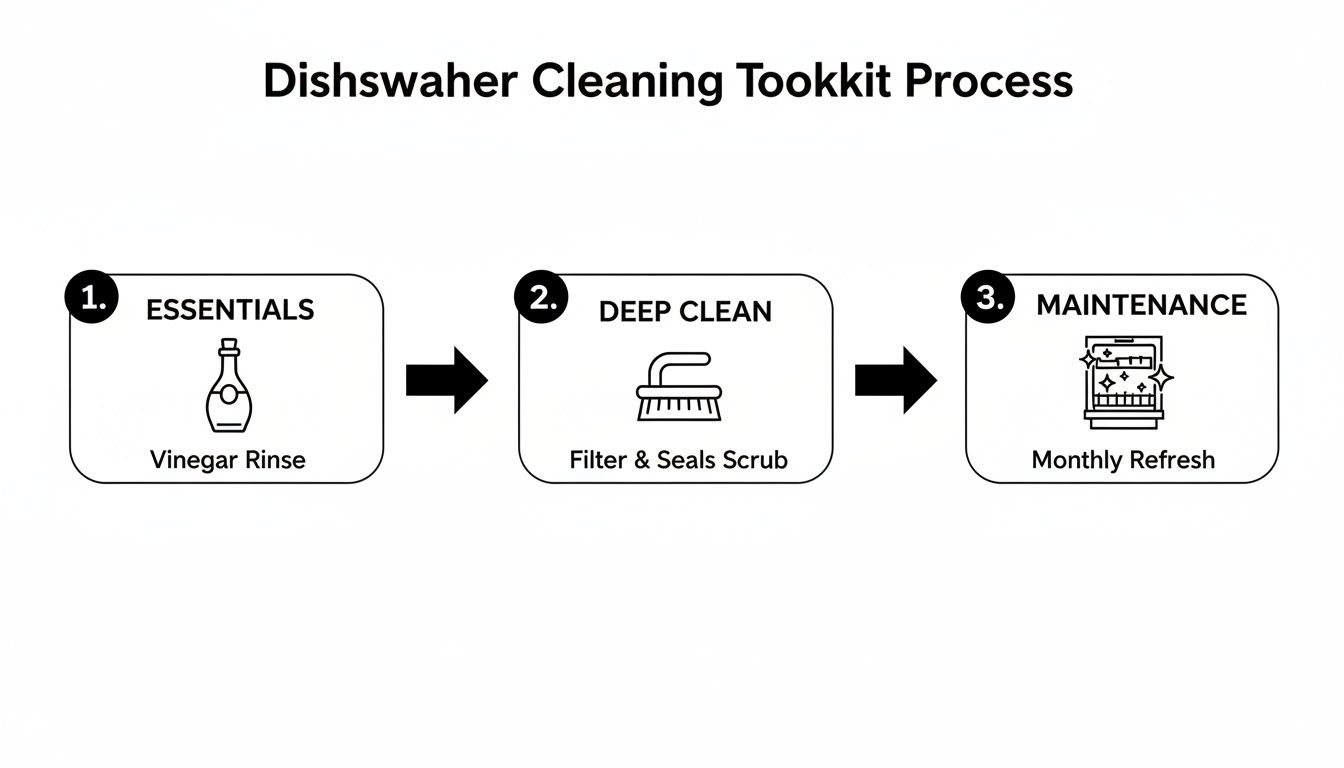
As you can see, a proper deep clean is a mix of some hands-on scrubbing of the key components followed by a couple of simple, automated cycles.
After a thorough wipe-down, go ahead and reinstall the clean spray arms and filter. Your dishwasher is now prepped for the final sanitizing stage.
The Two-Cycle Vinegar and Baking Soda Refresh
This last part is surprisingly simple but incredibly effective. By using two common household staples in separate cycles, you can dissolve grime, kill germs, and deodorize the entire machine.
First up is the vinegar cycle. Grab a dishwasher-safe bowl or a simple measuring cup and fill it with one cup of white distilled vinegar. Place it securely on the top rack of the otherwise empty dishwasher and run a full cycle on the hottest setting you have. The hot, acidic steam will work its way into every corner, breaking down grease and sanitizing the interior while also dissolving those chalky mineral deposits from hard water.
Once the vinegar cycle finishes, take the bowl out. Now, sprinkle one cup of baking soda across the bottom of the dishwasher tub. Run another cycle, this time a short one on a hot setting. The baking soda is a fantastic, gentle abrasive that will help scrub away any lingering stains and, more importantly, absorb any leftover odors. The result? A bright, fresh-smelling machine.
This vinegar-and-baking-soda combo is a powerful one-two punch against the most common dishwasher issues, all without using harsh chemicals. If you're looking for even more advanced techniques, you might find some useful tips in a comprehensive guide to deep cleaning your dishwasher. Making this a quarterly ritual is the best way to keep your appliance working perfectly for years to come.
How to Banish Stubborn Odors and Buildup
Sometimes, the usual cleaning routine just won't cut it. You’ve scrubbed the filter, you’ve run a vinegar cycle, but your glasses still come out cloudy, or a funky smell hits you every time you open the door. These are classic signs of a deeper issue, usually hard water minerals or tiny food particles hiding in plain sight.
When you're dealing with stubborn limescale or an odor that refuses to leave, it’s time to bring out the big guns. Let's tackle these tougher cleaning challenges head-on.
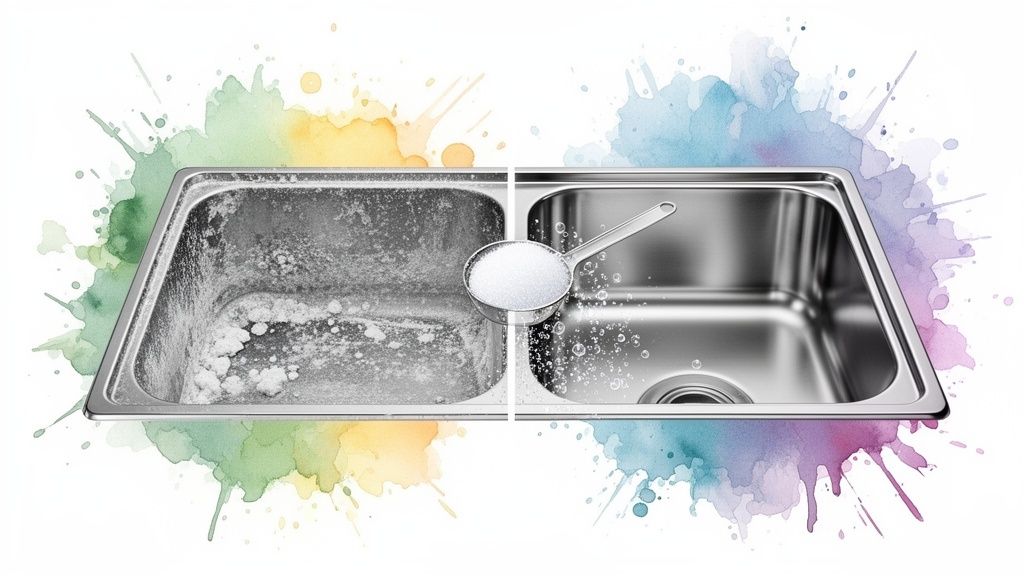
Conquering Hard Water Stains and Limescale
See that chalky white film on your glassware and the inside of your dishwasher? That's limescale, and it’s the calling card of hard water. It doesn't just look bad; over time, it can clog up your spray arms and seriously hurt your machine's performance.
Vinegar is a solid first step, but for heavy-duty buildup, you need something with more punch. Your secret weapon here is citric acid. It's a food-safe, natural acid that’s amazing at dissolving mineral deposits without being harsh on your appliance.
Here’s how I get the best results with it:
- First, make sure the dishwasher is completely empty. No forgotten spoons!
- Sprinkle about 1/2 cup of citric acid powder directly onto the floor of the dishwasher.
- Then, just run a full cycle on the hottest setting.
The hot water and citric acid will work their way through the whole system, breaking down even the most caked-on limescale from the heating element, pipes, and interior walls. Everything will come out sparkling.
Eliminating Persistent Foul Odors
If a bad smell is still hanging around after you’ve cleaned the filter and done a vinegar wash, the source is probably hiding somewhere deeper. From my experience, the most common culprits are the drain hose and the sump area right below the filter.
- Check the Drain Hose: A simple kink or loop in the drain hose can create a trap for stagnant, stinky water. Carefully pull your dishwasher out a bit and check that the hose runs smoothly to the drain, with no low spots where water can sit.
- Inspect the Sump: Take the filter out again. Use a sponge or some paper towels to soak up any water pooled in the sump at the very bottom. You’d be surprised at the gunk that can accumulate down there.
These deep-cleaning principles work for other kitchen appliances, too. If you’re curious, you can learn how to clean your coffee maker for a tastier, healthier brew. The same logic applies to microwaves, and our guide on the best way to clean a microwave interior has more great tips.
A little extra diligence here goes a long way. You’re not just covering up odors—you're getting rid of them at the source. Remember, your dishwasher is designed to kill germs by heating water to between 130 and 140 degrees Fahrenheit. Running it regularly not only cleans your dishes but can also save over 8,000 gallons of water a year compared to hand washing.
Building a Sustainable Maintenance Routine
A deep clean feels great, but honestly, the real secret to a sparkling, efficient dishwasher is just plain consistency. By building a simple maintenance routine, you can prevent major gunk and grime from ever taking hold. It's about turning a big, annoying chore into a few small, manageable habits that become a natural part of your kitchen cleanup.
This proactive approach saves you a ton of time and elbow grease in the long run. More importantly, it’s one of the best ways to extend the life of your dishwasher. A well-maintained machine just runs better, which means your dishes come out perfectly clean, every single time.
Daily Habits: The Smallest Steps Make the Biggest Impact
The most effective changes are the ones you barely notice. These tiny daily actions are your first line of defense against clogs and odors.
Before you load a dish, just give it a quick scrape. You don't need to pre-rinse everything—modern dishwashers are built to handle some mess—but getting rid of big stuff like bones, seeds, and leftover chunks of food is crucial. These are the culprits that clog your filter and spray arms. Making this a habit can dramatically reduce how often you need to do a deep clean. To make this even easier, keeping something like the Cooler Kitchen countertop compost bin by the sink keeps your space tidy and makes scraping a breeze.
Weekly and Monthly Check-Ins
A quick weekly check-in can stop small issues from becoming big problems. Once a week, grab a damp cloth and just wipe down the rubber door seal and the bottom edge of the door. These are prime spots for mildew to take hold, and a quick wipe keeps it at bay. While you’re down there, take a quick peek at the filter to see if any large debris has gotten stuck.
Then, about once a month, give your dishwasher a refresh. This is the perfect time to run that vinegar and baking soda cycle we talked about. Think of it as a tune-up that dissolves any new mineral buildup and knocks out any funky smells before they get too comfortable.
A consistent routine is key, especially since everyone's habits are different. While nearly 80 million U.S. households own a dishwasher, about 20% rarely use it. On the other hand, many families in Italy and Russia run theirs daily, which just goes to show how much our reliance on this appliance can vary. You can find more global dishwasher usage insights on us.fotileglobal.com.
To help you get started, here’s a simple schedule you can adapt to your own needs.
Your Easy Dishwasher Maintenance Schedule
This simple checklist breaks down the tasks into daily, weekly, and monthly actions. Following this schedule will keep your dishwasher running like new with minimal effort.
| Frequency | Task | Time Required |
|---|---|---|
| Daily | Scrape large food particles off plates before loading. | 1 minute |
| Weekly | Wipe down the door gasket and check the filter for debris. | 2 minutes |
| Monthly | Run a cleaning cycle with vinegar, followed by baking soda. | 5 minutes (plus cycle time) |
Sticking to this routine might feel like a small thing, but it’s the most powerful way to guarantee a clean, efficient dishwasher for years to come.
Got Questions About Cleaning Your Dishwasher? We’ve Got Answers.
Even with the best routine, questions are bound to pop up. Maybe you're staring at a bottle of bleach wondering if it's a good idea (it's not!), or you just can't shake a weird smell. Let's tackle some of the most common head-scratchers I hear all the time.
My goal here is to help you feel totally confident tackling whatever your dishwasher throws at you, keeping it running like new for years to come.
Can I Use Bleach to Clean My Dishwasher Interior?
I’d steer clear of bleach for this job. This is especially true if you have a dishwasher with a stainless steel tub or any stainless components inside.
Bleach is incredibly corrosive and can easily cause permanent pitting and damage to that beautiful steel finish. Worse, it can eat away at the rubber gaskets and seals, which is a fast track to leaks and an expensive repair call.
You're much better off reaching for a safer, but just as effective, alternative like good old white vinegar. If you’re dealing with a serious case of mold or mildew, grab a dedicated dishwasher cleaner from the store. They’re formulated to be tough on gunk but gentle on your machine’s parts.
What Are the Signs My Dishwasher Filter Needs Cleaning?
Oh, your dishwasher will definitely let you know when its filter is crying for help. If you know what to look for, you can catch the problem before your dishes start paying the price.
- Gritty Dishes: Finding little bits of last night's dinner on your "clean" plates? A clogged filter is almost always the culprit.
- A Funky Smell That Won't Quit: That filter is a perfect breeding ground for bacteria when it’s clogged with old food. This is what causes that unmistakable sour, musty odor.
- Puddles in the Bottom: If you open the door after a cycle and see a pool of murky water, that's a five-alarm fire. It means water can't drain properly because the filter is completely blocked.
Seriously, checking the filter once a week takes less than a minute and prevents all of these headaches.
Think of your dishwasher filter like the drain in your kitchen sink—if it gets clogged, nothing can pass through. Keeping it clear is the single most important maintenance task for a healthy, odor-free machine.
Are Commercial Cleaning Tablets Better Than DIY Methods?
This is a great question, and the answer isn't a simple "yes" or "no." It's more about using the right tool for the right job.
Commercial cleaning tablets are the heavy hitters. They are packed with specific enzymes and surfactants engineered to obliterate caked-on grease and heavy mineral scale. I like to use one for a super-deep clean every few months, sort of like a reset button for the machine.
For your regular monthly maintenance, though, the DIY vinegar and baking soda method is fantastic. It’s cheap, gentle on the environment, and does a brilliant job keeping everyday grime and odors in check. The best strategy? Use the DIY method monthly and toss in a commercial cleaner every 3-4 months. You get the best of both worlds.
Why Does My Dishwasher Still Smell After I Cleaned It?
This is incredibly frustrating, I know. You've scrubbed the filter, run a cleaning cycle, and it still smells funky. When this happens, the problem is usually hiding somewhere deeper.
The number one suspect is the drain hose.
If the hose behind your dishwasher has a saggy loop or a kink in it, it can create a trap where gross, stagnant water sits and never fully drains out. You'll need to carefully pull your dishwasher out a bit to check. Make sure the hose runs in a smooth, high arc up to the drain connection under your sink.
Another sneaky spot is the sump area, which is the little pit right under the filter. Gunk can get trapped down there, so it might need a good manual cleanout. If you've checked both of these and the smell is still there, it might be time to call in a pro.
At Cooler Kitchen, we believe a well-maintained kitchen is a happy kitchen. Our thoughtfully designed tools are made to simplify your daily routines, from cleanup to cooking. Explore our collection of durable, family-friendly essentials at https://www.coolerkitchen.com.