

Your Guide to Dishwasher Safe Cooking Utensils
When a manufacturer labels their cooking utensils as "dishwasher safe," they're making you a promise. It's their way of saying, "Go ahead, toss it in. This tool is built to handle the heat, harsh detergents, and high-pressure water jets of your dishwasher without falling apart."
What Does "Dishwasher Safe" Actually Mean?
It's easy to see that label and think the utensil is indestructible. But there's a bit more to it than that. I like to think of it as the difference between a tool that simply survives the wash cycle and one that truly thrives in it.
A survivor might come out in one piece, but after a few washes, you'll start to see the battle scars—a bit of discoloration, maybe some minor warping. A thriver, on the other hand, is designed for the dishwasher. It comes out sparkling clean and ready to go, wash after wash. The real difference comes down to two things: material stability and heat resistance.
Material Stability and Heat Resistance
First, let's talk about material stability. This is all about how well a utensil holds up against the strong chemical detergents in your dishwasher. Those little pods and powders are incredibly alkaline, which is great for cleaning but can be corrosive to the wrong materials, causing metals to pit or plastics to become brittle.
Heat resistance is just as important. A typical dishwasher cycle can easily reach 150°F (65°C), especially during the final rinse and drying. Materials that can't take the heat will warp, melt, or even crack. We've all seen it: the cheap plastic spatula that comes out with a permanent curl, versus a high-quality silicone one that looks exactly the same as when it went in.
At its core, a truly dishwasher-safe item is engineered from materials that can consistently handle both the chemical and thermal stress of a modern dishwasher without breaking down.
It's no surprise that we're relying more on these durable, convenient tools. The global dishwasher market was valued at a whopping USD 9,234.7 million in 2023 and is only expected to grow. You can dive deeper into these industry trends with this market analysis from Grand View Research.
This trend just shows why it's so critical for home cooks to know the difference between a survivor and a thriver. Choosing the right dishwasher safe cooking utensils is an investment—it saves you precious time without forcing you to compromise on the quality or lifespan of your favorite kitchen tools.
A Material-By-Material Guide to Utensil Care
That "dishwasher safe" label is a great start, but true kitchen wisdom comes from knowing how different materials really behave in the heat of battle. The steamy, high-pressure environment of a dishwasher isn't a one-size-fits-all solution; it treats every material differently, quickly sorting the tools that will thrive from those that will merely survive.
This little diagram breaks it down nicely, showing the two main camps your utensils fall into.

As you can see, some materials are built for this, while others are just hanging on for dear life and will break down over time. Let's dig into the common materials you'll find in your kitchen drawers.
The Champions of Dishwasher Safety
Some materials are practically born for the dishwasher. Their natural properties make them almost immune to the harsh conditions, meaning they emerge sparkling clean and undamaged, wash after wash.
Stainless Steel This is the undisputed king of dishwasher-safe utensils. Stainless steel is non-porous, so it won’t hang onto food particles or last night's garlic smell. It's also tough as nails and can handle soaring temperatures and strong detergents without a hint of rust or corrosion.
- Why it works: The secret is in the alloy. A key ingredient, chromium, forms a passive, self-repairing layer that acts as a shield against rust.
- Best practice: To dodge those annoying water spots, use a rinse aid. Also, make sure your spoons aren't spooning in the basket—give everything some space to prevent water from getting trapped.
Silicone There's a reason silicone has taken over our kitchens. It’s flexible, naturally non-stick, and can handle some serious heat. This material laughs in the face of extreme temperatures, refusing to melt, warp, or leach weird chemicals.
High-quality, 100% food-grade silicone is the go-to for modern spatulas, whisks, and tongs. It stays stable and safe even when the dishwasher is running its hottest cycle.
The numbers back it up. In the global kitchen utensil market, cooking tools led the charge with 2.8 billion units sold, and silicone items made up a massive 960 million of those sales, mostly thanks to their incredible heat resistance. You can see more on these trends in this comprehensive kitchen utensil market report.
The Materials That Need Extra Care
Some materials can handle a trip through the dishwasher, but they have a few non-negotiable rules. If you ignore them, you'll drastically shorten their lifespan and could ruin them completely.
Nylon and Hard Plastics Your trusty slotted spoons, turners, and measuring cups are often made from nylon or other hard plastics. While they usually say "dishwasher safe," they have a mortal enemy: the dishwasher's drying element.
- The Golden Rule: Always, always, always place these items on the top rack only.
- Why it matters: The heating element is at the bottom of the machine, making it the hottest part of the dishwasher. Putting plastics down there is asking for them to melt, warp, or potentially release chemicals.
The Hand-Wash-Only Brigade
And then there are the materials that should never, ever cross the threshold of your dishwasher. For them, the combination of being submerged in water, blasted with heat, and scrubbed with harsh detergents is a recipe for disaster.
Wood and Bamboo Think of wood as a thirsty sponge. When it sits in hot water for an entire cycle, it soaks up moisture and swells. Then, the high-heat drying phase yanks that moisture out too quickly, causing the wood to crack, split, and warp.
- The damage: This brutal process strips away the wood's natural oils, leaving it dry and brittle. It also weakens any glue holding handles together, leading to a wobbly, unsafe tool.
- The solution: A quick hand wash with mild soap and warm water is all wood and bamboo need. Dry them right away to keep them in prime condition. Proper storage helps, too—a well-ventilated holder keeps them dry and happy. You might find our tips on choosing a modern and slim bamboo utensil holder caddy useful.
How to Spot and Choose Genuinely Durable Tools
Moving beyond the simple "dishwasher safe" label is what separates a hopeful buyer from a savvy one. The first step is learning to read the clues the manufacturers give you, starting with the symbols stamped right onto the utensils. While there isn't one single, universal icon, most of them give you a pretty clear idea of what you're dealing with.
The most common symbol you'll see looks like plates or glasses getting sprayed with water. That's your basic confirmation. Sometimes, you'll get more specific info, like a temperature rating—70°C (158°F), for example—which tells you the absolute maximum heat the item can handle. Paying attention to these tiny details is the secret to picking tools that will actually last.
As you can see, "dishwasher safe" can mean a few different things. It might mean "top rack only," or it could mean it's only safe up to a certain temperature. It's not a one-size-fits-all term.
Look for Physical Clues of Quality
Symbols are a great start, but the best dishwasher safe cooking utensils have physical traits that practically scream durability. You can often spot a well-made tool just by holding it and looking at its construction.
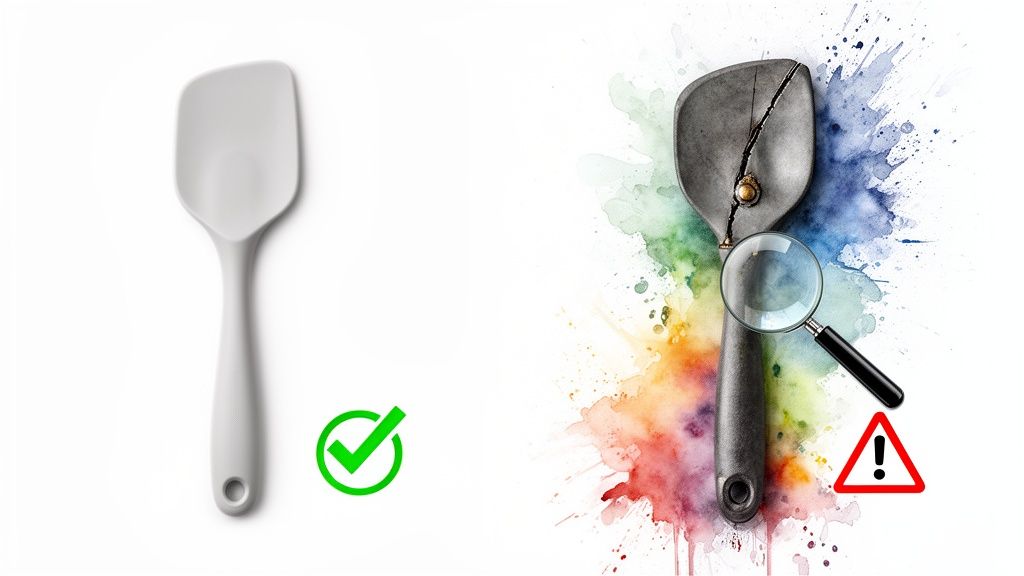
Take a high-quality silicone spatula, for instance. The best ones almost always have a single-piece design. This means the head and handle are molded from one continuous piece of material, getting rid of that pesky seam where the handle meets the head—a prime spot for gunk and water to get trapped.
On the flip side, a cheaply made spatula often has a silicone head glued onto a separate plastic or wood handle. That joint is a massive weak spot. The dishwasher's intense heat and moisture will attack that adhesive, and before you know it, the head is wobbly or pops off completely.
Think of it like this: a seamless, single-piece utensil has no weak links. A multi-part tool has built-in points of failure that the dishwasher’s harsh environment will find and exploit over time.
Your Checklist for Buying Durable Utensils
When you're ready to add some new tools to your kitchen, keep this simple checklist in mind. It'll help you cut through the noise and find pieces that are truly built to last.
- Construction Quality: Go for single-piece designs whenever possible, especially with silicone tools. For stainless steel, look for solid, seamless connections where parts are joined.
- Material Integrity: If you're buying plastic, look for labels that clearly state it's BPA-free and "top-rack safe." For silicone, make sure it’s 100% food-grade and doesn't have any cheap fillers mixed in.
- User Reviews and Brand Reputation: Spend a few minutes seeing what other cooks are saying. Do the reviews consistently mention warping, staining, or breaking after just a few runs through the dishwasher? A well-regarded brand with a history of positive long-term feedback is almost always a safer bet.
Mastering Your Dishwasher for Utensil Longevity
Having a set of dishwasher safe cooking utensils is one thing, but how you treat them inside the machine is what really counts. Getting the loading technique and cycle selection right is the secret to protecting your investment and making sure your favorite tools last for years.
Think of your dishwasher less like a magic box and more like a powerful cleaning system that you need to direct. Just tossing everything in and hoping for the best is a recipe for warped plastic, dull knives, and lingering food residue. A few small tweaks to your routine can make a world of difference.
Strategic Loading for Maximum Protection
The way you arrange your utensils directly impacts how clean they get and how much stress they endure during a cycle. The number one enemy here is overcrowding. When items are jammed together, water and detergent can't reach every nook and cranny.
A classic mistake is letting utensils "nest" — think of spoons stacked so tightly they form a waterproof seal. This blocks the water jets, leaving behind food bits and encouraging discoloration over time.
To avoid this, just follow a few simple rules:
- Stop the Nesting: Alternate how you place utensils in the cutlery basket. Mix it up with some heads-up and some heads-down to give everything some breathing room.
- Handle the Big Stuff: Long items like spatulas, tongs, and ladles should lie flat on the top rack. This keeps them from blocking the spray arms, which is crucial for getting the rest of the load clean.
- Knives Get a Pass: Your good knives should never see the inside of a dishwasher. It’s not just about the blade; the intense heat and harsh detergent will dull the edge in no time. Plus, the sharp points can easily chip the protective coating on your dishwasher racks. A quick hand-wash is all they need.
Choosing the Right Cycles and Detergents
Not all wash cycles are created equal. That heavy-duty "pots and pans" setting might seem like a good idea, but its high heat and intense water pressure are often overkill for everyday utensils, which just accelerates wear and tear.
For most loads, a normal or eco cycle strikes the perfect balance between cleaning power and gentle care. These cycles use lower temperatures, which is a game-changer for preserving the structure of plastic and silicone items wash after wash.
The right detergent plays a huge role, too. Look for formulas that don't contain harsh abrasives or high levels of bleach. These aggressive ingredients can cause tiny pits to form on stainless steel and can slowly degrade the finish on other materials. A gentler detergent and the right cycle is the winning combo.
Of course, a clean dishwasher is a happy dishwasher. Learn how to keep yours in top shape by reading our guide on cleaning the inside of a dishwasher. By turning these simple habits into a routine, you’ll transform your machine from a potential hazard into an ally that carefully maintains your favorite kitchen tools.
Solving Common Dishwaster Problems with Utensils
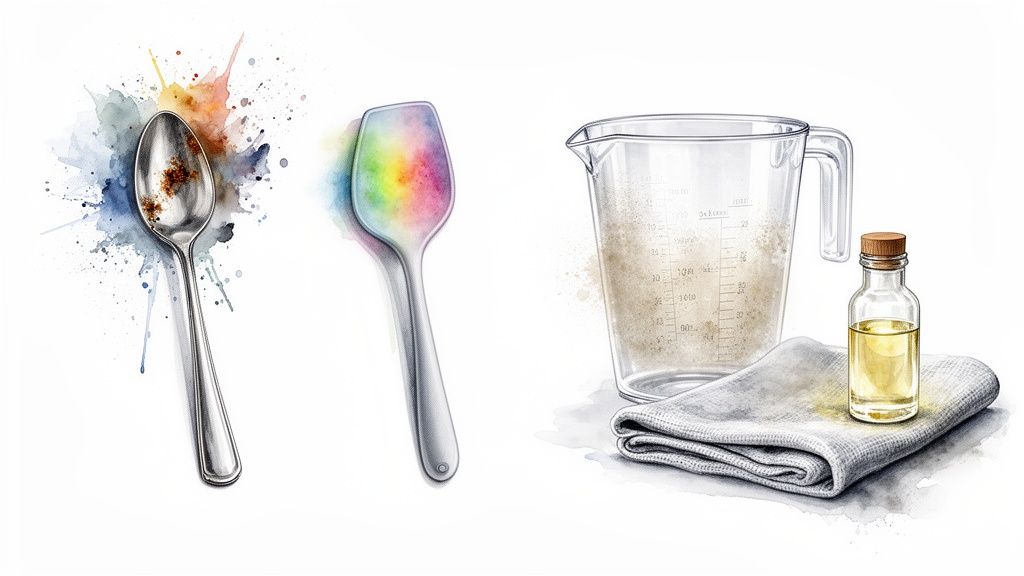
Even when you do everything right, sometimes a favorite utensil comes out of the dishwasher looking worse for wear. Finding a tool warped, spotted, or covered in a strange film is a common kitchen frustration. The good news is that most of these issues are easily preventable once you know what’s really going on inside the machine.
Let’s dive into some of the most frequent problems and how to get your utensils back to their pristine, ready-to-use state.
Identifying and Fixing Rust Spots
Seeing little orange or brown specks on your stainless steel spatulas and spoons is jarring. You might think your high-quality tools are failing, but that's rarely the case. This is usually just a surface-level chemical reaction, not a sign that the steel itself is rusting through.
So what's the cause? It could be a few things. Sometimes, acidic foods like tomatoes or mustard can etch the surface if they sit on the utensil for too long before a wash. More often, though, the spots are a reaction to harsh detergents (especially ones with bleach) or from your stainless steel tools rubbing against other, less stable metals in the dishwasher.
- The Quick Fix: Mix up a simple paste of baking soda and a little water. Rub it gently onto the spots with a soft cloth, then rinse and dry completely.
- Long-Term Prevention: Get in the habit of rinsing acidic foods off your utensils right after using them. Also, try to keep different metal types from touching in the cutlery basket and unload everything soon after the cycle finishes to let any trapped moisture escape.
Dealing with Discoloration and Cloudy Film
Another all-too-common sight is a cloudy, white film or even rainbow-like stains on your silicone and stainless steel items. This isn't permanent damage—it’s just a harmless deposit left behind during the wash.
This annoying residue is almost always caused by hard water, which is loaded with minerals like calcium and magnesium. When the water evaporates during the heated dry cycle, it leaves those minerals behind, creating that dull, filmy look.
Pro Tip: For a quick fix, just soak the cloudy utensils in a bowl of white vinegar for about five minutes. The mild acid in the vinegar effortlessly dissolves the mineral buildup without any need for scrubbing.
To keep the film from coming back, a rinse aid is your best friend. Rinse aids work by breaking the water's surface tension, helping it slide right off your utensils instead of beading up and leaving mineral spots behind. If hard water is a persistent problem in your home, installing a water softener is a more permanent—though more involved—solution.
Even the most careful among us run into issues now and then. Here’s a quick-glance table to help you diagnose and solve the most common utensil problems.
Troubleshooting Utensil Damage in the Dishwasher
| Problem | Common Cause | Prevention & Solution |
|---|---|---|
| Warping (Nylon/Plastic) | High heat, especially from a bottom-rack heating element. | Load on the top rack only. Skip the heated dry cycle and let them air dry instead. |
| Cracking/Splitting (Wood/Bamboo) | Excessive heat and water absorption swell and shrink the wood. | Hand wash only. Never soak wooden or bamboo items for extended periods. |
| Chalky/White Film (Silicone) | Mineral deposits from hard water or a reaction with oily food residue. | Use a rinse aid. For stubborn film, boil the utensil in water for 10-15 minutes or scrub with a baking soda paste. |
| Rust Spots (Stainless Steel) | Contact with other metals, harsh detergents, or acidic food residue. | Don't let different metals touch. Rinse acidic foods promptly. Remove utensils after the cycle to air dry. |
By paying a little attention to how you load your dishwasher and what cycles you use, you can easily avoid these headaches. A few small adjustments are all it takes to keep your favorite kitchen tools looking and working like new for years.
Making Safe and Sustainable Choices for Your Kitchen
When you're picking out new tools for your kitchen, it's easy to just think about convenience. But the choices we make have a real impact on our family's health and even the planet. When it comes to dishwasher safe cooking utensils, thinking about material safety and long-term durability is a decision you'll never regret. It's about finding tools that last and are free from nasty chemicals.
One of the biggest things to look for is the BPA-free label. This is a non-negotiable, especially for any plastic or nylon tools. The high heat inside a dishwasher can cause chemicals to leach out of cheap plastics, and that’s the last thing you want near your food. This is why I always lean towards materials like high-grade silicone and stainless steel—they’re incredibly stable, won't react with your food, and just give you total peace of mind.
Durability as a Sustainable Choice
It might not seem obvious, but there's a straight line connecting durability to sustainability. Think about it: every time a flimsy spatula warps in the dishwasher or a cheap plastic spoon snaps, it's headed straight for a landfill. Investing a little more in well-made tools is one of the simplest and most effective ways to cut down on waste from your kitchen.
A truly sustainable kitchen is built on quality, not disposability. Choosing a sturdy stainless steel ladle or a single-piece silicone spatula over a cheap alternative means you buy it once and use it for years, significantly cutting down on waste.
This "buy it once, buy it right" mindset is really starting to catch on. You can see this shift in the growing demand for sustainable kitchen products. Just look at the dishwasher tablet market, which is projected to grow from US$699.1 million in 2025 to US$1,190.4 million by 2032. A huge driver of this is the move toward biodegradable products and formulas that let us use less detergent. You can dig into the numbers on these eco-friendly market trends.
When you pair durable utensils with an energy-efficient dishwasher, you create a genuinely powerful combination for a greener home. It’s a thoughtful approach that not only keeps your kitchen safe and running smoothly but also fits into a more sustainable lifestyle. And if you're looking for ways to keep those great tools tidy, check out our guide on how to organize kitchen utensils.
Your Questions About Dishwasher Safe Utensils Answered
Even when you feel like you have a good handle on what’s dishwasher safe, some tricky questions always seem to pop up. Let's tackle some of the most common ones so you can wash your kitchen tools with total confidence.
Can I Put Utensils with Wooden Handles in the Dishwasher?
This is a big one, and the answer is a hard no. You should never put utensils with wooden or bamboo handles in the dishwasher.
The combination of high heat and a long soak in hot water is a recipe for disaster for wood. It will swell, crack, splinter, and lose any protective finish it once had. This kind of damage is almost always permanent and often leads to the handle loosening or breaking off entirely. Stick to hand-washing for these items to keep them in one piece.
Why Are My Stainless Steel Utensils Getting Rust Spots?
Seeing those little orange or brown spots on your shiny stainless steel can be alarming, but it’s usually not a sign that your utensils are low-quality. It's just a surface-level reaction. This often happens when utensils are in prolonged contact with other metals, you're using a harsh detergent with bleach, or you have hard water.
Here’s how to prevent it:
- Give your utensils some personal space in the cutlery basket; don't let them nestle up against other metal items.
- A good rinse aid helps water sheet off for faster, more even drying.
- Try to unload your utensils as soon as the cycle is done.
If you already have some spots, you can usually buff them out with a simple paste of baking soda and water.
What Does "Top Rack Only" Really Mean for Plastics?
That little instruction is incredibly important. The heating element in your dishwasher is at the bottom, and it gets hot.
The top rack stays much cooler, which protects plastics and other delicate materials from the direct blast of heat that would otherwise warp or melt them. Putting a "top rack only" item on the bottom is the fastest way to ruin it. Always follow the rule!
Are All Silicone Utensils Safe for the Dishwasher?
Not necessarily. While high-quality, 100% food-grade silicone is a champ—it’s super durable and heat-resistant—not all silicone is made the same.
Some cheaper products have fillers mixed in, making them less able to stand up to the dishwasher's tough environment. Another common trap is a silicone head attached to a non-dishwasher-safe handle (like wood). The safest bet is to always look for the manufacturer's dishwasher-safe symbol before you buy.
At Cooler Kitchen, we design our products with real-world durability and family safety as our top priorities. We use high-quality materials like BPA-free silicone and sturdy stainless steel to create tools you can truly rely on. Explore our collection of thoughtfully designed kitchen essentials at https://www.coolerkitchen.com.