

The Ultimate Guide to Dishwasher Safe Cookware Sets
Let's be honest, the best part of a home-cooked meal is the eating, not the mountain of pots and pans waiting in the sink afterward. If you're tired of that post-dinner scrub-down, this guide is for you. We're diving into the world of dishwasher safe cookware sets, which are far more than a simple convenience—they're a game-changer for any modern kitchen.
Your Guide to Effortless Kitchen Cleanup
After you've put all that effort into creating a fantastic meal, the last thing you want to do is roll up your sleeves for a long cleanup session. While some specialty pans will always need a gentle hand-wash, the reality of a busy life calls for efficiency. That’s where a truly high-quality, dishwasher safe cookware set proves its worth.
This is about more than just skipping a chore. It's about finding kitchen tools that fit seamlessly into your life. The right cookware frees up your evenings, giving you back precious time to spend with family, unwind, or do anything other than scrape burnt-on food.
The Rise of Kitchen Convenience
Our kitchens are getting smarter and more streamlined, and cookware is no exception. It’s no surprise that the dishwasher market is expected to surge from USD 9.54 billion in 2025 to USD 16.69 billion by 2033. That huge jump reflects a clear trend: we all want practical, low-maintenance solutions that make our lives easier.
Choosing dishwasher safe cookware means you're investing in a system. Each component—from the pot's material to the dishwasher's cleaning cycle—works together to simplify your life.
What This Guide Will Cover
We're here to cut through the marketing noise and show you what really makes a cookware set tough enough for the dishwasher, day in and day out. We’ll walk through everything you need to know to make a smart purchase.
Here's what we'll get into:
- Understanding Materials: We'll break down how different materials like stainless steel, nonstick, and ceramic hold up against the intense heat and harsh detergents in a dishwasher.
- Proper Care and Loading: You'll get real-world tips to protect your pans and make them last. It all starts with a spotless machine, so check out our guide on cleaning the inside of a dishwasher for a perfect wash every time.
- Making the Right Choice: We'll help you find a set that genuinely fits your cooking style, family size, and kitchen space for years of great food and easy cleanups.
What "Dishwasher Safe" Really Means for Cookware
Seeing "dishwasher safe" on a new cookware set feels like a free pass to easy cleanup. But hold on—it's not quite that simple.
Think of it like this: a water-resistant watch can handle getting caught in the rain, but you wouldn't take it scuba diving. The "dishwasher safe" label on cookware is similar. It means the manufacturer says the pot can survive a wash cycle without falling apart right away. It's not a guarantee that it will look or perform like new after 50 or 100 trips through that high-heat, high-pressure storm.
What's Actually Happening Inside Your Dishwasher
Your dishwasher is a cleaning powerhouse, but that power comes from a pretty intense process. For your pots and pans, every cycle is a battle against a triple threat of harsh conditions.
Here’s what they’re up against:
- High-Pressure Heat: Water gets blasted at temperatures between 130°F and 170°F. Over time, that kind of intense, focused heat can warp thinner pans and start to break down delicate nonstick coatings.
- Caustic Detergents: Those little pods and powders are packed with powerful chemicals designed to dissolve stubborn, baked-on food. But those same chemicals can be incredibly abrasive, dulling the mirror finish on stainless steel or even causing pitting on materials like aluminum.
- The Bake-Out Dry Cycle: Just when you think it's over, the final drying cycle bakes everything with sustained high heat. This can make handles brittle and discolored, and it's one more assault on any protective coatings.
Simply put, "dishwasher safe" often just means "dishwasher tolerant." The cookware can take the abuse, but it might not come out unscathed every time. The best sets are specifically built to handle these conditions over and over again.
Looking Past the Label to Find Real Durability
So, how do you spot a truly durable dishwasher safe cookware set? You have to look beyond the marketing claim and pay attention to what the cookware is actually made of.
A truly resilient pot or pan won’t just survive the dishwasher—it will emerge ready for action, performing just as well as it did before.
For instance, a cheap nonstick pan might have the "dishwasher safe" sticker, but after a few washes, you’ll notice your eggs are starting to stick. That's because the heat and harsh detergents have slowly worn away its delicate coating. A heavy-duty, multi-clad stainless steel pan, on the other hand, is far more likely to stand up to that punishment without losing a step. The label gets you in the door, but the materials tell you how long you'll get to stay.
How Different Cookware Materials Handle the Dishwasher
Ever wondered why some pans come out of the dishwasher sparkling while others look dull, damaged, or even start to rust? It all comes down to the material. A dishwasher creates a surprisingly harsh environment—a perfect storm of intense heat, high-pressure water jets, and powerful detergents. This trio is fantastic for blasting off grime but can be a real nightmare for the wrong kind of cookware.
Figuring out how each material stands up to this abuse is the secret to picking a genuinely durable dishwasher safe cookware set.
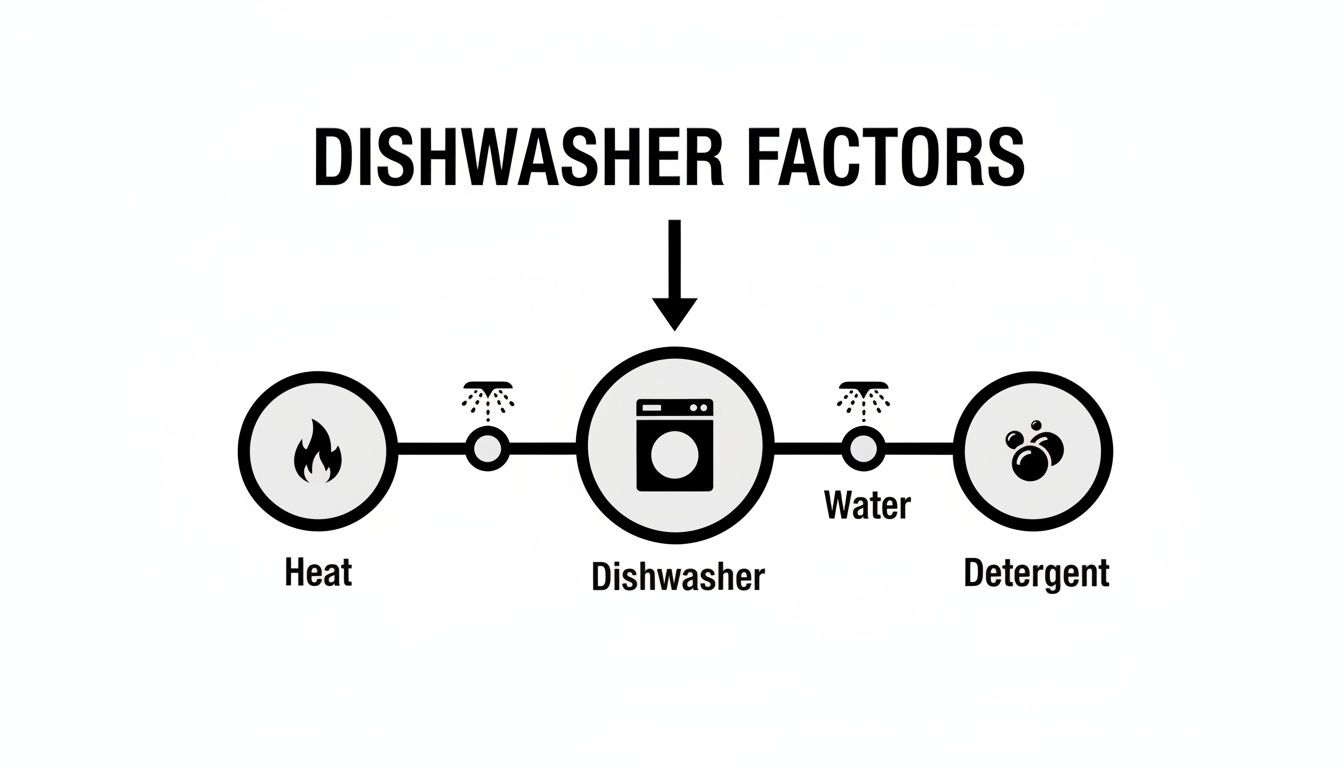
These three forces—heat, water, and detergent—are what separate the truly resilient cookware from the pans that just can't take the heat.
The Champion: Stainless Steel
When it comes to dishwasher durability, stainless steel is the undisputed king. It’s tough, non-porous, and built to resist corrosion, which means it can handle countless cycles of high heat and strong detergents without breaking a sweat. This rock-solid reliability is why it’s a favorite in both home and professional kitchens.
It’s no surprise that in a global cookware market projected to hit USD 48.17 billion by 2032, convenient options like stainless steel are in high demand. If you're curious, you can dive deeper into these cookware market trends.
Of course, nothing is indestructible. Over a long period, super harsh detergents might cause some faint spotting on stainless steel, but this is almost always a minor cosmetic issue that can be buffed out.
The Delicate Player: Nonstick Coatings
We all love nonstick pans for their easy-breezy cooking and cleanup, but they are far more delicate when it comes to the dishwasher. The intense heat from the wash and dry cycles can slowly degrade that slick coating, eventually making it lose its "nonstick" magic.
Think of a nonstick coating like a thin layer of wax on a car. The first few washes might be fine, but repeated exposure to harsh chemicals and high temperatures will eventually strip it away, leaving the surface unprotected.
The abrasives in some dishwasher detergents are another enemy, creating tiny, microscopic scratches. Over time, these little imperfections add up, ruining the pan's performance and leading to stuck-on food. It’s why most manufacturers still quietly recommend hand washing to make your nonstick last.
Hard-Anodized Aluminum and Other Materials
Hard-anodized aluminum strikes a pretty good balance. It's aluminum that’s been put through an electrochemical process to create a surface that's much harder and more durable than the standard stuff. This means it resists scratches and holds up to the dishwasher way better than a typical nonstick pan. Even so, it's not invincible—harsh detergents can still dull its finish after many, many cycles.
Here’s a quick rundown of other common materials you’ll find:
- Ceramic Coatings: Much like their nonstick cousins, ceramic coatings can break down over time from the heat and abrasive detergents, causing them to lose their nonstick properties.
- Copper: As beautiful as it is, unlined copper is a huge "no" for the dishwasher. The detergents will cause it to tarnish and pit almost immediately, completely ruining its classic finish.
- Cast Iron: Keep this one far away from the dishwasher, too. A single cycle can strip away all that precious seasoning you've built up and leave your pan vulnerable to rust.
To make this crystal clear, here’s a quick-reference guide to help you compare your options at a glance.
Cookware Material Dishwasher Safety Guide
This table breaks down how different materials hold up, so you know exactly what you're getting into.
| Material Type | Dishwasher Safety Rating (1-5) | Potential Risks | Best Practice Tip |
|---|---|---|---|
| Stainless Steel | 5 | Minor cosmetic spotting with very harsh detergents over time. | A true workhorse. Just avoid abrasive scrubbers to prevent scratching. |
| Nonstick (PTFE) | 2 | Coating degradation, scratching from detergents, reduced lifespan. | Hand wash whenever possible to preserve the nonstick surface. |
| Ceramic Coating | 2 | Loss of nonstick properties, chipping, staining. | Treat it like traditional nonstick—gentle hand washing is best. |
| Hard-Anodized Aluminum | 4 | Can become dull or discolored over many cycles. | Generally safe, but check manufacturer instructions for detergent recommendations. |
| Copper (Unlined) | 1 | Severe tarnishing, pitting, and permanent discoloration. | Never put in the dishwasher. Hand wash and polish regularly. |
| Cast Iron | 1 | Strips seasoning, causes immediate and severe rusting. | Never put in the dishwasher. Clean with a brush and water, then re-season. |
Ultimately, choosing the right material is a trade-off between convenience and longevity. If you want true, set-it-and-forget-it ease, stainless steel is the clear winner for any dishwasher safe cookware set.
Best Practices for Washing Your Cookware Sets
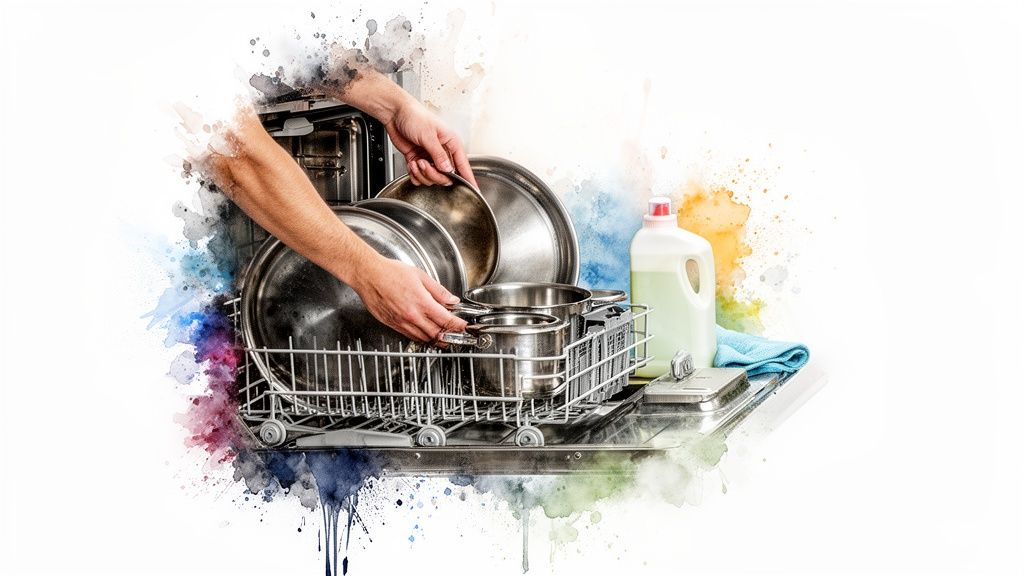
Even the most durable dishwasher safe cookware sets will last longer with a bit of know-how. Just because a pan is built to handle the heat and pressure of a dishwasher doesn't mean you can just cram it in and forget about it. To protect your investment and keep your tools in top shape, a few smart habits go a long way.
Think of it like packing a suitcase for a trip. You wouldn't just toss everything inside and zip it up. A little organization ensures nothing gets damaged and everything comes out just right, ready for your next culinary creation.
How to Load Your Cookware for a Perfect Clean
The way you load your dishwasher is the first step in preventing damage. Good placement stops pots and pans from banging against each other, which is a fast track to scratches, chips, and dents. Even better, it guarantees water and soap can get to every nook and cranny for a truly deep clean.
Here are a few simple rules I always follow:
- Give Them Space: Try to avoid nesting pots and pans inside one another. When they're packed too tightly, the water jets can't reach the grime, leaving you with leftover food bits and soap spots.
- Face Down, Always: I always put my pots, pans, and bowls on the bottom rack, facing down or at a slight angle. This lets the high-pressure spray from below hit the dirtiest surfaces head-on.
- Secure the Lids: Lids can be tricky. I find they do best standing vertically along the sides of the rack or lying flat on the top rack. This stops them from flipping over and collecting a pool of dirty water.
Proper placement isn't just about getting things clean—it's about preservation. When you stop your cookware from rattling around during the wash cycle, you're actively protecting the finish and structure of your favorite pans.
Choosing the Right Detergent and Cycle
The soap you choose makes a bigger difference than you might think. A lot of dishwasher detergents are packed with harsh, abrasive chemicals and high phosphate levels meant to power through caked-on messes. While they work, they can be too aggressive for certain cookware finishes, causing them to dull or even pit over the years.
I recommend looking for a milder, phosphate-free detergent. They’re much gentler on your cookware's surface but still have plenty of power to get the job done. Along the same lines, I’d skip the "heavy duty" or "pots and pans" cycle unless you’re dealing with a real disaster. For most everyday messes, a normal wash cycle is the perfect blend of cleaning power and gentle care.
If you want to dive deeper into caring for your other kitchen tools, we have a helpful guide on the best ways to clean dishwasher safe cooking utensils.
So, what about pre-rinsing? It’s an age-old debate, but today’s dishwashers and detergents are engineered to handle food particles. For most pots and pans, just scraping off the big stuff is all you need to do. It saves water and lets the detergent’s enzymes do their job properly. The only time I bother with a pre-rinse is for really stubborn, burnt-on food. Stick to these tips, and you'll keep your cookware looking and performing its best for a long, long time.
Choosing the Right Set for Your Kitchen Lifestyle
Picking the best dishwasher safe cookware set isn’t just about the material. It’s really about how it slots into your life. What works wonders for a single person in a tiny apartment could be a total nightmare for a big, busy family. The secret is to line up the cookware’s features with how you actually cook and live.
When you think about your "kitchen lifestyle," you start to see past the marketing jargon and focus on what you genuinely need. Do you spend Sundays batch-cooking for the week? Are you all about quick 30-minute dinners? Or is your main goal just to keep the clutter down in a small kitchen? Nailing down these answers is the first step toward buying a set you’ll actually use and love for years to come.
For the Busy Family
If you've got a family, you know that durability and size are everything. You need pots and pans that can take a beating, handle a mountain of spaghetti sauce or a vat of oatmeal, and survive the daily whirlwind of a family kitchen. This is where stainless steel really proves its worth—it's tough, resilient, and can handle high heat without breaking a sweat.
Look for sets that are built for efficiency and convenience:
- Large Stockpots: A must-have for making soups, big batches of chili, or enough pasta to feed a small army.
- Multiple Saucepans: Having a few different sizes is a lifesaver when you’re trying to cook rice, steam veggies, and warm up a sauce all at once.
- Helper Handles: That extra little handle on a big skillet makes a world of difference. It gives you the stability you need to safely carry a hot, heavy pan from the stove to the oven or dinner table.
Sometimes, a single smart design feature can be a total game-changer. Take pasta night, for example. A pot with a built-in strainer lid means one less colander to wash, saving you time and hassle. It’s that kind of thoughtful engineering that separates a good cookware set from a great one. You can see this in action with Cooler Kitchen's own stainless steel pasta pot with a built-in strainer lid.
For the Small-Space Dweller
Living in a condo, apartment, or any home where cabinet space is a precious commodity? Then every single kitchen tool has to earn its keep. For you, the perfect set is all about versatility and compact storage. A clunky 15-piece set will just create a mountain of clutter you don’t have room for.
Instead, keep an eye out for sets specifically designed to stack neatly. Some of the smartest modern designs let pots and pans nest inside each other like Russian dolls, and many come with flat lids that can be flipped over for an even tighter fit.
It’s always better to have a small, curated set of fantastic pieces than a huge collection of so-so ones. Think versatility: a deep sauté pan can stand in for a wok, and an oven-safe skillet can go from searing a steak on the stovetop straight into the oven to bake cornbread.
For the Eco-Conscious Cook
If you're an eco-conscious cook, you're looking for cookware that lasts and is made sustainably. It's about choosing materials that are not only tough but also free from questionable chemicals. The philosophy is simple: buy it once, buy it right. This helps you steer clear of the "disposable" culture that clogs up our landfills.
This is another arena where high-quality stainless steel really shines. It’s incredibly durable, completely recyclable, and isn't made with chemical coatings that can degrade over time. The focus is on finding cookware that can genuinely last a lifetime, cutting down on the need for replacements.
This shift toward long-lasting, low-maintenance products is happening across the entire industry. As our kitchens change, the global kitchenware market is expected to jump from USD 74.74 billion in 2025 to USD 137.64 billion by 2034, with a huge emphasis on sustainable and convenient solutions. You can read more about these expanding market insights to see where things are headed.
Got Questions About Your Dishwasher Safe Cookware? We've Got Answers.
So you've found a great dishwasher safe cookware set, but a few nagging questions are probably still on your mind. That's completely normal. Let's walk through some of the most common concerns I hear from people so you can feel totally confident using your new pots and pans.
Think of this as the troubleshooting guide you wish came in the box. We’ll get straight to the point and clear up any confusion.
Can I Really Put My Nonstick Pans in the Dishwasher Every Single Day?
Ah, the million-dollar question. The short answer is yes, you can, but it comes with a catch. Even though many nonstick pans are labeled "dishwasher safe," running them through a cycle every night will definitely wear them out faster. The triple threat of high heat, powerful water jets, and harsh detergents is just brutal on those delicate coatings.
It’s like washing your favorite silk shirt on a heavy-duty cycle every day. Sure, it'll come out clean, but it won't be long before it starts to fray and fall apart. The same principle applies to your nonstick pan.
My advice? Hand-wash your nonstick pieces most of the time. It only takes a minute and will dramatically extend the life of the coating. Save the dishwasher for those super busy nights when you truly need the backup. This one small change can easily add years to your go-to skillet's lifespan.
Are Some Dishwasher Detergents Bad for My Stainless Steel Pans?
Stainless steel is a real workhorse, which is why it's such a popular choice for dishwasher-safe sets. But even this tough material has its limits. Watch out for detergents that are overly abrasive or contain high concentrations of chlorine bleach or citrus-based additives.
Over time, these aggressive chemicals can cause a couple of problems:
- A Dulled Finish: Harsh, gritty powders can leave tiny micro-scratches on the surface, taking that beautiful mirror shine down to a dull gleam.
- Pitting: It’s rare, but long-term exposure to aggressive detergents can sometimes lead to tiny, permanent pits or spots on the steel.
To keep your stainless steel looking its best, just stick to a quality, phosphate-free detergent. It’s more than strong enough to cut through grease and grime without being unnecessarily harsh on your cookware.
What’s Causing Those Weird White Spots or Rainbow Stains?
Pulling a pan out of the dishwasher only to find it covered in chalky white spots or a strange rainbow film is a little frustrating. But don't panic! This stuff is almost always cosmetic, harmless, and surprisingly easy to fix.
Here’s a quick rundown of what’s happening and how to solve it:
- White Spots: That chalky residue is just calcium from hard water. The fix is simple: pour a little white vinegar or lemon juice onto a soft cloth and wipe the inside of the pan. The acid dissolves the mineral deposits right away.
- Rainbow Stains (Heat Tint): Seeing a blueish or rainbow-like tint? That’s just a harmless chemical reaction that happens when stainless steel gets a bit too hot. You can usually buff it out with a paste made from baking soda and water. Just scrub gently, rinse, and you're good to go.
Neither of these issues impacts how your cookware performs one bit. With these simple tricks, you can keep your dishwasher safe cookware set looking as good as the day you bought it.
At Cooler Kitchen, we focus on creating durable, thoughtfully designed cookware and kitchen tools that just make sense for modern life. See how our kitchen essentials are built to make things easier at https://www.coolerkitchen.com.