

Kitchen Design Ideas for Small Spaces That Actually Work
The best kitchen designs for small spaces aren't about magic; they're about being clever. It's a mix of smart storage, efficient layouts, and a few visual tricks to make the room feel bigger and work harder. The secret sauce is to think vertically, embrace light colors, and choose compact, multi-functional appliances. This approach can turn a kitchen that feels like a constant squeeze into a charming and incredibly efficient space for cooking.
The Small Kitchen Mindset Shift
Let's be honest, working in a tiny kitchen can feel like a game of Tetris you're always losing. Counter space is a hot commodity, finding a spot for everything is a challenge, and just moving around can be a pain. But what if we flipped the script? Instead of seeing limitations, think of a small kitchen as a chance to get creative, efficient, and really intentional with your design. It pushes you to be smarter about every single choice, from the layout down to the gadgets you buy.
That's exactly what this guide is all about: turning those tight corners into highly functional, beautiful hubs for cooking. We’ll dig into real-world strategies that prove you don't need a massive footprint to have a kitchen you truly love. It's time to stop focusing on what you don't have and start maximizing every square inch.
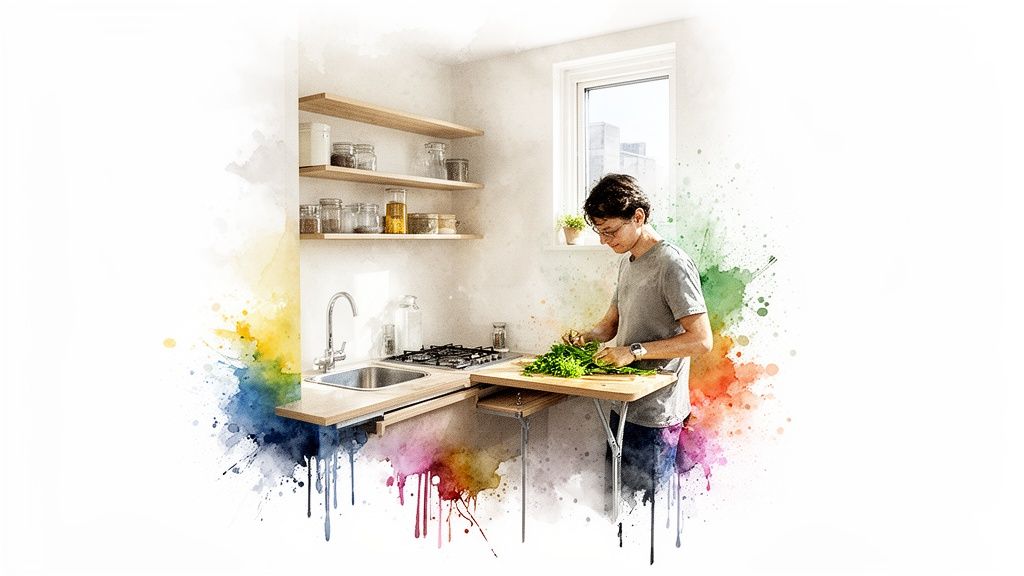
Why Small Kitchens Are The New Normal
The push for smart, compact design isn't just a fleeting trend—it's a direct reflection of how we live now. As more people flock to cities, smaller living spaces have become the norm, making every inch of real estate count. This global shift has sparked a boom in design innovation focused squarely on making these petite footprints work beautifully.
The global kitchen design service market, valued at a hefty USD 6.73 billion, is projected to soar to USD 12.3 billion by 2035. A huge driver behind this is the urbanization happening in densely populated areas. This demand has lit a fire under designers to come up with genius vertical storage solutions and multi-purpose units, showing once and for all that great design actually thrives under constraints.
A small kitchen is like a well-written poem. Every element must have a purpose, and nothing is wasted. It’s about creating maximum impact with minimum space, turning constraints into a form of art.
Embracing Creative and Affordable Solutions
You don't always need a full-blown renovation to make your kitchen more functional and stylish. Often, the changes that make the biggest difference are the simplest and most budget-friendly. For an instant, high-impact upgrade, consider Kitchen Wrapping. It's a smart and stylish alternative to a full remodel, allowing you to completely refresh the look of your cabinets and surfaces without all the dust, disruption, and expense. This kind of resourceful thinking is what the modern small kitchen mindset is all about.
Here's a quick look at some high-impact strategies that can immediately improve how your small kitchen works and feels.
Quick Wins for Your Small Kitchen
| Strategy | Core Benefit | Example Application |
|---|---|---|
| Go Vertical | Maximizes unused wall space. | Install floating shelves or a tall, narrow pantry. |
| Light & Bright | Creates an illusion of more space. | Use light-colored paint and reflective backsplash tiles. |
| Multi-Function First | Saves counter and storage space. | Choose an over-the-sink cutting board or a rolling cart. |
| Declutter Ruthlessly | Frees up surfaces and cabinets. | Keep only essential daily-use items on the counter. |
These simple moves can make a world of difference without requiring a major overhaul. It's all about making smart, targeted changes to get the most out of your space.
Your Kitchen's Layout: The Key to a Better Workflow
The real magic of a great small kitchen isn't just about nifty storage gadgets—it's about how you move within the space. Think of your kitchen's layout as the unspoken choreography of your daily cooking. A smart floor plan makes everything feel effortless and intuitive. A bad one? It's just a recipe for frustration, constant shuffling, and bumping into things.
The foundation of any good kitchen design is a time-tested concept called the kitchen work triangle. This simple idea connects the three main zones you use most: the fridge (storage), the sink (cleaning), and the stove (cooking). The goal is to keep the path between these three points clear and compact, making your cooking process smooth and efficient. Even in the tiniest kitchens, you can adapt this principle to create a space that works with you.
Finding the Right Layout for Your Small Kitchen
When you're short on square footage, a few tried-and-true layouts just work better. Most small kitchens fall into one of these three camps, and figuring out which one you have—or which one you want—is the first step.
- The One-Wall Kitchen: You'll see this a lot in studios and lofts. It’s exactly what it sounds like: all your appliances, cabinets, and counter space are lined up along a single wall. It's the ultimate space-saver, but your work triangle becomes more of a work line, which can mean a few extra steps between tasks.
- The Galley Kitchen: This layout is a workhorse. It features two parallel walls with a corridor in between, creating an incredibly efficient cooking zone. Everything is just a quick pivot away, making the work triangle tight and effective.
- The L-Shape Kitchen: By using two adjoining walls, this layout forms a natural "L." It’s a fantastic choice because it often opens up into another room, which makes the kitchen feel more spacious and social. It also leaves room for a small dining nook or a mobile island.
If you’re planning a remodel, playing around with the best kitchen design software can be a game-changer. These tools let you experiment with different layouts virtually, so you can see what works before you start knocking down walls or buying cabinets.
Making the Work Triangle Work for You
The idea isn't just to have a triangle, but to have one that’s perfectly sized. The sweet spot for the distance between any two points is between 4 and 9 feet. Any closer and you’ll feel boxed in. Any farther, and you’re basically running a marathon just to make dinner.
For example, in a galley kitchen, you might put the sink and stove on one wall with the fridge directly across from them. Boom—a perfect little triangle. In a one-wall kitchen, try placing the sink in the middle, flanked by the fridge and stove. The L-shape gives you two sides of the triangle automatically, making it easy to position the third appliance.
Your kitchen's flow should feel like a smooth dance, not a clumsy obstacle course. When you plan your layout around the work triangle, you're designing for efficiency—the true luxury in any small kitchen.
Common Layout Mistakes to Sidestep
It’s surprisingly easy to mess up a good layout with a few simple mistakes. One of the biggest offenders is blocking the work triangle. Placing a bulky trash can, a cart, or even a small island right in the middle of that path will drive you crazy.
Another classic blunder is ignoring door swing. Make sure your refrigerator, oven, and cabinet doors can all open completely without hitting another appliance or blocking a walkway. It’s a small detail that makes a huge difference every single day. And don't forget about "landing zones"—you need clear counter space right next to the stove, fridge, and sink for setting down hot pans, unloading groceries, and stacking clean dishes.
If you want to dig deeper into creating functional zones and decluttering your space, check out our guide on how to organize a small kitchen for more tips. By thinking through your layout with these core ideas in mind, you can design a small kitchen that not only looks fantastic but works like a dream.
Unlocking Hidden Storage Potential
Once you've settled on a layout that works for your kitchen's footprint, the real fun begins: tackling the clutter. This is where clever design truly makes a small kitchen sing, transforming awkward nooks and forgotten corners into genuinely useful storage. The philosophy is simple but powerful: make every single inch count. It’s not about wishing you had more space, but about getting smarter with the space you already have.
Think of your kitchen like a puzzle. That gap above your cabinets? The sliver of wall next to the fridge? Even the dead space at the base of your cabinets? These are all opportunities waiting to be claimed. With a few smart strategies, you can radically boost your storage and create a kitchen that feels organized, efficient, and way bigger than its measurements suggest.
This decision tree can help you visualize which layout best suits your space, forming the foundation for your storage plan.
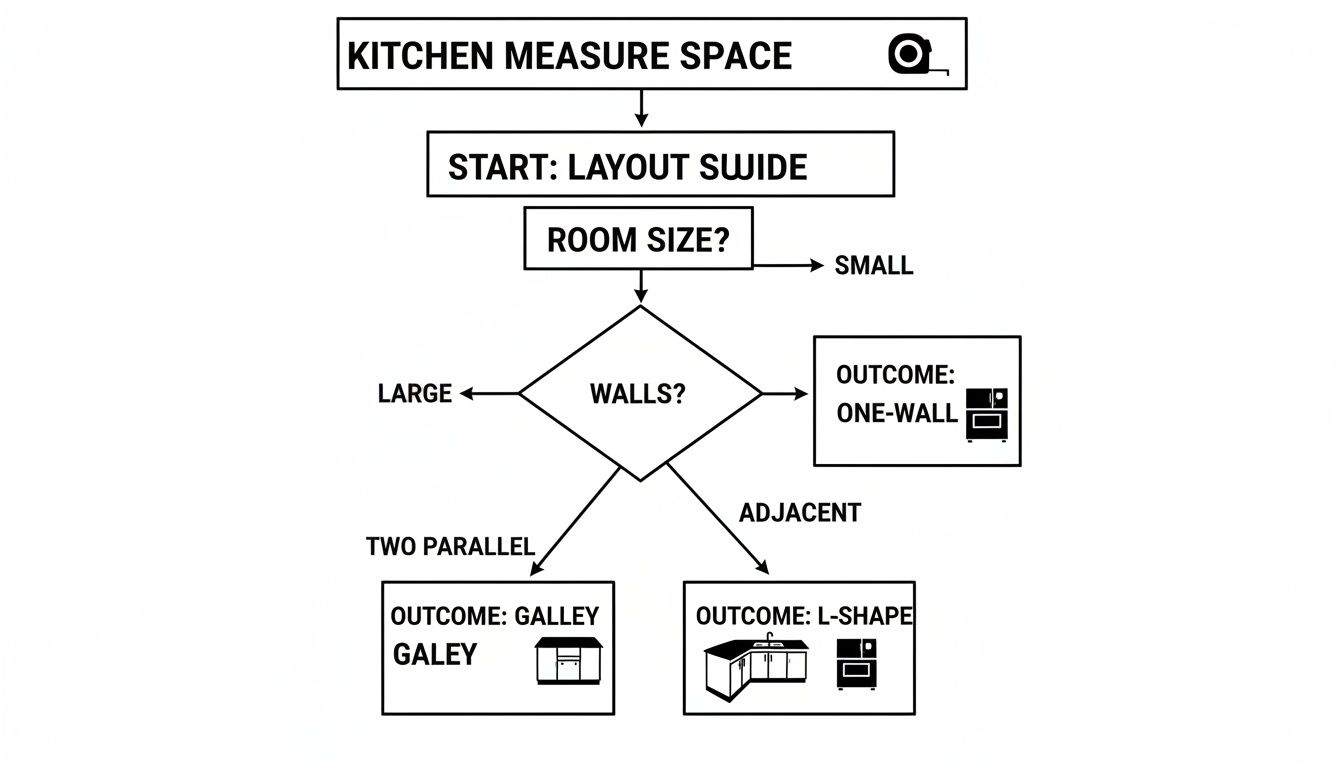
The key takeaway here is that your wall configuration—whether you're working with one wall, two, or a corner—is the primary factor in determining the most efficient layout. That layout, in turn, directly shapes your storage strategy.
Think Vertically: Go High and Low
When you can't build out, you build up. Maximizing vertical space is the golden rule of small kitchen design. It’s all about drawing the eye upward and using the full height of your room to your advantage.
Floor-to-ceiling cabinetry is the holy grail here, offering a massive amount of storage while creating a clean, uninterrupted line that makes the room feel taller. If a full renovation isn't in the budget, you can get a similar effect by placing attractive baskets or bins on top of your existing upper cabinets. That often-ignored space is perfect for stashing things you don't use every day, like that holiday serving platter or the stand mixer you only pull out for birthdays.
And don’t forget to look down! Consider installing toe-kick drawers at the very base of your cabinets. These shallow, hidden drawers are a brilliant hack for storing flat items like baking sheets, cutting boards, or even pet food bowls. It’s a genius move to capture space that’s almost always wasted.
Master Your Cabinet Interiors
The real battle against clutter is won inside your cabinets. We all know how a deep, dark cabinet can become a black hole where Tupperware lids and forgotten spices go to die. The fix is to make everything inside visible and easy to grab.
Smart cabinetry is the backbone of an organized small kitchen. It's about transforming chaotic cupboards into highly functional zones where everything has a designated, easy-to-reach spot.
Modern cabinet solutions are built for exactly this challenge. Here are a few game-changers:
- Pull-Out Pantries: These slide-out units let you see and reach everything stored in a tall, narrow cabinet, from the front all the way to the back.
- Lazy Susans: A classic for a reason! These rotating shelves make awkward corner cabinets completely functional, ensuring nothing gets lost in the abyss.
- Drawer Dividers: These are non-negotiable for keeping utensils, spices, and gadgets from turning into a jumbled mess.
The entire kitchen cabinet industry is shifting to meet the demand for these kinds of sleek, efficient solutions. The global market, currently valued at USD 80.72 billion, is expected to skyrocket to USD 143.96 billion by 2030. A huge driver for this is the rise of compact homes; in fact, 75% of new builds under 1,000 square feet now feature modular cabinets designed for maximum efficiency. You can see more on this trend over at Strategic Market Research.
Use Your Walls and Open Shelving
Your walls are prime real estate just waiting to be developed. Instead of leaving them bare, turn them into stylish and functional storage zones.
Wall-mounted magnetic strips are fantastic for getting knives off the counter, and hanging racks can hold everything from pots and pans to utensils. Not only does this free up precious drawer and cabinet space, but it also keeps your most-used tools within arm's reach, making your cooking workflow so much smoother.
Open shelving is another great design choice for small kitchens. It creates a much lighter, more open feel than a wall of solid upper cabinets. The trick is to keep it curated—don't just cram it full of stuff. Use shelves to display your everyday dishes, glassware, or a few favorite cookbooks. It’s a perfect blend of practical storage and personal style. For a deeper dive into clever organizational tools, check out our full guide on space-saving kitchen storage solutions.
Creating the Illusion of Space
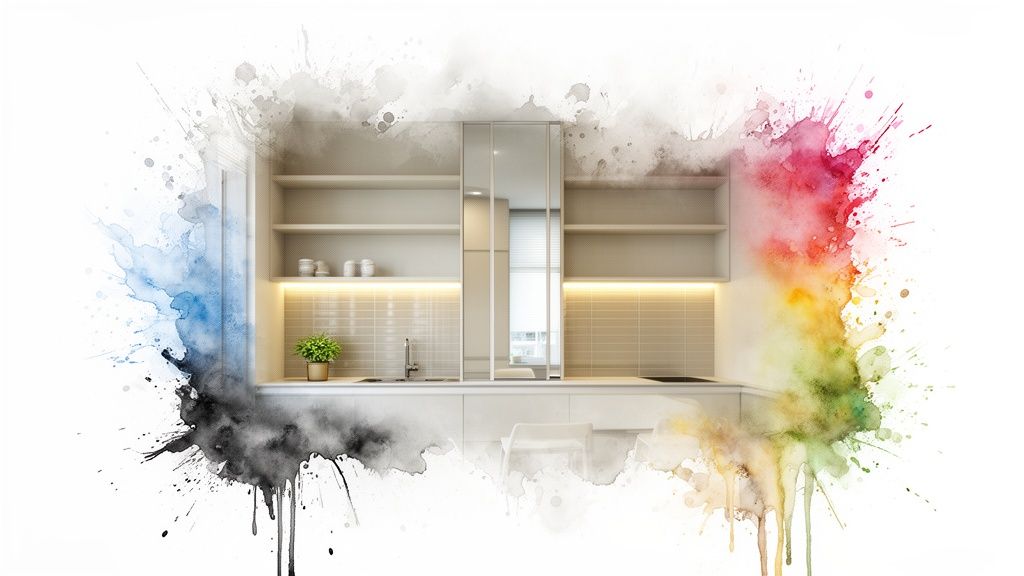
Once you’ve got your storage sorted, it's time for a little bit of visual wizardry. We’re going to trick the eye into seeing a kitchen that feels way bigger and brighter than its actual square footage. This isn’t about knocking down walls; it's about playing with color, light, and texture to create an open, airy feeling.
Think about it: a dark, cluttered room feels claustrophobic, but a bright, well-lit one feels expansive and calm. With a few deliberate design choices, you can nudge your kitchen from feeling cramped to feeling spacious, all without a single sledgehammer.
Let There Be Light (and the Right Color)
If you do only one thing, get your color palette right. Light and neutral colors are your secret weapon in a small kitchen because they are champs at reflecting light. Think crisp whites, soft creams, pale grays, and even gentle pastels. They bounce light—both natural and artificial—around the room, which has the effect of visually pushing the walls back.
Now, dark colors do the opposite; they absorb light and can make a space feel heavy and boxed-in. Does that mean you have to give up on that deep navy or forest green you love? Not at all. Just use it strategically. A pop of bold color on a backsplash, a set of vibrant bar stools, or a single accent wall can add personality without swallowing the room whole.
A light color palette in a small kitchen acts like a visual amplifier. It takes every bit of available light and magnifies it, creating an atmosphere of openness and calm that defies the room's actual dimensions.
Use Reflective Surfaces to Add Depth
Beyond your paint choices, the actual materials in your kitchen play a huge part in how spacious it feels. Anything with a bit of a sheen will bounce even more light around the room. These reflective surfaces work a lot like mirrors, adding depth and keeping the space from feeling flat.
This is a simple trick, but it makes a noticeable difference. Look for opportunities to bring in materials that have a natural polish or gloss.
Elements That Bounce Light Beautifully:
- Glossy Backsplash Tiles: You can't go wrong with classic subway tiles or sleek glass tiles. Their high-gloss finish catches the light and is a breeze to clean.
- Polished Hardware: Shiny cabinet pulls and faucets in chrome, brass, or nickel add little glints of light all over the kitchen.
- Stainless Steel Appliances: That metallic finish is great for breaking up solid blocks of cabinetry and reflecting the room back on itself.
- A Well-Placed Mirror: It might sound odd for a kitchen, but a small, framed mirror on a wall can be a total game-changer, creating a stunning illusion of depth.
Layer Your Lighting for Work and Vibe
Good lighting is a must in any kitchen, but in a small one, it’s a design superhero. A single, harsh overhead light is your enemy—it creates shadows in all the wrong places and makes corners feel dark and forgotten. The fix is to layer your lighting, using several different sources to make sure every inch of the kitchen is well-lit and inviting.
A great lighting plan combines three distinct types of light:
- Ambient Lighting: This is your room’s main light source—the one you flip on when you walk in. It could be recessed ceiling lights or a simple flush-mount fixture. Its only job is to provide good, general illumination.
- Task Lighting: This is where the magic happens. It’s bright, focused light aimed right where you work. The number one priority here is under-cabinet lighting. Installing LED strips under your upper cabinets completely transforms your countertops, wiping out shadows and making chopping and prep work so much safer and easier.
- Accent Lighting: This is the fun, decorative layer. Maybe it's a cool pendant light hanging over the sink or a small peninsula. It adds a touch of style and draws your eye to a specific feature.
When you bring all three types together, you get a kitchen that not only works better but also feels warmer, more dynamic, and a whole lot bigger.
Choosing Smart Tools and Compact Appliances
When you're working with a small kitchen, every single thing you own—from the fridge down to the humble vegetable peeler—has to earn its keep. Your counter is the most valuable real estate you have, and filling it with bulky, single-purpose appliances is just asking for chaos and frustration.
The real secret is to curate an arsenal of kitchen tools that are powerful, efficient, and scaled perfectly for your space. This is all about shifting your mindset from "bigger is better" to "smarter is essential." You're looking for tools and appliances that can pull double or even triple duty, keeping you ready for serious cooking without sacrificing that precious sense of openness.
The Rise of Compact and Mighty Appliances
The demand for space-saving kitchen gear isn't some fringe trend; it's a huge market that's responding to how we actually live. As more of us embrace apartment living, especially in cities, manufacturers have really stepped up. They're creating brilliant appliances that deliver full-sized performance in a much smaller footprint.
This shift has made it easier than ever to equip a tiny kitchen without compromise. In fact, the global market for small kitchen appliances was valued at USD 29.09 billion and is expected to hit USD 40.90 billion by 2030. This boom is directly linked to the surge in compact living. Just look at the numbers: since the 2010s, apartment living has jumped by 25% in major US cities, where kitchens under 400 square feet are common. You can see more data on this trend from Grand View Research.
Here are the heavy hitters to look for in your own small kitchen:
- Slimline Refrigerators: These counter-depth models are a game-changer. They offer clever interior layouts without jutting out and killing your kitchen’s flow.
- 18-Inch or Drawer Dishwashers: A compact dishwasher gives you modern convenience without demanding you sacrifice an entire standard cabinet.
- Combination Microwave-Ovens: Why have two separate boxes? These versatile units can bake, roast, and microwave, freeing up an incredible amount of counter or cabinet space.
Curating Your Gadget Collection
Beyond the big-ticket items, your everyday tools and gadgets are a massive opportunity to save space. It's about consciously choosing items that are either multi-functional or designed to be stored neatly. Think of it like building a minimalist toolkit, where every piece is a workhorse.
For instance, instead of a separate pot and a clumsy colander, why not use a stainless steel pasta pot with a built-in, locking strainer lid? It does both jobs beautifully, which means one less thing to store and wash. You can apply this same thinking to almost every tool in your kitchen.
In a small kitchen, every tool must pass a simple test: Does it do more than one thing, or does it store exceptionally well? If the answer is no, it probably doesn't belong.
Keep an eye out for anything that nests or collapses. A set of mixing bowls that fit perfectly inside one another can replace a chaotic jumble with a single, tidy stack. In the same way, a collapsible silicone colander can be tucked into a slim drawer, freeing up an entire cabinet shelf.
Smart Tools for a Streamlined Kitchen
Building an efficient toolkit doesn't have to be complicated. By focusing on just a few key types of products, you can make a huge difference in how your kitchen feels and functions every day.
Multi-Functional Cookware and Tools:
- Over-the-Sink Cutting Boards: These are brilliant. Many come with integrated, collapsible colanders, instantly adding prep space right where you need it.
- Rotating Utensil Holders: A sturdy rotating caddy keeps your spatulas, whisks, and spoons organized and right at your fingertips without eating up a huge chunk of your counter.
- Nesting Bowl and Measuring Sets: This is a non-negotiable for saving cabinet space. Look for complete sets that bundle mixing bowls, colanders, sieves, and measuring cups all in one.
Choosing the right gadgets is one of the most effective ways to redesign a small kitchen because it directly improves your daily workflow. For more great ideas, check out our guide on space-saving kitchen gadgets that will help you declutter for good. With a few deliberate choices, you can equip your kitchen for any culinary adventure without it ever feeling cramped.
Your Small Kitchen Transformation Checklist
Feeling inspired and ready to take back your kitchen? Turning a cramped, frustrating space into a genuinely functional one comes down to making a series of smart, deliberate choices. I’ve pulled together all the key design ideas we've covered into this quick checklist to give you a clear roadmap.
Whether you're gearing up for a full gut renovation or just carving out a weekend for a refresh, think of this as your game plan. It’s broken down into the four areas that will give you the most bang for your buck.
Layout and Planning
Everything starts here. A good layout is the foundation that makes a small kitchen feel intuitive and efficient, not like a daily puzzle.
- Nail the Work Triangle: Keep the path between your sink, stove, and fridge as clear and direct as possible. A smooth workflow is everything in a tight space.
- Pick the Right Floor Plan: Are you working with a galley, a single wall, or an L-shape? Choose the layout that best fits your room’s actual footprint to avoid wasted space.
- Create Landing Zones: This is non-negotiable. You need dedicated counter space right next to your fridge and oven for loading groceries or pulling out hot dishes safely.
Storage and Organization
This is where the magic really happens. Getting smart with storage is how you banish clutter for good and make every single inch count.
- Go Vertical: Think floor-to-ceiling cabinets or high-mounted open shelving. It not only provides more storage but also draws the eye upward, making the room feel taller.
- Hack Your Cabinets: Don't just accept cavernous, empty boxes. Install pull-out pantry shelves, lazy Susans for corners, and deep drawer dividers to make everything easy to see and grab.
- Put Your Walls to Work: Get things off the counter! A magnetic knife strip or a simple hanging rail system can free up an incredible amount of prime real estate.
The goal is simple: a home for everything. When every tool and ingredient has a specific, easy-to-reach spot, your kitchen will feel twice as big and a thousand times more enjoyable to be in.
Lighting and Aesthetics
Don't underestimate the power of visual tricks. The right light, color, and finishes can make a kitchen feel dramatically larger and more welcoming.
- Stick to Light Colors: This is the oldest trick in the book because it works. Light, neutral tones—think whites, creams, or soft grays—on walls and cabinets will bounce light around like nothing else.
- Add Reflective Surfaces: Use materials that work a little harder. Glossy backsplash tiles, polished chrome hardware, or even a strategically placed mirror can amplify the light you have.
- Layer Your Lighting: One overhead fixture won't cut it. Combine that ambient light with targeted under-cabinet task lighting to brighten up your work surfaces and kill any gloomy corners.
Appliances and Tools
Finally, it’s time to equip your kitchen with tools that respect its small scale. Every item you bring in should either do the job of two things or be a breeze to store.
- Choose Compact Appliances: Look for slimline refrigerators, drawer-style dishwashers, and combination microwave/convection ovens that deliver function without dominating the room.
- Prioritize Multi-Functional Gear: Think smarter, not more. A pasta pot with a built-in strainer lid or an over-the-sink cutting board are perfect examples of tools that save space and steps.
- Look for Stackable Designs: Save precious cabinet space with nesting mixing bowls, measuring cups, and prep bowls that stack into a single, neat footprint.
Your Top Small Kitchen Questions, Answered
Even the best-laid plans can leave you with a few lingering questions. When you're in the thick of a kitchen project, specific challenges always seem to surface. Let's tackle some of the most common ones head-on so you can get back to creating a kitchen you love, with total confidence.
What’s the Best Color to Paint a Small Kitchen?
Hands down, light and neutral colors are your secret weapon in a tight space. Think bright whites, soft creams, light grays, or even subtle pastels. These shades are fantastic at bouncing light around the room—both natural and artificial—which instantly creates a more open, airy, and uncluttered feeling.
But what if you're a die-hard fan of bold color? Don't despair! You don't have to live in a plain white box. The trick is to use those vibrant hues as accents. A pop of color in a backsplash, a few brightly colored barstools, or even a single feature wall can inject tons of personality without making the space feel smaller.
How Can I Squeeze in Seating?
Getting a spot to sit in a tiny kitchen is all about clever, multi-functional thinking. One of my favorite tricks is a small drop-leaf table mounted right on the wall. It's there when you need it for a quick meal and folds completely out of the way when you don't, which is a lifesaver for floor space.
Another great move is to install a narrow breakfast bar against an unused wall. Just slide a couple of backless stools underneath—the kind that can tuck completely out of sight. And if your kitchen flows into another room, a peninsula is a brilliant workhorse. It gives you extra prep space and a casual dining spot all in one, beautifully connecting the two zones.
The real key to adding seating in a small kitchen is flexibility. Look for options that can disappear, tuck away, or pull double duty. Your goal is to keep the workflow open and functional.
Are Open Shelves a Smart Move for a Small Kitchen?
Open shelves can be absolutely fantastic, but they do come with one small caveat. On the plus side, they do an incredible job of opening up walls and getting rid of that heavy, "boxed-in" feeling you often get from a solid bank of upper cabinets. They’re perfect for keeping your everyday dishes and glasses right at your fingertips.
The trade-off, of course, is that everything is on display. This means you have to commit to keeping things tidy to avoid a chaotic, cluttered look. For many people, the perfect solution is a mix-and-match approach. Use beautiful open shelving for your most attractive, frequently used items, and keep the rest of the clutter neatly tucked away behind closed cabinet doors.
Ready to conquer clutter and bring big style to your small kitchen? Having the right tools makes all the difference. Explore the Cooler Kitchen collection to find thoughtfully designed, space-saving essentials—from our rotating utensil holders to clever nesting bowls—that help you make the most of every single inch.
Shop the collection now at https://www.coolerkitchen.com.