

Smart Space Saving Kitchen Storage Solutions for Any Layout
The secret to truly effective space-saving kitchen storage isn't just about clever containers; it's a blend of ruthless decluttering and learning to see all the hidden and vertical real estate in your kitchen. By taking a hard look at your daily habits and mapping out your space into clear work zones, you can build a system where everything has a smart, easy-to-reach home.
Starting Your Kitchen Organization Project
It’s easy to feel overwhelmed by the thought of organizing a kitchen. But the journey to a clutter-free space doesn't begin in the container aisle. Real, sustainable organization starts with an honest conversation about your kitchen and how you actually live in it.
This is about figuring out the "why" behind the mess before you start shopping for the "what" to fix it. This first step is crucial because it ensures you buy solutions that solve your unique problems, not just copy a pristine photo you saw online.
So many of us make the classic mistake of buying a bunch of bins and baskets first, only to discover they don't fit the cabinet or hold what we need them to. A successful project flips that script. You have to start by looking at your countertops, peeking into your cabinets, and identifying the real pain points. Is it that chaotic utensil drawer? The dreaded corner cabinet where pans go to die? Or the spice jars that have staged a hostile takeover of your prep area? Naming these frustrations gives you a clear goal.
A Practical Approach to Decluttering
Before you can organize, you have to purge. A simple, tried-and-true method is to tackle one small area at a time—just a single cabinet or drawer. Pull everything out. As you touch each item, ask yourself some tough questions: When did I last use this? Do I own three of these? Does this thing genuinely make cooking better or is it just taking up space?
This isn't about becoming a minimalist overnight. It's about a realistic gut-check. Make three piles: Keep, Donate/Sell, and Toss. Be honest about that novelty avocado slicer you used once or the mountain of plastic containers with no matching lids. Getting rid of the stuff you don't use is the single most powerful thing you can do to instantly reclaim space.
Key Takeaway: Decluttering isn’t just about getting rid of junk; it's about consciously choosing to keep only what serves you. This step alone can often solve more than half of your storage headaches before you even buy anything.
Before you start pulling everything out, it helps to have a plan. The checklist below is a great way to audit your space, pinpoint those frustrating bottlenecks, and set some clear, achievable goals for your project.
Your Kitchen Assessment Checklist
Use this checklist to perform a quick audit of your kitchen, identify frustrating bottlenecks, and define clear organizational goals.
| Assessment Area | Key Questions to Ask | Actionable Goal |
|---|---|---|
| Countertops | What's living here that shouldn't be? Is there enough clear prep space? | Create a "home" for mail and keys away from the counter. Find a solution for utensils currently in a crock. |
| Pantry/Food Cabinets | Can I see everything I have? Are there expired items? Are like items grouped together? | Group all grains, pastas, and canned goods. Use clear bins to contain snacks. |
| Pots & Pans Cabinet | Do I have to unstack 5 pans to get the one I need? Are lids a total mess? | Install a lid organizer. Consider a vertical rack for frying pans so they can be grabbed easily. |
| Utensil & Gadget Drawer | Is it a "junk drawer"? Can I find the peeler without digging for 2 minutes? | Use drawer dividers to create specific zones for cooking utensils, baking tools, and everyday flatware. |
| Under the Sink | Is this a jumble of cleaning supplies and plastic bags? Is the space being used vertically? | Add a small tension rod for hanging spray bottles. Use a stackable two-tier organizer to double the storage. |
Once you've done this audit, you'll have a much clearer picture of what you truly need to store and where your biggest challenges lie.
Mapping Your Kitchen Work Zones
With your inventory slimmed down, it's time to think like a chef and map out your kitchen’s "work zones." Every well-functioning kitchen, no matter the size, has a natural flow between a few key areas. Grouping your items by zone is what makes a kitchen feel intuitive and efficient.
Think about these core zones:
- Prep Zone: This is where the action starts—chopping, mixing, measuring. It's usually a clear stretch of counter. You'll want knives, cutting boards (like our versatile bamboo cutting boards with color-coded mats), mixing bowls, and measuring tools right here.
- Cooking Zone: Centered on your stove and oven. This is home base for pots, pans, cooking utensils, oils, and spices. Keeping these items within arm's reach means no more frantic searching while something is sizzling on the stove. A sturdy rotating utensil holder can be a total game-changer here.
- Cleaning Zone: Everything related to the sink and dishwasher. This is where you'll keep dish soap, sponges, cleaning sprays, and your trash or compost bin.
Thinking in zones takes your kitchen from being just a room with cupboards to a high-performance workspace. It's no surprise that this kind of hyper-organized, efficient thinking is catching on. The global market for kitchen storage and organization hit a staggering USD 139.22 billion in 2023 and is still climbing, which just goes to show how much we all crave a more functional cooking space.
By decluttering first and then zoning, you lay the perfect groundwork for any storage solutions you decide to bring in. For an even deeper dive, check out our complete guide on how to organize a small kitchen.
Unlocking Vertical Space and Hidden Corners
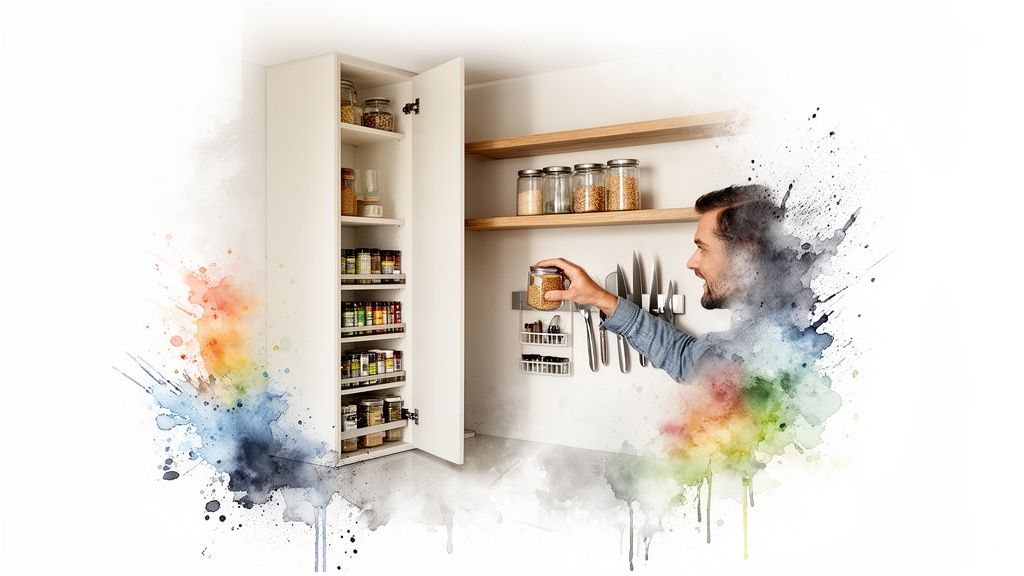
When we think about kitchen storage, most of us automatically look horizontally. We see the countertops and the cabinet shelves, but we often miss the huge amount of untapped real estate right above our heads and tucked into forgotten corners. These are the spots where the most creative and effective space-saving solutions come to life.
Learning to see your kitchen in three dimensions—especially vertically—is a total game-changer. It’s about finally noticing the empty wall space above your coffee station or the six inches of dead air between your cereal boxes and the top of the pantry. That isn't just empty space; it's a wasted opportunity. By claiming it, you can multiply your storage capacity without knocking down a single wall.
Think Vertically to Maximize Every Inch
For anyone with a small or perpetually cluttered kitchen, going vertical is the single best strategy you can adopt. It’s not just about adding shelves; it’s a design trick that draws the eye upward, making the whole room feel taller and more open, all while creating practical storage out of thin air. You’re not spreading out; you’re stacking up.
This approach involves a few clever tactics that are surprisingly easy to pull off but give you massive returns. You could start small by adding simple risers to your existing cabinets, which instantly doubles the storage for mugs or small plates. In a pantry, a tall, slim shelving unit can turn one deep, chaotic shelf into a multi-level storage powerhouse.
Here are a few vertical solutions I recommend all the time:
- Tiered Shelving: Place these inside deep cabinets to stop things from getting lost in the back. They’re brilliant for organizing canned goods or spices so you can actually see everything at once.
- Under-Shelf Baskets: These slide right onto an existing shelf, creating a new storage cubby underneath. I love using them for things like bread, kitchen towels, or bags of chips that would otherwise take up precious shelf space.
- Tall Pantry Organizers: Got that awkward gap next to your refrigerator? A narrow, rolling cart slides right in, giving you an incredible amount of storage for spices, oils, and other slim containers.
Expert Insight: The average American kitchen has over 15 square feet of unused wall space. Just by installing a couple of floating shelves or a wall-mounted rack, you can get canisters, cookbooks, and everyday dishes off your counters, clearing up vital prep areas.
Turn Your Walls into Smart Storage
Your walls are essentially blank canvases waiting for a job. Wall-mounted storage is one of the most powerful space-saving kitchen storage solutions because it gets bulky items up and out of the way, freeing up countertops and drawers in a flash.
This is about much more than just hanging a picture. It's about creating functional, accessible storage that also happens to look great. A magnetic knife strip, for example, is not only safer for your blades than a clunky knife block, but it also frees up a whole section of your counter. In the same way, a wall grid with S-hooks can hold all of your most-used utensils, keeping them right by the stove where you need them.
Consider these other powerful wall-mounted options:
- Floating Shelves: Perfect for everyday dishes, glassware, or even decorative canisters. They give the kitchen an open, airy feel while serving a very practical purpose.
- Pegboards: A versatile classic for a reason. You can customize a pegboard with hooks, baskets, and small shelves to hold everything from pots and pans to measuring cups.
- Pot Racks: Whether you hang it from the ceiling or mount it on the wall, a pot rack makes it so much easier to grab the exact pan you need without causing a noisy avalanche in a cabinet.
Capitalize on Overlooked and Hidden Spaces
Beyond the obvious walls and shelves, every kitchen has hidden nooks and awkward spots that are just begging to be organized. These are the areas we tend to write off, but with the right tools, they can become some of the most useful storage zones in your home.
The inside of your cabinet doors is a perfect example—prime real estate that almost always goes unused. Simply attaching a slim spice rack, a holder for cutting boards, or a few hooks for measuring spoons can free up an entire drawer. It’s a tiny addition that delivers huge results.
Keep an eye out for these hidden opportunities:
- Inside Cabinet Doors: This space is ideal for storing foil, plastic wrap, cutting boards, or those pesky pot lids.
- The Toe-Kick Area: Some modern cabinet systems offer shallow toe-kick drawers. These are brilliant for stashing flat items like baking sheets, cooling racks, or serving platters.
- Above the Cabinets: That gap between the top of your cabinets and the ceiling is often a dust-collecting dead zone. Use decorative baskets to store seasonal items or appliances you only pull out a few times a year.
By combining vertical thinking with a sharp eye for these hidden spots, you’ll unlock a surprising amount of storage you never even knew you had.
Optimizing Cabinets, Drawers, and Countertops
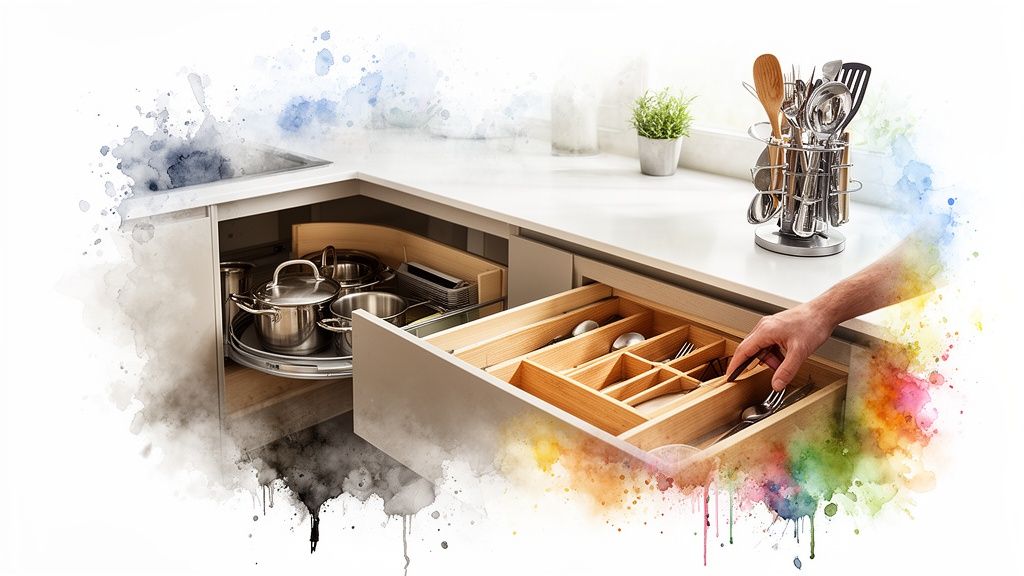
Alright, now that we’ve claimed all that unused vertical and hidden space, it’s time to tackle the heart of the kitchen chaos. I’m talking about the high-traffic zones: your cabinets, drawers, and countertops. These are the areas you interact with every single day, and bringing real order to them will completely change how you feel about cooking.
This is where small, strategic organizers make the biggest impact. We’re not just tidying up; we're creating a system that works for you. No more frustrating searches for the right spatula. No more avalanches of plastic containers. Let's turn these chaotic spots into models of kitchen efficiency.
Taming the Utensil Drawer for Good
We all have one—that tangled mess of a drawer filled with whisks, spatulas, and spoons. A simple, effective drawer divider isn't just a nice-to-have; it's essential for restoring sanity. The goal is to create dedicated zones, turning one big jumble into a grid where everything has a home.
But don’t just grab the first plastic tray you see. The best organizers offer real flexibility:
- Adjustable Dividers: I'm a big fan of bamboo or sturdy plastic dividers that expand to fit your drawer perfectly. They lock in place, so there's no wasted space and nothing slides around.
- Tiered Organizers: These are brilliant for flatware. They store forks and spoons at an angle, which not only saves space but makes it much easier to see and grab what you need.
- Bin Systems: For all those awkward gadgets like peelers, corkscrews, and garlic presses, a set of small, individual bins is the answer. You can create a totally custom layout that fits your specific tools.
A well-organized drawer doesn't just save time; it protects your tools from getting dinged up. For a really deep dive on this, our guide on how to organize kitchen utensils has even more strategies.
Here’s another game-changing move: get your most-used tools out of the drawer entirely. A heavy-bottomed rotating utensil holder on the countertop keeps spatulas, ladles, and wooden spoons right where you need them, next to the stove. This one simple change often frees up an entire drawer for other items.
Making Every Cabinet Accessible
Deep cabinets and blind corners are notorious black holes. You know the drill—stuff gets pushed to the back and is never seen again. The trick is to bring the contents of the cabinet to you.
For lower cabinets, pull-out shelving is a fantastic upgrade. These sliding shelves essentially convert your cabinet into a set of deep drawers, giving you a bird's-eye view of everything inside. They are an absolute must for heavy items like pots, pans, and that stand mixer you hardly use because it's a pain to get out. When thinking about accessibility, I've found that some of the best expert kitchen packing tips also apply here—it's all about making things easy to get to.
And for those frustrating corner cabinets? The Lazy Susan is a classic for a reason. Modern versions with kidney-shaped shelves or multi-tiered trays make sure every inch of that awkward space is put to good use.
Pro Tip: Stop stacking your pots and pans. A simple vertical rack lets you store frying pans and baking sheets on their sides, like files in a cabinet. You can slide out exactly what you need without unstacking a heavy, noisy pile.
Solving the Under-Sink Cabinet Challenge
The cabinet under the sink is often the most neglected, chaotic space in the whole kitchen. The plumbing creates an awkward layout that most people just give up on. But with a couple of clever tools, you can transform it into a super-functional spot for all your cleaning supplies.
First, think vertically. A two-tiered sliding organizer is specifically designed to fit around pipes, which instantly doubles your storage surface. Put bulkier items like dishwasher pods on the bottom and smaller things like sponges and brushes on top.
Next, add a simple spring-loaded tension rod near the top of the cabinet. Hang your spray bottles from it by their triggers. This clears the cabinet floor, keeps them from falling over, and makes them easy to grab. It's one of the simplest yet most effective space-saving solutions for this tricky spot.
Reclaiming Your Countertops
Finally, let's talk about the countertops. The goal here is clarity. A cluttered counter feels stressful and shrinks the space you have for actually prepping and cooking food. The secret is to give everything that tends to land there a proper home.
- Slim Knife Blocks: Ditch the bulky wooden block for an in-drawer version or a slim magnetic strip on the wall.
- Appliance Garages: If you have the cabinet space, designate a spot to hide the toaster and blender when they’re not in use. Out of sight, out of mind.
- Stylish Compost Bins: Instead of an ugly bowl, a sleek countertop compost bin, like the Cooler Kitchen model with charcoal filters, contains food scraps neatly without any odor. It becomes a functional and surprisingly attractive addition.
By combining these targeted fixes, you can systematically turn your kitchen's workhorse zones from sources of frustration into smoothly operating parts of your daily routine.
Choosing Storage Products That Will Actually Last
The success of your newly organized kitchen really comes down to the quality of the products you bring in. A flimsy organizer that cracks under the weight of a few cans or a utensil tray that warps in the dishwasher will have you right back at square one. Investing in durable, well-made items is the secret to creating a system that sticks around.
This isn't about breaking the bank; it’s about making smarter choices. The right material can be the difference between a solution that holds up for years and one that needs replacing in a few months. When you prioritize durability, food safety, and even style, your efforts pay off with a kitchen that just works.
Materials Matter More Than You Think
When you're shopping for space-saving kitchen storage, the material is your first real clue about its quality and lifespan. Each one has its own strengths, making it better suited for different jobs around the kitchen.
Let's look at the most common options you'll run into:
- Bamboo: This is a fantastic, sustainable choice for things like drawer dividers and cutting boards. It's naturally tough, handles moisture well, and has a warm, modern look. A huge plus is that it won't absorb odors or stains like some plastics can.
- Stainless Steel: There's a reason this is the go-to in commercial kitchens. Stainless steel is non-porous, incredibly durable, and super easy to sanitize. Look for it in products that need to be workhorses, like a rotating utensil caddy or a sturdy pot rack.
- BPA-Free Plastics: For items like clear pantry bins or fridge organizers, a high-quality, BPA-free plastic is a great pick. It’s lightweight, affordable, and lets you see exactly what you have at a glance, which is a huge help in cutting down on food waste.
When you're really trying to make the most of your space, exploring smart space saving kitchen accessories can introduce you to some really clever solutions for those tricky corners and forgotten cabinet depths.
What to Look For in Quality Construction
Beyond the raw material, the small details in how a product is built tell the real story of its quality. A poorly made item will fail you, no matter what it's made of. Before you make a purchase, take a second to inspect the construction for signs of thoughtful design.
For example, look at the joints on a bamboo organizer. Are they fitted together neatly and glued securely, or can you see gaps? For metal items, pick them up—a flimsy feel often means thin material that will bend or dent with the slightest knock. With plastic bins, check for thick walls and reinforced corners that can handle being pulled in and out of shelves day after day.
Takeaway: Pay attention to the little things. Smooth, finished edges, sturdy joints, and a solid feel are all signs that a product was built to last.
Matching Durability with Your Kitchen's Style
Functionality is king, but you don't have to sacrifice style to get it. The best storage products are the ones that not only perform well but also feel like a natural part of your kitchen's overall look. A well-organized kitchen should feel calming and cohesive, not like a jumble of random plastic containers.
Try to create a consistent vibe. If your kitchen has modern, clean lines, stainless steel and clear acrylic organizers will fit right in. For a warmer, more traditional space, bamboo or items with wood accents can add a natural, elegant touch.
This move toward professional-grade durability isn't just a fad; it’s what people are coming to expect. The demand for kitchen storage in commercial settings is projected to grow at a CAGR of 5.3% through 2030. This professional demand is pushing innovation in long-lasting materials and efficient designs, which means we home cooks get access to better, more reliable products.
Ultimately, picking the right products is a balancing act. You need solutions that are tough enough for the daily grind but also help create a kitchen you genuinely love spending time in. For more ideas on tools that work hard and look great, check out our guide on other essential space-saving kitchen gadgets.
Bringing Your New Kitchen Organization System to Life
Alright, the planning is done, the boxes are open, and now for the fun part—actually putting it all together. This is the moment where all that careful measuring and smart shopping really starts to pay off. The secret to a smooth, stress-free installation is to tackle it piece by piece, not as one massive, overwhelming job.
I've seen it a hundred times: people pull everything out of every cabinet at once, creating a mountain of kitchen chaos. They end up feeling defeated before they even get started. The much better way is to break it down into small, manageable wins. Think of it as a series of mini-projects, each one giving you a little boost of accomplishment.
A Realistic Workflow for a Smooth Transformation
First things first, pick one area to start with. Just one. Maybe it's the chaotic utensil drawer or that jumbled spice cabinet. This focused approach keeps you from getting buried in clutter and lets you see a finished result in a single session. It's a great way to build momentum and prove to yourself that you can do this.
Before you install a single thing, get your tools together. Seriously, nothing kills your flow faster than having to dig through a junk drawer for a screwdriver.
Your Essential Toolkit:
- A reliable drill with a full set of bits
- A tape measure and a pencil
- A level (you'll thank me later when your shelves are perfectly straight)
- A screwdriver (have both Phillips and flathead handy)
- A small hammer or rubber mallet
With your tools at the ready, you can get to the physical work. Follow the instructions that came with your shelves, dividers, or pull-out systems. Take your time, measure twice, and make sure everything is rock-solid. A securely installed organizer is a safe and effective one.
Placing Items Back with Purpose
Once the new hardware is in, it's time to reload your cabinets and drawers. But don't just shove things back in. This is your chance to place them according to the work zones you mapped out earlier. The goal is to keep items close to where they're actually used.
Cooking utensils belong near the stove, whether that's in a freshly organized drawer or a handy rotating utensil holder on the counter. Spices should be easy to see and grab, making a tiered shelf or a door-mounted rack a perfect fit. Try to group all your baking supplies—flour, sugar, mixing bowls—into one dedicated cabinet. This kind of strategic placement is what elevates a kitchen from just tidy to truly functional.
Insider Tip: As you put things away, grab a label maker or even just a roll of masking tape and a marker. Labeling bins and shelves might seem a bit extra, but it's the key to helping everyone in the house maintain the system you've worked so hard to create.
When you're thinking about what will stand up to the daily grind, it helps to know your materials.
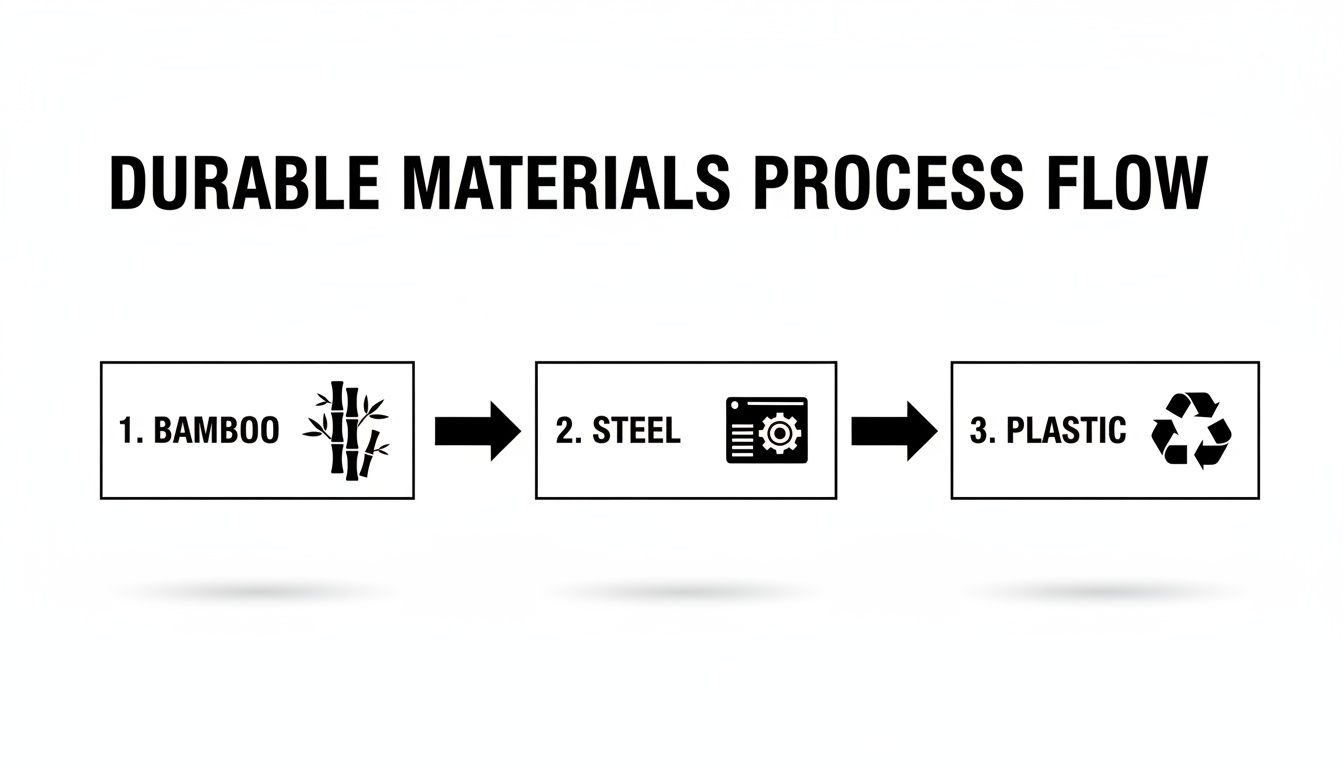
From sustainable bamboo to heavy-duty steel and versatile plastics, each material plays a specific role. Understanding their strengths helps you choose the right product for the right job, ensuring your new setup lasts.
Making Final Tweaks and Adjustments
Now, live with it for a week or two. Pay attention to how it feels. You'll quickly notice if something isn't quite right—maybe that pot you use every day is on a bottom shelf, or the coffee mugs are a long walk from the coffee maker. Don't hesitate to make small adjustments.
The best organizational system is one that evolves with your habits. The whole point is to create a kitchen that feels intuitive. A simple pantry inventory list can also be a game-changer for tracking what you have and cutting down on food waste. This final stage of fine-tuning is what ensures your new space-saving solutions will work for you for years to come.
Keeping Your Kitchen Clutter-Free for Good
An organized kitchen isn't something you achieve once and then forget about. It's more like a garden; it needs a little bit of regular attention to stay beautiful and functional. The real secret to lasting order isn't about massive cleaning sprees, but about building small, simple habits into your daily life.
The whole point is to make being tidy the easiest option. By weaving these little routines into your day, you make sure all those clever storage solutions you put in place keep doing their job. It’s how a big project becomes a lasting, effortless success.
Build Habits That Stick
One of the most powerful tricks I've learned is the ‘one in, one out’ rule. Any time a new kitchen gadget, mug, or even a fancy new olive oil comes into the house, something similar has to go. This simple trade-off is your best defense against the slow, creeping clutter that inevitably fills up cupboards.
Another game-changer is what I call the ‘five-minute nightly reset’. Seriously, just five minutes before you go to bed. Wipe the counters, put that stray coffee cup in the dishwasher, and tuck away the mail. Waking up to a clean slate instead of yesterday's mess is a tiny habit with a huge payoff for a calmer morning.
An organized kitchen is the result of a thousand small, smart choices made every day. It's less about a massive cleaning blitz and more about the simple act of putting things back where they belong.
Finally, put a couple of seasonal check-ins on your calendar. Twice a year, just take 30 minutes to peek into your cabinets and pantry. Does a drawer divider need a quick reshuffle? Can you box up the holiday cookie cutters to make room? These quick little tune-ups keep your system working perfectly.
Your Kitchen Storage Questions, Answered
Even the best-laid plans can hit a snag. When you're in the middle of a kitchen overhaul, questions are bound to pop up. Getting the right advice can be the difference between a project you abandon and a space you absolutely love. Let's tackle some of the questions I hear most often from people just like you.
"My Kitchen Is Tiny. Where Do I Even Begin?"
If you're working with a really small kitchen, the first thing you have to do is get ruthless. I mean it. You just don't have the square footage to hang onto things you "might" use someday. Start small to avoid getting overwhelmed—pick one drawer or a single shelf. Empty it completely and be brutally honest about what deserves to go back in.
Once you’ve cleared out the clutter, your new mantra is: go vertical. This is hands-down the most effective strategy for making a tight space work harder.
- Think Up: Floating shelves are perfect for everyday plates and glasses, getting them out of crowded cabinets.
- Wall Power: A simple magnetic strip gets your knives off the counter and frees up an entire knife block's worth of space.
- Double Down: Slide some under-shelf baskets into your existing cabinets. You've just instantly doubled your storage without a single tool.
The goal here is to reclaim your countertops first. It makes the biggest visual and functional impact right away, which will give you the motivation to keep going.
"What's the Secret to Organizing Pots and Pans?"
Ah, the classic cabinet-killer. Pots and pans are bulky, awkward, and the reason for so much kitchen frustration. The trick is to find a solution that lets you grab any single item without having to un-nest a wobbly tower of cookware first.
A pull-out cabinet organizer can be a game-changer. Instead of digging into the back of a dark cabinet, you slide the whole collection out into the light. Another fantastic option is a heavy-duty vertical pot rack that lets you file pans on their side, just like records in a crate. No more stacking.
And for the lids? Get a dedicated organizer and mount it to the inside of the cabinet door. It’s one of those simple, why-didn’t-I-think-of-that-sooner hacks that solves the problem of runaway lids for good.
"Do I Really Need to Spend a Lot on Organizers?"
Honestly? No. The best organizer isn't the most expensive one; it's the one that solves your specific problem and is built to last. I've seen some beautifully engineered high-end systems, but I've also seen simple bamboo drawer dividers, tension rods, and clear plastic bins work absolute wonders.
Instead of looking at the price tag, focus on the item's purpose and how it's made. A well-crafted bamboo organizer or a solid steel rack will outlive a flimsy, overpriced gadget every time. Your guiding principles should always be function and durability, not brand names.
At Cooler Kitchen, our goal is to help you build a kitchen that feels as good as it looks. We focus on smart, functional products made with quality that lasts. Check out our full collection of thoughtfully designed kitchenware at https://www.coolerkitchen.com.