

Clean and Care for dishwasher safe kitchen utensils: A Practical Guide
Staring at a sink full of dirty utensils, we've all played that guessing game: "Can this go in the dishwasher?" It's a daily kitchen dilemma. The short answer? Most tools made from stainless steel, silicone, and hard plastics are good to go. But anything made of wood, cast iron, or aluminum needs to be hand-washed to avoid a kitchen catastrophe.
Let's clear up the confusion for good.
Why Dishwasher Safe Kitchen Utensils Matter
The dishwasher isn't just a luxury; for many of us, it’s an essential part of a functional kitchen. It saves a massive amount of time and, honestly, gets things cleaner and more sanitized than I ever could by hand. With life getting busier, it's no surprise that we rely on these machines more and more.
The proof is in the numbers. The global dishwasher market hit around $9.23 billion in 2023 and is expected to climb to $14.91 billion by 2030. That tells you one thing: we love our dishwashers. And if we're using them every day, we need to know our kitchen tools can handle the heat.
The Real Cost of Guesswork
Picking dishwasher-safe utensils is more than just a time-saver—it's about protecting the tools you've invested in. Tossing the wrong thing in there can ruin it in a single cycle. I've seen it happen.
- Warping: That plastic spatula you love? If it's not rated for high heat, it can come out looking like a Dali painting.
- Cracking: Wood and bamboo are the biggest culprits here. They soak up water like a sponge and then crack wide open when the heat kicks on for the dry cycle.
- Rusting: Cast iron is an obvious no-go, but even some lower-quality metals will start to rust after being blasted with hot water and detergent.
- Dulling: Your good knives have no business in the dishwasher. The harsh detergents and the way things get knocked around will kill that sharp edge in no time.
A great cleanup depends on your machine running at its best. If you've ever found your dishwasher not cleaning dishes properly, it’s worth looking into why. A well-functioning machine is step one to getting your utensils sparkling.
The Path to Effortless Cleanup
This guide is here to end the guesswork. We'll break down exactly why some materials can take the heat while others can't, and I’ll show you how to read those confusing care symbols like a pro. Once you know the basics, you'll be able to keep your favorite kitchen tools looking and working like new for years.
And remember, a clean machine means cleaner dishes. Keeping the appliance itself in top shape is just as important, which is why we put together a guide on how to clean it right: https://www.coolerkitchen.com/blogs/news/cleaning-the-inside-of-a-dishwasher.
What Makes a Utensil Dishwasher Safe?
Ever wondered what that "dishwasher safe" label on a kitchen tool really means? It’s not just a friendly suggestion. It's a guarantee that the item can survive what is essentially a high-intensity storm of scalding water, powerful jets, and potent detergents, all contained within a metal box.
A utensil's ability to come out the other side unscathed boils down to three key things: its material, its construction, and its finish. Once you understand these, you'll be able to spot the difference between a long-term kitchen companion and a one-wash wonder before you even buy it.
The Science of Survival: Porous vs. Non-Porous
The main event in the dishwasher battle happens at the material level. A utensil's surface is its first line of defense, and it all comes down to whether it's porous or not. Think of it like wearing a raincoat versus a cotton sweater in a downpour.
-
Non-Porous Surfaces: Materials like quality stainless steel, glass, and silicone have sealed surfaces. Water and soap just roll right off without soaking in, which is why they emerge looking as good as new.
-
Porous Surfaces: On the flip side, materials like wood and bamboo are full of tiny pores. They act like sponges, soaking up hot water during the wash cycle and swelling up. When the high-heat drying cycle kicks in, that trapped moisture is forced out too quickly, leading to cracks, splits, and warping.
This simple difference is the single most important factor in determining if a utensil is one of the many dishwasher safe kitchen utensils on the market or if it needs to be washed by hand.
Taking the Heat
Your dishwasher isn't just spraying water; it's blasting your utensils with heat that can climb upwards of 150°F (65°C). While that's great for sanitizing, it can be a death sentence for certain materials.
Materials with a high heat tolerance, like stainless steel and food-grade silicone, handle these temperatures without breaking a sweat. They won't lose their shape or structural integrity. Many plastics, however, have a much lower melting point. Exposing them to that kind of heat can cause them to warp, bend, or even leach chemicals. This is exactly why you'll see a "top rack only" warning—it's a way of saying, "keep this away from the main heating element at the bottom!"
A utensil’s durability is a combination of its heat tolerance and its reaction to chemical agents. The powerful detergents used in dishwashers are designed to dissolve food and grease, but their alkaline nature can be harsh on softer metals and delicate finishes.
Why Construction and Finish Matter
Beyond the core material, the way a utensil is put together plays a massive role. A solid, single-piece tool is almost always a safer bet for the dishwasher.
For instance, a spatula made from one continuous piece of silicone is built to last. But one with a wooden handle glued to a silicone head? That's a different story. The glue is a weak point, and the intense heat and moisture will likely cause it to break down, leaving you with two separate pieces. The same goes for utensils with painted-on designs—the abrasive detergents and high-pressure water jets can easily strip them away.
Ultimately, the perfect dishwasher-safe utensil is made from a tough, non-porous material with high heat resistance and a simple, solid construction. This winning combination ensures it can handle cycle after cycle, giving you one less thing to worry about when it's time to clean up.
How to Read Dishwasher Safe Symbols
Ever flip over a new spatula and stare at the tiny icons stamped on the handle, feeling like you’re trying to decode ancient hieroglyphics? Those little symbols are the secret language of kitchen tool care, and learning to read them is the key to making sure your favorite utensils last.
Think of them as universal signs. The most common one you'll see is a simple square box with some plates or water droplets inside. That’s your green light—it means the item is generally safe for a standard cycle in your dishwasher. It's the most basic and widely used symbol out there.
Sometimes, you'll see a variation on that box, but with a number inside, like "150°F" or "65°C." This is crucial information, telling you the maximum temperature the item can handle without warping or melting. Another common icon shows dishes on a rack with water spraying from above, which specifically means it’s “top-rack safe.” This is a must-follow instruction for plastics that can't take the direct heat from the dishwasher's heating element at the bottom.
What if There Is No Symbol?
So, what do you do when a utensil is completely unmarked? It's tempting to just toss it in and hope for the best, but that's a risky gamble. Instead, you can play kitchen detective and make a solid, educated guess based on the material.
The first and most important clue is porosity. Is the material porous, like wood, or non-porous, like stainless steel or silicone? This simple question can guide your decision.
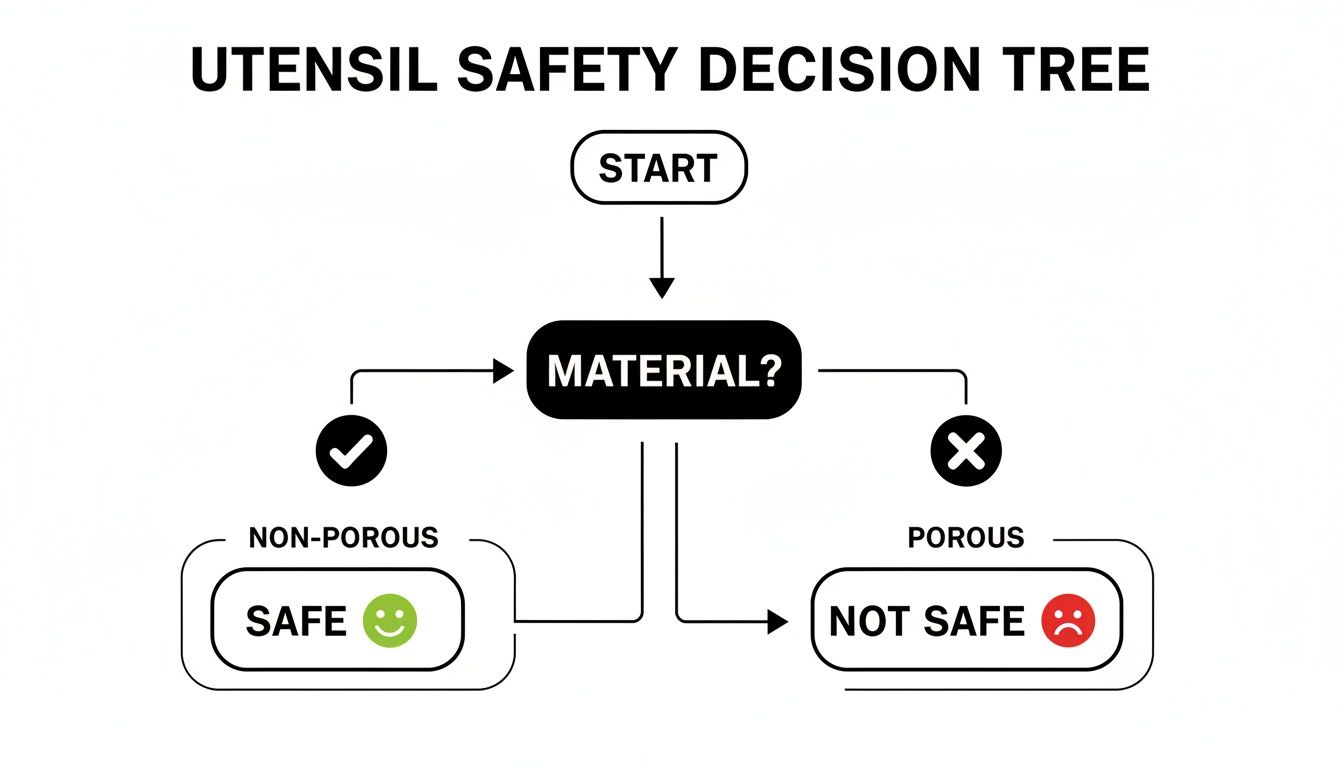
As you can see, non-porous materials are almost always a safe bet for the dishwasher. Porous materials, on the other hand, are a definite no-go. This one rule will help you protect countless unmarked items from a watery grave.
Knowing this stuff has become more important than ever. As more families have two working parents and city life gets busier, dishwashers have become essential time-savers. This shift has made knowing how to identify dishwasher-safe gear a critical skill for any modern kitchen. You can actually discover more about this market trend on ResearchAndMarkets.com.
Common Dishwasher Safe Icons Explained
To clear things up even more, let’s look at the most common symbols you’ll find on your kitchenware. Getting to know these will take almost all the guesswork out of loading the dishwasher.
- Standard Dishwasher Safe: Look for a square icon with stylized plates, glasses, or water drops. This is the all-clear for normal wash cycles.
- Top-Rack Safe: This symbol usually shows dishes sitting on the top level of a rack, often with water spraying up from below. It's a clear warning to keep that item away from the intense heat of the main heating element at the bottom.
- Food Safe Symbol: This icon, which looks like a wine glass and a fork, doesn't scream "dishwasher safe" on its own. However, it confirms the material is non-toxic and approved for food contact. More often than not, items with this symbol are made from materials that are also perfectly fine for the dishwasher.
Remember the golden rule of dishwashing: "When in doubt, wash it out." If you have a cherished heirloom or an expensive knife with no symbol, and you aren't 100% sure about the material, just wash it by hand. It’s always the safest bet to keep it in great shape for years to come.
When Not to Use the Dishwasher
The dishwasher is a modern marvel, but it's not the right tool for every job. Just because you can fit something inside doesn't mean it should go in there. Think of it like a high-powered car wash—fantastic for the family sedan, but a terrible idea for a classic convertible with a delicate finish.
Some materials just can't handle the intense heat, powerful detergents, and general chaos of a wash cycle. Putting the wrong utensil in the dishwasher can lead to warping, dulling, or outright ruin. Knowing what to keep out is just as critical as knowing which dishwasher safe kitchen utensils can go in.
The Hidden Damage to Sharp Knives
Let's get this out of the way first: your good kitchen knives have no business being in a dishwasher. Ever.
The powerful water jets slam them against the racks and other utensils, which is a surefire way to chip and dull that finely honed edge. A dull knife is not only frustrating to use but also far more dangerous than a sharp one. Plus, the harsh detergents can cause pitting and corrosion on high-carbon steel over time. Protect your investment—and your fingers—by washing your best knives by hand.
When Good Materials Go Bad
Sometimes, the damage isn't immediate and obvious. It's a slow burn, a gradual decline you only notice after months of repeated cycles. The dishwasher's harsh environment can cause subtle, cumulative harm even to materials you’d think are tough enough.
Here’s what that slow-motion damage can look like:
- Aluminum: Your trusty aluminum baking sheets and measuring cups can come out looking dull and chalky. That weird dark gray finish is the result of a chemical reaction with the detergent, and it’s not coming off.
- Plastics: High-heat drying cycles are the enemy of plastic. Over time, even sturdy plastics can become brittle and develop micro-cracks, which compromises their strength and safety.
- Stainless Steel: It's a workhorse, but not invincible. Letting stainless steel air dry in a humid dishwasher can lead to stubborn water spots. Worse, if it's touching another type of metal, you might even find little rust spots.
Preserving your favorite kitchen tools often just means giving them a gentle touch. Sometimes, the best way to care for a utensil is to keep it far away from the dishwasher's internal storm.
The Definite No-Go Zone
Finally, there are the items that can be destroyed in a single wash. These materials are often porous, meaning they absorb water, and they simply can't handle the extreme swings in temperature and moisture.
Wood and Bamboo This is the golden rule of dishwasher etiquette. Wooden spoons, bamboo cutting boards, and anything with a wooden handle must be kept out. Wood and bamboo act like sponges, swelling up with hot water. The high-heat drying cycle then sucks that moisture out too quickly, causing them to crack, warp, and splinter. It also strips away their protective natural oils, leaving them brittle.
Cast Iron Putting a well-seasoned cast iron pan in the dishwasher is a cardinal sin in the kitchen. The hot water and aggressive soap will completely obliterate that beautiful, non-stick seasoning you've worked so hard to build up. You'll be left with a dull, raw iron surface that's a prime candidate for rust.
Non-Stick and Coated Items Many non-stick pans now come with a "dishwasher-safe" label, but I'd still be cautious. Abrasive detergents will slowly wear down that delicate coating. The same goes for insulated travel mugs—the high heat can compromise the vacuum seal, ruining its ability to keep your coffee hot. For these sensitive items, hand washing is always the safest bet. If you want to master the technique, our guide on how to hand wash dishes shows you how to do it right.
Mastering Your Dishwasher Loading Strategy
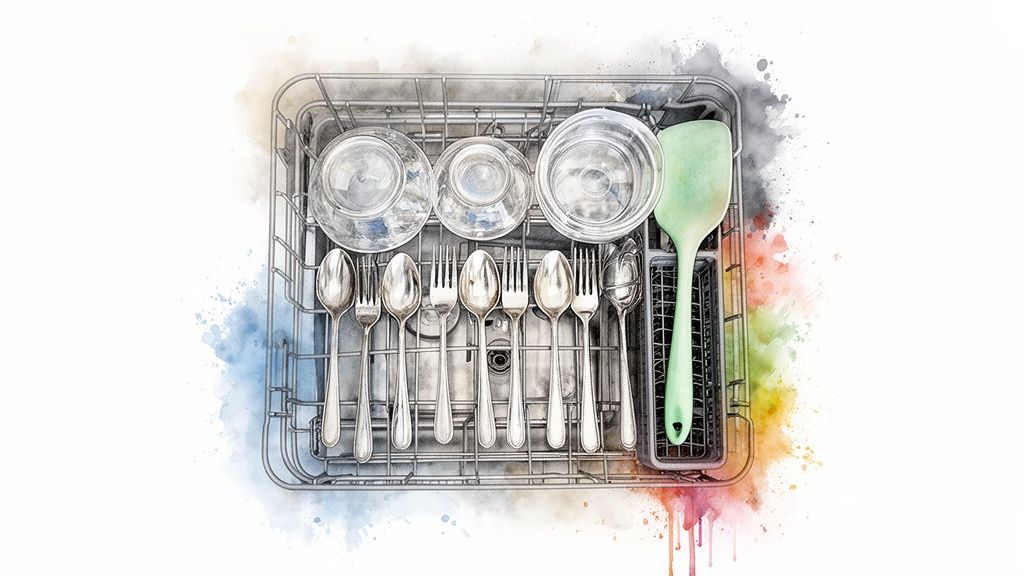
Let's be honest, loading a dishwasher properly is more than just a chore—it’s a bit of an art form. Getting it right directly affects how clean your utensils get and, just as importantly, how long they last. Think of your dishwasher less like a magic box and more like a high-powered cleaning system that has its own set of rules. Follow them, and you'll turn a chaotic pile of dirty tools into sparkling, ready-to-use kitchen allies.
The whole game is about giving water and detergent a clear path to every single surface. When utensils are crammed together or hidden behind a big bowl, the water jets simply can't reach them. That leaves you with bits of stuck-on food and the annoying job of having to re-wash everything. A few smart adjustments make all the difference.
The Great Silverware Debate Solved
It’s one of the most common kitchen arguments: when loading the silverware basket, should handles point up or down? The best answer is surprisingly simple: do both.
Seriously, just mix them up. It's the single best way to stop your spoons from "nesting"—that annoying huddle where they spoon each other so tightly that no water or soap can get in between. By alternating some handles up and some down, you create just enough space for a proper clean. The only exception? Sharp knives. For safety's sake, always place them point-down so you don't accidentally grab a blade when unloading.
A well-loaded dishwasher doesn't just clean better; it protects your investment. By preventing items from clanking against each other, you minimize scratches and wear, helping your favorite dishwasher safe kitchen utensils last longer.
To get the absolute best results from your utensil basket:
- Don't Overcrowd: Give your silverware some breathing room. Avoid jamming every last fork into a single compartment and spread them out evenly.
- Lay Large Utensils Flat: Spatulas, tongs, and ladles are often too big for the basket anyway. The best spot for them is lying flat on the top rack where they won't block the spinning spray arm.
- Use the Slotted Covers: If your basket came with those slotted grid tops, use them! They were designed specifically to keep each piece of silverware separate, which pretty much guarantees a perfect clean every time.
Rack Placement Rules for Utensil Longevity
Where you put things is just as crucial as how you put them. Your dishwasher has different heat zones, and putting the wrong material in the wrong spot can ruin it. The main heating element is almost always at the bottom of the machine, which makes the lower rack the hottest place to be.
This simple fact creates a clear rule for placement. Tough, durable items like stainless steel or hefty ceramic can take the heat of the bottom rack. But anything more delicate needs to go upstairs where the temperature is a bit gentler.
Top Rack Versus Bottom Rack Strategy
Getting this zoning right is the key to protecting your tools. Here's a quick cheat sheet for what goes where:
Top Rack Essentials:
- Plastics and Silicones: This is a non-negotiable. Plastic measuring cups, silicone spatulas, and anything marked "top rack only" must go here. The lower heat prevents them from warping or melting.
- Lids and Small Items: The top rack is a safer harbor for small container lids or other little items that might get tossed around by the powerful water jets.
- Long, Flat Utensils: As we mentioned, large serving spoons, whisks, and spatulas are happiest lying flat on the top rack.
Bottom Rack Champions:
- Stainless Steel Cutlery: Since the utensil basket usually lives on the bottom rack, it's a good thing that sturdy stainless steel can handle the direct spray and higher heat.
- Heavy-Duty Tools: Heavy stainless steel mixing bowls, colanders, and other tough tools are perfectly at home on the bottom rack.
Finally, for that truly spotless, sparkling finish, the secret is a good detergent paired with a rinse aid. The detergent handles the cleaning, but the rinse aid is what makes the magic happen in the final cycle. It breaks the surface tension of the water, causing it to sheet off your utensils instead of forming droplets. No droplets means no annoying water spots, leaving your dishwasher safe kitchen utensils looking brand new.
Choosing the Right Utensils for Your Kitchen
The best kitchen utensils aren't just about good looks; they’re about how well they fit into your real, everyday life. When you’re picking out new tools, you’re looking for something that matches your household’s unique rhythm. It’s not just about buying a spatula—it’s about finding a reliable partner that makes your time in the kitchen a little bit easier.
So, where do you start? Think about your lifestyle. Are you juggling meals for a busy family? Trying to make the most of a tiny apartment kitchen? Or maybe you're focused on making more eco-friendly choices? Each of these situations points to a different set of priorities, and the right dishwasher safe kitchen utensils can be a game-changer.
For Busy Families and High-Traffic Kitchens
In a kitchen that’s the heart of a busy family, durability and safety are everything. Utensils get used, tossed in the sink, and run through the dishwasher in a never-ending cycle. They have to be tough.
This is where materials like high-grade stainless steel and food-safe silicone really prove their worth. Because they’re non-porous, you don’t have to worry about bacteria hiding in little crevices. Plus, they can handle the high heat of a dishwasher day in and day out without breaking down. When you’re shopping, exploring durable and safe silicone tableware options can make cleanup so much simpler, especially when you have kids.
Here's what to look for in family-friendly utensils:
- Non-toxic materials like BPA-free silicone and quality 18/8 or 18/10 stainless steel.
- Solid, one-piece construction. This means no wobbly handles that can snap off or trap gunk.
- Stain and odor resistance to keep them looking and smelling fresh, no matter what you've been cooking.
When you invest in tools like these, you spend less time scrubbing and worrying and more time actually enjoying your meals.
For Small Spaces and Apartment Dwellers
When you're short on cabinet and counter space, every single tool has to justify its existence. The game isn't about having a gadget for every conceivable task; it’s about having a few smart, versatile tools that can pull double or triple duty.
Multi-functional, easy-care utensils are the undisputed champions of the compact kitchen.
Think about a silicone spatula that can stir a hot sauce on the stove, scrape a bowl completely clean, and then go right into the dishwasher. That one tool does the job of three. The same goes for a great pair of stainless steel tongs—they can flip, serve, and toss, saving you from needing a drawer full of serving spoons. If you're looking for more ways to make your space work for you, our guide on how to organize kitchen utensils has some great tips.
In a small kitchen, a utensil's value is measured by its versatility and ease of care. Choosing dishwasher-safe, multi-use tools is a strategic way to reduce clutter while maintaining full culinary capability.
For the Eco-Conscious Cook
Building an eco-conscious kitchen often comes down to a simple philosophy: "buy well, buy once." It’s about choosing high-quality, long-lasting tools instead of cheap, disposable ones that just end up in a landfill. Investing in durable, dishwasher-safe utensils is a surprisingly powerful way to be more sustainable.
Think about it—those flimsy plastic tools often can't stand up to the heat and pressure of a dishwasher. They warp, crack, and before you know it, you're throwing them out. By contrast, well-made stainless steel, silicone, or even glass utensils can last for years—sometimes a lifetime—with the right care. That simple choice dramatically shrinks your kitchen's environmental footprint.
Opting for durable goods is a conscious decision to create less waste. By selecting tools designed for longevity and easy machine washing, you're not just making your own life easier; you're supporting a more sustainable way of living. It's proof that convenience and responsibility can absolutely go hand in hand.
Got Questions? We've Got Answers
Even when you've got the basics down, certain questions about what can really go in the dishwasher always seem to surface. Here are the straight-up answers to some of the most common head-scratchers we hear.
Can I Put Stainless Steel Utensils in the Dishwasher?
You bet. Good quality stainless steel is practically made for the dishwasher. It's tough, non-porous, and stands up beautifully to rust and corrosion, which is why it's such a go-to material in the kitchen.
A couple of quick tips to keep it looking great: give utensils a quick rinse to get rid of acidic stuff like tomato sauce before you load them up. A rinse aid is also your best friend for preventing water spots and keeping everything gleaming. Just try to keep your stainless steel from bumping up against sterling silver or aluminum during the wash, as a weird chemical reaction can sometimes leave marks.
What Does "Top Rack Only" Actually Mean for Kitchen Tools?
Take this one seriously—it's less of a suggestion and more of a command. This label is slapped on items, usually plastics or certain silicones, that can't handle the heat. Your dishwasher’s main heating element is at the bottom, and it gets hot.
The top rack is a much cooler, safer place for these more delicate items. Sticking them up there ensures they won't melt, warp, or get weirdly misshapen. So, things like plastic measuring cups, food container lids, and thinner silicone spatulas should always live on the top floor.
The "top rack only" rule is a simple yet powerful way to extend the life of your plastic and silicone kitchenware. Ignoring it is one of the fastest ways to ruin a perfectly good utensil.
Why Did My Wooden Spoon Crack After Just One Wash?
Think of wood as a thirsty sponge. When you subject a wooden spoon to the hot, wet environment of a dishwasher, its porous fibers soak up a ton of water and swell.
Then comes the high-heat drying cycle, which aggressively sucks all that moisture out way too fast. This rapid expansion and contraction is exactly what causes the wood to crack, splinter, and warp. On top of that, the harsh detergent strips away the wood's natural oils, leaving it brittle. For anything wood or bamboo, hand-washing is the only way to go.
Is It Safe to Put My Good Knives in the Dishwasher?
Technically, the knife might come out in one piece, but it's a terrible idea for a couple of big reasons. First, the powerful water jets will slam that sharp edge against the rack and other dishes, dulling it in no time. A dull knife is far more dangerous than a sharp one.
Second, those potent detergents are abrasive and can cause tiny pits and corrosion on the blade, especially on high-carbon steel. To keep your knives sharp and for your own safety when unloading, always hand-wash your sharp knives. It’s a small bit of effort that pays off big time.
At Cooler Kitchen, we focus on creating products that fit into your real life. That means durable, easy-to-care-for tools that make cleanup less of a chore. Check out our collection of thoughtfully designed kitchen essentials at https://www.coolerkitchen.com.